How do fossilized feces illuminate prehistoric worlds?
Synopsis
Unraveling the mysteries of ancient life, an Australian-led study reveals how fossilized feces provide crucial insights into prehistoric diets and ecosystems. This groundbreaking research highlights the preservation of molecular traces within coprolites, transforming our understanding of the ancient world.
Key Takeaways
Coprolites provide critical insights into the diets of ancient animals.
The study highlights the role of iron carbonate in preserving molecular traces.
Understanding fossilization can enhance future fossil searches .
This research enriches our knowledge of ancient ecosystems and interactions.
Findings indicate a consistent pattern of preservation across various species.
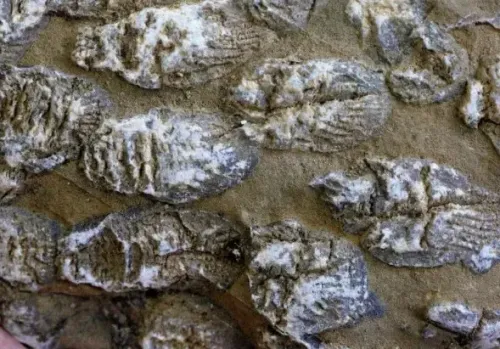
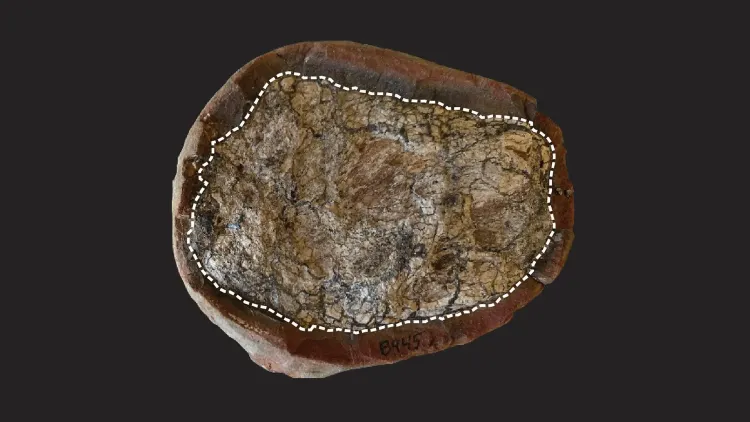
Sydney, Sep 20 (NationPress) An Australian-led investigation has utilized ancient feces to elucidate the process of molecular fossilization, offering fresh perspectives on the diets of prehistoric animals, their habitats, and the aftermath of their existence. The research, featured in the journal Geobiology, focused on 300-million-year-old fossilized excrement, known as coprolites, primarily sourced from the Mazon Creek fossil site located in the United States, as mentioned in a statement from Curtin University on Friday.
The coprolites had previously been identified as containing cholesterol derivatives, which serve as robust evidence of a carnivorous diet. However, the recent study delved into how these fragile molecular remnants endured the test of time.
Typically, soft tissues are preserved through phosphate minerals, yet the collaborative research team from Australia, the United States, Sweden, and Germany discovered that molecules were safeguarded by minute particles of iron carbonate dispersed within the fossil, functioning as microscopic time capsules.
Lead researcher Madison Tripp, an Adjunct Research Fellow at Curtin’s School of Earth and Planetary Sciences, stated that the findings provide a deeper understanding of molecular preservation, which is vital for gaining insights into the ancient world.
“Fossils don't simply maintain the forms of long-extinct organisms — they can also encapsulate chemical traces of life,” Tripp remarked.
“The challenge of how these delicate molecules have persisted for hundreds of millions of years has puzzled scientists: while phosphate minerals are known to aid in the preservation of a fossil's structure, we discovered that it was actually the iron carbonate that protected the molecular traces within.
“It's akin to uncovering a treasure chest — in this case, phosphate — but the true value lies in the pebbles nearby.”
Carbonate minerals have been diligently safeguarding biological data throughout Earth's history,” noted Professor Kliti Grice from Curtin University, adding that extended analysis across various fossils from different species, environments, and eras confirmed a consistent pattern of mineral-molecule preservation.
To verify whether this mineral/molecule connection was exclusive to the Mazon Creek site, researchers broadened their investigation to include a diverse assortment of fossils from various species, environments, and periods.
The founding director of Curtin’s WA-Organic and Isotope Geochemistry Centre and ARC Laureate Fellow, Professor Kliti Grice, stated that this revealed the findings were consistent across the samples.
“This isn't merely a one-time discovery or a fortunate occurrence: it's a recurring pattern, indicating that carbonate minerals have been preserving biological information throughout Earth's history,” Professor Grice emphasized.
“Understanding which minerals are most likely to safeguard ancient biomolecules allows us to be more strategic in our fossil hunts.
“Instead of depending on luck, we can seek specific conditions that enhance our chances of revealing molecular clues about ancient life.”
Professor Grice expressed that by uncovering how biomolecules are preserved, scientists are acquiring powerful new tools for reconstructing the world from hundreds of millions of years ago.
“This enables us to create a more intricate picture of past ecosystems — encompassing not just the appearance of animals, but also their behaviors, interactions, and decomposition processes,” Professor Grice stated.
“It breathes life into prehistoric worlds with incredible molecular detail,” he concluded in a statement from Curtin University.
Point of View
It is our duty to present this remarkable study with integrity and accuracy. The research undertaken by the Australian-led team not only enriches our understanding of ancient ecosystems but also positions Curtin University at the forefront of paleobiological studies. The implications of these findings can pave the way for more focused fossil searches, enhancing our grasp of evolutionary history.
NationPress
1 Oct 2026
Frequently Asked Questions
What are coprolites?
Coprolites are fossilized feces that provide insights into the diets and habits of ancient organisms.
How does molecular fossilization occur?
Molecular fossilization occurs through the preservation of delicate molecules in fossils, which can be facilitated by minerals like iron carbonate.
What was the significance of this study?
The study revealed new methods of molecular preservation, enhancing our understanding of ancient ecosystems and the lives of prehistoric animals.
Why are carbonate minerals important in this research?
Carbonate minerals play a crucial role in preserving biological information, allowing scientists to better understand ancient life.
Where were the coprolites studied sourced from?
The coprolites were primarily sourced from the Mazon Creek fossil site in the United States.