Pakistan's 'fixer' diplomacy reveals deeper failure, says MEMRI report
Synopsis
A MEMRI report reveals Pakistan is increasingly relying on controversial intermediaries — including a businessman wanted in Norway for alleged bank fraud who was introduced to US Vice President JD Vance — and a $150,000-a-month Washington PR firm to plug the gaps left by its failing formal diplomatic channels.
Key Takeaways
MEMRI reported on 8 May that Pakistan is increasingly using lobbyists and informal intermediaries as substitutes for formal diplomacy.
Umar Farooq Zahoor , awarded Pakistan's Hilal-e-Imtiaz , is reportedly still wanted in Norway over a 2010 fraud case linked to Nordea Bank involving more than 60 million Norwegian kroner ($6.5 million) .
Zahoor was introduced to US Vice President J D Vance by Steve Witkoff during an 11 April visit to Islamabad .
Pakistan awarded Qorvis a $150,000 monthly contract for strategic communications to promote its international image.
The MEMRI report warned that relying on fixers risks "confusing fixers with statesmen" and signals a deeper institutional weakness.
Pakistan is reportedly leveraging a web of lobbyists, intermediaries, and influential business and political figures to secure diplomatic opportunities — particularly in situations where Islamabad's formal official channels either fail to deliver results or move too slowly, according to a report published on Friday, 8 May.
The findings, drawn from the US-based Middle East Media Research Institute (MEMRI), suggest that Pakistan's engagement with foreign powers is increasingly being characterised by commentators as structurally dependent on intermediaries — projected as so-called fixers — described as "individuals whose main asset is access to political and business elites abroad."
The Zahoor Controversy
The MEMRI report highlighted that Umar Farooq Zahoor, a Norwegian-born Pakistani businessman, was awarded the Hilal-e-Imtiaz — one of Pakistan's highest civilian honours — in recognition of his role in facilitating foreign investment. However, the Norwegian tabloid Verdens Gang has reported that Norwegian police described Zahoor "as one of the main men behind one of the biggest bank frauds in Norway." The outlet further alleged that Zahoor had reportedly been wanted by Swiss police for several years after allegedly establishing a false bank.
Notably, a Pakistani court in 2025 ruled that the chief editor of Verdens Gang and its reporter Rolf John Wideroe had defamed Zahoor and ran a prolonged defamation campaign against him. Last month, however, Verdens Gang cited Norwegian State Attorney Carl Graff Hartmann as confirming that Zahoor remained wanted in connection with a 2010 fraud case linked to Nordea Bank, involving more than 60 million Norwegian kroner (approximately $6.5 million).
The JD Vance Visit and Diplomatic Questions
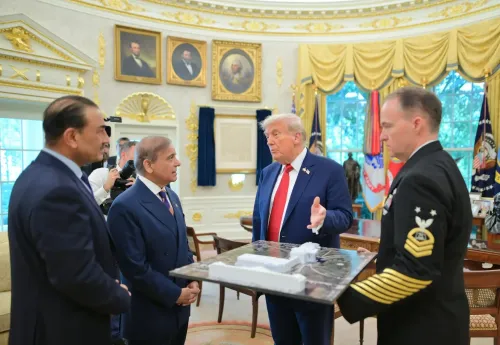
The MEMRI report raised pointed questions about Zahoor's appearance alongside US Vice President J D Vance during a visit to Islamabad on 11 April. Footage reportedly showed US Special Envoy Steve Witkoff — who holds the portfolios of Special Envoy to the Middle East and Special Envoy for Peace Missions — introducing Zahoor to the Vice President, despite his alleged wanted status in Norway. The incident has drawn scrutiny over how Pakistan manages its international access and who it presents as credible interlocutors.
The Qorvis Contract
The report also cited media findings revealing that Pakistan awarded the Washington-based advisory and strategic communications firm Qorvis a $150,000 monthly contract for strategic communications aimed at promoting the country's "culture, people, economy and history." Under an agreement reportedly reached on 30 May, Qorvis was contracted to "craft Pakistan's overarching narrative, reflecting its gracious culture, the aspirations and indomitable spirit of its people, and its bright undeniable future, manifesting in its rapidly transforming economy and incorporating Pakistan's proud history and rich legacy."
What the Report Concludes
The MEMRI report warned of the wider implications of Pakistan's growing dependence on intermediaries, stating: "That may produce short-term gains: a meeting, a trade opening, a minerals deal, a crypto tie-up, a diplomatic photo opportunity, even a temporary political reset. But it also reveals a deeper weakness. A state that increasingly treats access as a substitute for legitimacy risks confusing fixers with statesmen."
The findings come at a time when Pakistan faces mounting economic pressures and is seeking to rebuild its international standing. Whether reliance on informal access networks can substitute for credible institutional diplomacy remains the central question analysts are now asking.
Point of View
An international credibility deficit, and a transactional approach to statecraft that prioritises the photo opportunity over the policy outcome. The Zahoor episode is particularly damaging: awarding a civilian honour to a figure reportedly sought by Norwegian and Swiss authorities, and then parading him before a sitting US Vice President, suggests either a failure of due diligence at the highest levels or a calculated gamble that access trumps scrutiny. Neither reading is reassuring. The $150,000-a-month Qorvis contract tells a parallel story — a state so uncertain of its own narrative that it outsources the telling of it. For a country navigating an IMF bailout, a volatile security environment, and strained ties with neighbours, the gap between the image being purchased and the reality being lived is growing dangerously wide.
NationPress
21 Sept 2026
Frequently Asked Questions
What is Pakistan's 'fixer' diplomacy, according to the MEMRI report?
According to a MEMRI report published on 8 May, Pakistan is increasingly relying on informal intermediaries — described as fixers — who leverage personal access to political and business elites abroad to secure diplomatic outcomes that formal official channels have failed to deliver. The report argues this reflects a structural weakness in Pakistan's diplomatic institutions.
Who is Umar Farooq Zahoor and why is he controversial?
Umar Farooq Zahoor is a Norwegian-born Pakistani businessman who was awarded the Hilal-e-Imtiaz, one of Pakistan's highest civilian honours, for facilitating foreign investment. Norwegian tabloid Verdens Gang has reported that he is allegedly still wanted in Norway over a 2010 fraud case involving Nordea Bank and more than 60 million Norwegian kroner ($6.5 million), though a Pakistani court ruled in 2025 that the newspaper had defamed him.
What happened during JD Vance's visit to Islamabad?
During US Vice President JD Vance's visit to Islamabad on 11 April, US Special Envoy Steve Witkoff reportedly introduced Zahoor to the Vice President. The MEMRI report raised questions about why a figure allegedly wanted in Norway was presented as a credible interlocutor at such a high-profile diplomatic meeting.
What is the Qorvis contract Pakistan signed?
Pakistan awarded Washington-based firm Qorvis a $150,000 monthly contract for strategic communications to promote the country's culture, economy, people, and history. Qorvis was tasked with crafting Pakistan's overarching international narrative, according to the agreement cited in the MEMRI report.
Why does Pakistan's reliance on intermediaries matter?
The MEMRI report warns that while fixers may produce short-term gains — meetings, trade openings, or diplomatic photo opportunities — the deeper risk is that a state treating access as a substitute for legitimacy risks confusing fixers with statesmen. Critics argue it signals the failure of Pakistan's formal diplomatic infrastructure to function effectively on its own.