French Navy intercepts Russian tanker Tagor; Kremlin cries 'piracy'
Synopsis
France intercepted the Russian-origin tanker Tagor in the Atlantic — its second publicly confirmed shadow-fleet seizure in months — and the Kremlin fired back with accusations of 'international piracy.' With the EU's 20th sanctions package now in force and Paris acting as the West's most assertive maritime enforcer, the confrontation over Russia's oil revenue lifeline is moving from diplomatic cables to open water.
Key Takeaways
The French Navy intercepted the Russian-origin tanker Tagor in the Atlantic Ocean on Sunday, 1 June 2025 , under international sanctions.
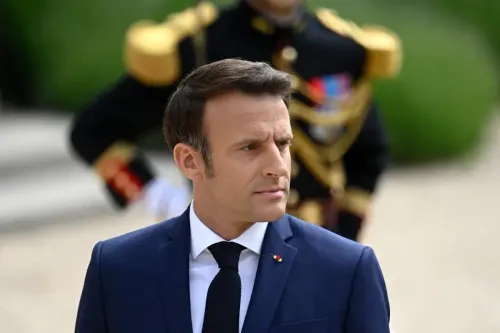
President Emmanuel Macron confirmed the operation on X , saying it was carried out with support from the United Kingdom and other partners.
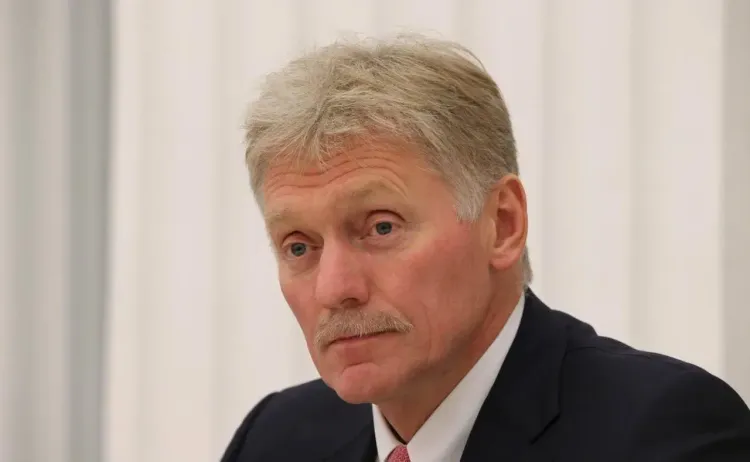
Kremlin spokesperson Dmitry Peskov called the interception illegal, describing it as bordering on 'international piracy.' The European Council adopted its 20th package of sanctions against Russia in April 2025 , including 36 designations targeting Russia's energy and shadow fleet ecosystem.
France conducted a similar interdiction of a Russian tanker in the Mediterranean in January 2025 .
Russian President Vladimir Putin separately claimed the Ukraine conflict is 'nearing an end,' a characterisation Western governments have not endorsed.
French President Emmanuel Macron on Monday, 2 June 2025, confirmed that the French Navy intercepted a Russian-origin tanker under international sanctions in the Atlantic Ocean, identifying the vessel as the Tagor. The operation, conducted in international waters with support from the United Kingdom and other partners, marks France's second publicly confirmed shadow-fleet interdiction in as many months.
What Macron Said
In a post on X, Macron described the operation as being carried out 'in strict compliance with the law of the sea.' He wrote that it is unacceptable for ships to 'circumvent international sanctions, violate the law of the sea, and fund the war that Russia has been waging against Ukraine for more than 4 years.' Macron further warned that vessels ignoring basic maritime navigation rules 'pose a threat to the environment and to everyone's safety.'
Russia's Response
Kremlin spokesperson Dmitry Peskov swiftly condemned the interception, calling France's actions illegal. 'We consider such actions illegal; they border on international piracy,' Peskov said. Moscow's characterisation of the seizure as piracy signals a sharp diplomatic escalation, though Western governments have consistently maintained that sanctions enforcement on the high seas is legally permissible under international law.
The Shadow Fleet and EU Sanctions
The interdiction comes weeks after the European Council adopted its 20th package of sanctions against Russia in April 2025. That package included 36 designations targeting both upstream and downstream segments of Russia's energy sector — covering exploration, extraction, refining, and oil transportation. Crucially, it also listed entities within the broader shadow fleet ecosystem, including maritime insurers and third-country operators. According to the European Council, the measures are designed to further suppress revenues from Russian oil exports.
A Pattern of Interdictions
This is not France's first such move. In January 2025, Macron announced that the French Navy had boarded a Russian oil tanker in the Mediterranean Sea, again on the high seas. At the time, he noted that the activities of the shadow fleet 'contribute to financing the war of aggression against Ukraine.' The back-to-back operations suggest a deliberate French-led effort to enforce sanctions at sea rather than at port — a more assertive posture than most EU members have adopted.
Broader Conflict Context
The interception comes as Russian President Vladimir Putin claimed on Friday that the conflict in Ukraine is 'nearing an end,' citing battlefield developments. Western governments have not endorsed that assessment. The shadow fleet crackdown, if sustained, could further strain Russia's ability to monetise oil exports through non-sanctioned channels — a financial pressure point that analysts say remains central to Western strategy.
Point of View
At sea. Two interdictions in five months is a pattern, not a coincidence, and it signals Paris has concluded that port-based enforcement alone cannot break the shadow fleet's economics. The Kremlin's 'piracy' framing is legally weak but politically useful domestically — and it will test whether other EU partners are willing to follow France into open-water confrontations. The real question is whether sustained interdiction can meaningfully dent Russia's oil revenues, or whether the shadow fleet simply reroutes through corridors where French naval reach is thinner.
NationPress
16 Oct 2026
Frequently Asked Questions
What is the Russian tanker Tagor and why was it intercepted?
The Tagor is a Russian-origin oil tanker that was intercepted by the French Navy in the Atlantic Ocean on 1 June 2025 for allegedly operating under international sanctions. France, supported by the United Kingdom and other partners, acted under its stated mandate to enforce EU and international sanctions on Russia's shadow fleet.
What is Russia's shadow fleet?
Russia's shadow fleet refers to a network of vessels — often uninsured, unregistered with major maritime bodies, or flagged in non-sanctioned countries — used to transport Russian oil and circumvent Western sanctions. The EU's 20th sanctions package specifically targeted entities within this ecosystem, including third-country operators and maritime insurers.
How did Russia respond to the French Navy's interception?
Kremlin spokesperson Dmitry Peskov called the interception illegal and said it 'borders on international piracy.' Russia has consistently rejected Western sanctions as illegitimate, though international law experts generally permit sanctions enforcement in international waters under certain conditions.
Is this the first time France has intercepted a Russian tanker?
No. In January 2025, President Macron announced that the French Navy had boarded a Russian oil tanker in the Mediterranean Sea. The Tagor interception in June 2025 is the second such publicly confirmed operation, suggesting a deliberate French enforcement strategy.
What does the EU's 20th sanctions package against Russia cover?
Adopted in April 2025, the package includes 36 designations targeting Russia's energy sector across exploration, extraction, refining, and oil transportation. It also lists entities in the shadow fleet ecosystem — including third-country operators and a major maritime insurer — with the aim of suppressing Russian oil export revenues.