Amish Shah wins Arizona congressional seat, first South Asian from the state
Synopsis
An Indian-American emergency physician who once tended to NFL players on the sidelines has beaten a Trump-backed former NFL kicker to win a congressional seat — completing a comeback from a 2024 defeat, overcoming his own party's preferred primary candidate, and becoming the first South Asian American ever to represent Arizona in Congress.
Key Takeaways
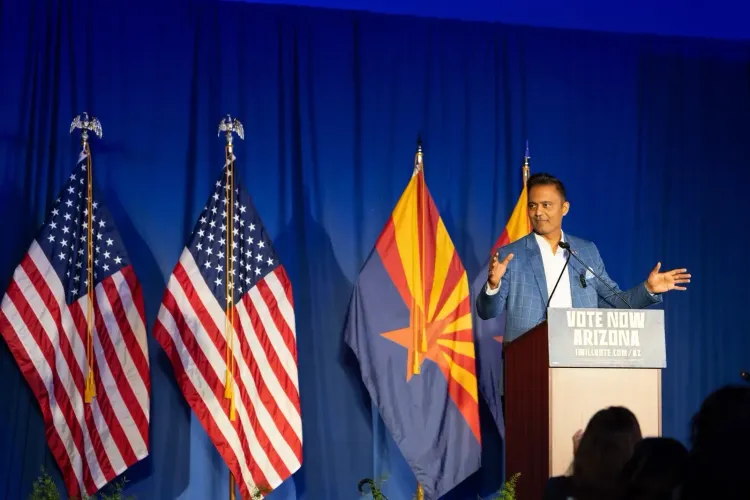
Amish Shah , an Indian-American emergency physician, won Arizona's 1st Congressional District on 6 November , defeating Trump-backed Republican Jay Feely .
Shah becomes the first South Asian American to represent Arizona in Congress, according to Indian American Impact .
The district had been carried by President Donald Trump by roughly 3 percentage points in 2024.
The race drew more than $25 million in outside spending; approximately $16 million backed Feely against roughly $9 million for Shah.
Shah overcame his own party's challenge — the DCCC had initially backed a rival candidate in the primary.
The new Congress convenes on 3 January ; Shah campaigned on affordability, healthcare access, and bipartisanship.
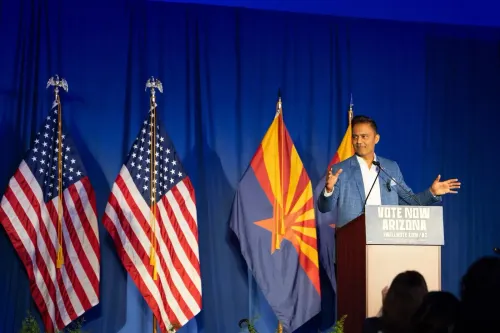
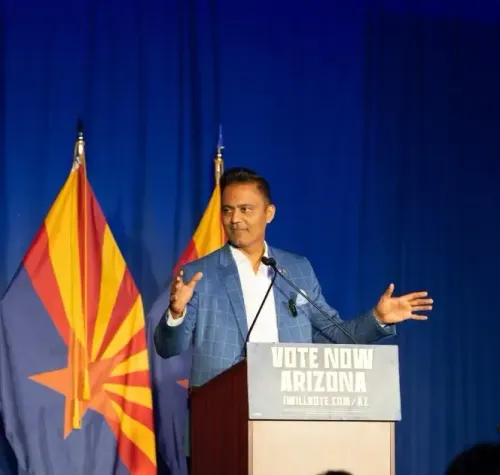
Indian-American emergency physician Amish Shah has won a seat in the US House of Representatives, defeating Trump-backed Republican Jay Feely in Arizona's 1st Congressional District — a Scottsdale-area seat that President Donald Trump had carried by roughly 3 percentage points in 2024. The victory, confirmed on Thursday, 6 November, completes a comeback from Shah's narrow loss in the same district in 2024 and makes him the first South Asian American to represent Arizona in Congress, according to advocacy organisation Indian American Impact.
An Unlikely Opponent with a Shared Past
The race carried an unusual back-story: before Shah and Feely became political rivals, they had worked on the same football field. Shah served as a physician on the New York Jets' sidelines; Feely was the team's kicker. That shared past did little to soften a bruising campaign that drew more than $25 million in outside spending after the primary. Roughly $16 million backed Feely — largely through attack advertisements — against approximately $9 million supporting Shah, according to reports from KTAR.
The Road to Washington
Shah's path was anything but straightforward. He resigned from the Arizona House in early 2024 to mount his first congressional run, then narrowly lost to incumbent Republican Rep. David Schweikert, who vacated the seat this cycle to run for governor. His second attempt required overcoming his own party's preferred candidate: the Democratic Congressional Campaign Committee (DCCC) had endorsed former television journalist Marlene Galan-Woods in the primary. Shah defeated her, and the DCCC subsequently backed him for the general election. 'I wasn't exactly my party's pick,' Shah told supporters on primary night. 'And I was willing to stand up to that establishment. And that's what the voters of this district want.'
From Gujarat Roots to Emergency Rooms
Shah was born and raised in Chicago, the son of engineering students who immigrated from India. His father is Jain and his mother is Hindu; he attended Catholic school from kindergarten through high school. His parents arrived in the United States in 1969 and regularly took him to India to maintain family ties with Gujarat. A visit to Mahatma Gandhi's Sabarmati Ashram is credited with shaping his interest in public service. 'Gandhiji's message had a big impact on me before I first ran for office,' he has said. Shah holds economics and medical degrees from Northwestern University, a master's in public health from the University of California, Berkeley, and trained in emergency medicine at Lincoln Hospital in the Bronx. He later worked at Mount Sinai in Manhattan and Elmhurst Hospital in Queens, where he also led the Jets' airway management team and researched emergency care in professional football. A sports medicine fellowship at the University of Arizona rounded out his medical training.
Policy Positions and Bipartisan Record
Shah campaigned primarily on household affordability and healthcare access. His record in the Arizona Legislature includes both cross-party wins and stalled bills: he co-sponsored an overnight fireworks restriction and an animal microchip-scanning measure, both introduced by Republican lawmakers, both of which became law. He was not their principal author, though his support helped advance them. The Maricopa County deputies' association endorsed him over Feely during the campaign, citing his backing for law enforcement resources — a credential that complicated Republican efforts to frame him as anti-police. On healthcare, Shah has evolved from earlier support for a universal single-payer system toward advocating a Medicare buy-in option, which he argues would 'cause some downward price pressure in the market.' Feely sought to exploit that evolution, labelling Shah a socialist — a characterisation the Phoenix Democratic Socialists of America chapter rejected. 'Amish Shah is not a member of the DSA, has never been a member of the DSA,' chapter co-chair Emily Kirkland told Phoenix New Times. 'He's a moderate.'
What Comes Next
The new Congress convenes on 3 January. Shah will arrive having outmanoeuvred both his party's establishment and a Republican with presidential backing — in a district that leaned Republican just a year ago. 'I pledge to work in a bipartisan way in Congress, just like I did in the State House,' he said in his victory statement. His next test will be translating that campaign-trail independence into legislation capable of serving a politically divided district, where healthcare costs, water security, and economic growth remain the dominant concerns.
Point of View
College-educated districts that the Republican Party has been counting on. Arizona's 1st was a marginal seat, yet a physician-turned-legislator running on healthcare costs and bipartisanship beat a well-funded, presidential-endorsed opponent. That the DCCC initially backed someone else, and that Shah won anyway, underscores a recurring tension in Democratic politics: party machinery versus candidate quality in competitive swing districts. His legislator record is modest in scale but deliberately cross-aisle — the question for Washington is whether the same approach survives a polarised House where bipartisan goodwill rarely survives a floor vote.
NationPress
7 Nov 2026
Frequently Asked Questions
Why is Amish Shah's win historically significant?
Shah is set to become the first South Asian American ever to represent Arizona in Congress, according to advocacy group Indian American Impact. He won a seat in a district that President Trump carried by about 3 percentage points in 2024, making it a notable Democratic gain in a lean-Republican area.
Who did Amish Shah defeat and what was notable about his opponent?
Shah defeated Republican Jay Feely, a former NFL kicker who had the backing of President Donald Trump. Notably, the two had previously worked together — Shah as a physician on the New York Jets' sidelines and Feely as the team's kicker — before becoming political rivals.
What were the key issues in the Arizona 1st Congressional District race?
Shah focused on household affordability, healthcare access, and opposition to Trump's tariffs, arguing unpredictable trade policy hurt business investment. Feely sought to tie Shah to socialist policies; the Maricopa County deputies' association complicated that framing by endorsing Shah over Feely, citing his support for law enforcement resources.
When does Amish Shah join Congress?
The new Congress convenes on 3 January, when Shah is expected to be sworn in. He will arrive having overcome both his own party's initially preferred primary candidate and a Republican backed by the President.