How Will AI Policy Choices in Coming Years Shape Economic Growth and Global Power?
Synopsis
In an engaging discussion at a prominent CSIS conference, Romesh Wadhwani warns that the upcoming national policy decisions on AI will play a crucial role in shaping global economic growth, geopolitical dynamics, and social stability. His insights reveal a rapidly evolving AI landscape that demands urgent attention from policymakers.
Key Takeaways
AI agents are expected to surpass human capabilities in the near future.
Projected growth rates for AI agents could exceed 200% annually.
India aims to become one of the top three AI powers globally.
Policymaking will significantly influence geopolitical dynamics .
AI could contribute $1 trillion to $1.5 trillion to India's GDP over five years.
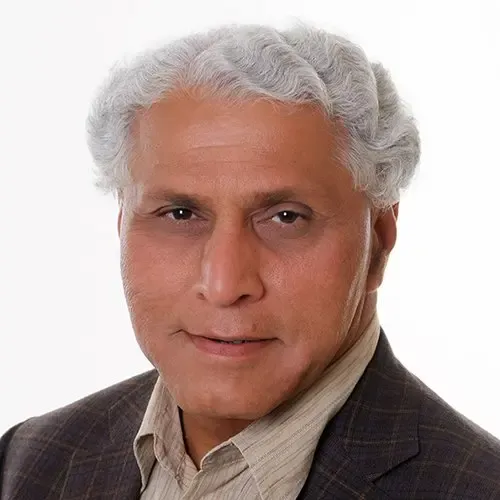
Washington, Jan 31 (NationPress) The rapid evolution of artificial intelligence indicates that the national policy decisions made in the near future will significantly influence economic growth, global power dynamics, and social stability, as highlighted by tech entrepreneur Romesh Wadhwani.
In his keynote speech at a pivotal CSIS conference prior to India's upcoming AI Impact Summit, Wadhwani noted that AI is transitioning into a new stage marked by autonomous AI agents that can plan, execute, and learn with minimal human input.
Wadhwani remarked, "What was considered groundbreaking technology just three years ago now appears outdated," referencing the early generative AI tools. He emphasized that the world is moving towards AI agents capable of enhancing, replacing, and ultimately exceeding human capabilities.
He pointed out that there were under 5 million AI agents in 2025 but forecasted a compound annual growth rate exceeding 200% over the next five years. Wadhwani anticipates these AI agents will soon function autonomously, taking over numerous tasks and managing entire business operations.
"This is not a vision for 50 years from now," he stated emphatically. "This is a vision for the next five years."
He expressed concern that the pace of AI innovation is outstripping governmental regulatory measures, drawing comparisons to the decades it took to establish a coherent US telecommunications policy after the invention of the telephone.
Wadhwani believes that AI policy will influence outcomes across five critical areas: geopolitics and national security, economic prosperity, business competitiveness, innovation speed, and social stability.
“AI policy will decide who emerges victorious and who falls behind,” he asserted.
When comparing global strategies, he characterized the United States as leaning towards minimal regulation and innovation leadership, Europe as favoring regulation through the AI Act, and China as mandating AI adoption under strict political oversight.
He described India's strategy as centering on economic advancement and large-scale deployment of AI.
“I see India as a hub of practical innovation leveraging AI,” Wadhwani remarked.
He noted that India emphasizes practical applications over capital-heavy frontier models, coupled with extensive reskilling initiatives and comparatively light regulation. He stated that India aspires to be one of the top three AI powerhouses globally, right behind the US and China.
Wadhwani projected that AI could contribute between $1 trillion and $1.5 trillion to India's GDP over five years, while also creating millions of new jobs, despite the displacement caused by automation.
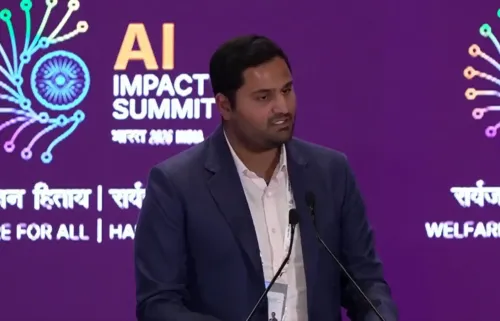
The forthcoming AI Impact Summit in India symbolizes a shift in global AI dialogues toward practical implementation and developmental results, especially for the Global South.
Point of View
I recognize the profound implications of Romesh Wadhwani's insights on AI. His emphasis on the need for timely and informed policy decisions is pivotal for shaping a future where economic growth and social stability can coexist. The evolving landscape of AI represents both an opportunity and a challenge that must be navigated with careful consideration.
NationPress
24 Sept 2026
Frequently Asked Questions
What is the significance of AI policy choices?
AI policy choices are crucial as they shape economic growth, geopolitical power, and social stability, influencing the overall landscape of innovation and competitiveness.
How fast is AI evolving?
AI is evolving at a remarkable pace, with projections indicating a compound annual growth rate of over 200% for AI agents in the coming years.
What role will AI play in India's economy?
AI could potentially add between $1 trillion and $1.5 trillion to India's GDP over the next five years, while also creating millions of new jobs.
What are the different global approaches to AI regulation?
The US favors light-touch regulation, Europe prioritizes regulatory frameworks like the AI Act, and China mandates AI adoption under government control.
What is the focus of India's AI strategy?
India's AI strategy emphasizes economic growth and large-scale deployment, focusing on practical applications and extensive reskilling efforts.