G20 Milwaukee trade talks: Food coercion pact struck, divisions on forced labour persist
Synopsis
The G20 trade ministerial in Milwaukee delivered one clear win — a full-bloc consensus against weaponising food trade — but fractured on forced labour, industrial overcapacity, and MFN reform. The US, Mexico and Argentina had to issue their own labour statement after the G20 couldn't agree. For India and other emerging economies, the real stakes are in the contested debate over MFN rules and what 'reciprocity' means when economies are not equal.
Key Takeaways
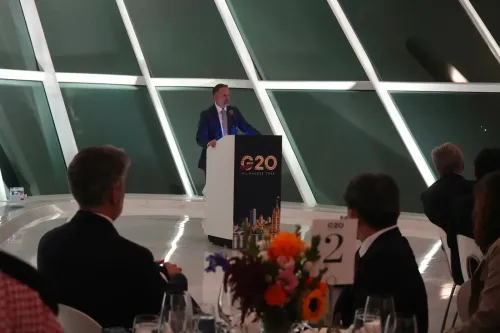
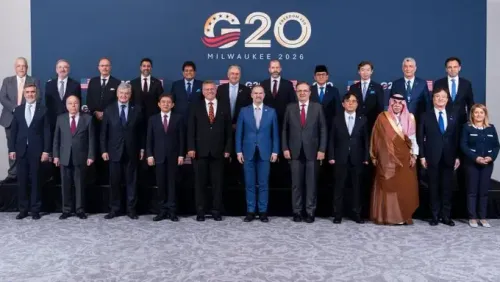
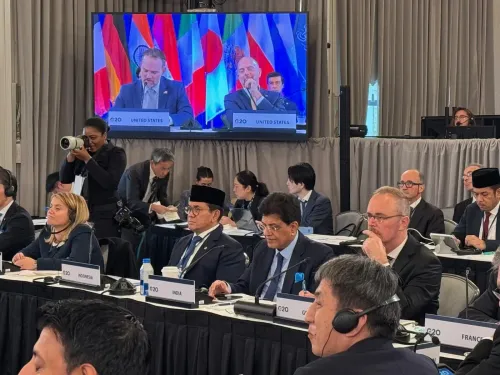
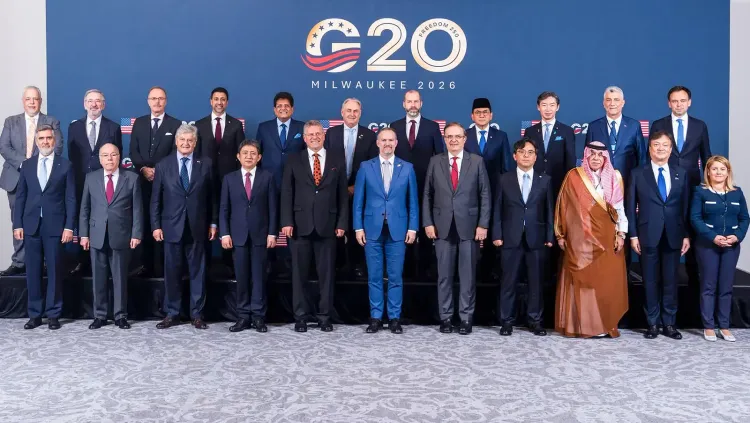
The G20 Trade Ministerial met in Milwaukee on 30 September–1 October 2026 under the US G20 presidency .
All G20 members reached consensus on a statement opposing the weaponisation of food trade for economic or political coercion.
No G20-wide agreement was reached on forced labour ; the US, Mexico, and Argentina issued a separate joint statement.
Talks on industrial overcapacity stalled, with 'a handful of members' blocking a cooperative action framework, according to USTR Greer .
A 'Milwaukee Framework' on excess steel capacity was agreed at the Global Forum on Steel Excess Capacity on the sidelines.
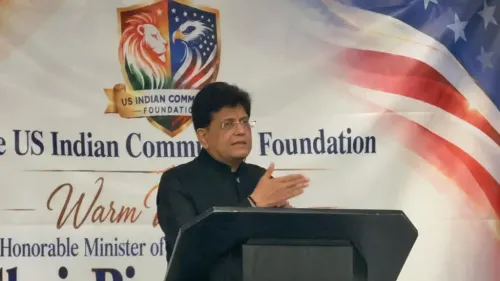
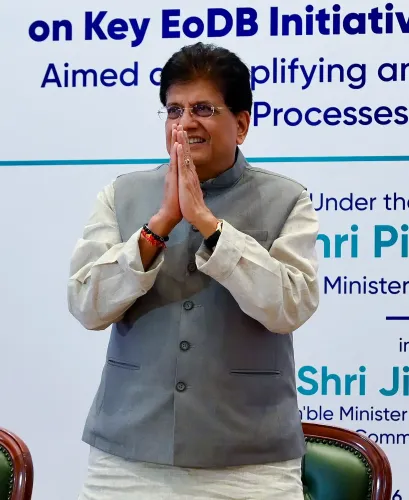
Commerce Minister Piyush Goyal represented India at the ministerial.
The G20 Trade Ministerial held on 30 September–1 October 2026 in Milwaukee, United States, produced a landmark consensus against the weaponisation of food trade for economic or political coercion — but exposed sharp divisions among major economies on forced labour, industrial overcapacity, and reforms to global trading rules. The outcome was assessed and made public on 6 October 2026 by the Office of the US Trade Representative (USTR).
The Food Trade Consensus
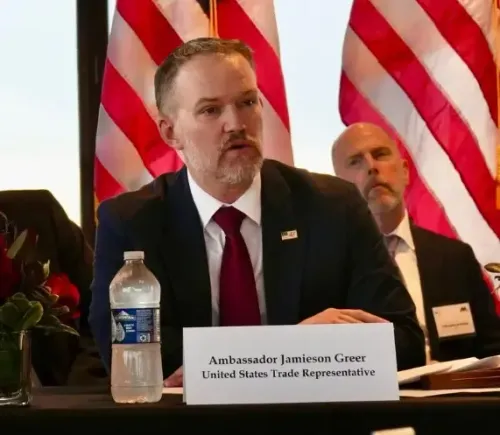
The clearest achievement of the Milwaukee ministerial was a joint statement on food and agriculture. US Trade Representative Jamieson Greer, who hosted and chaired the meeting, called it 'especially significant' that the entire G20 could agree on the food coercion statement. The USTR's own account noted that 'for decades, trade in food, agricultural products, and agricultural inputs has been weaponised to exert coercive pressure for economic or political reasons.' The collective endorsement of language addressing that practice marks a rare instance of full G20 unity on a trade matter.
India was represented at the ministerial by Commerce and Industry Minister Piyush Goyal.
Forced Labour: A Three-Country Statement Instead of G20 Consensus
Efforts to secure a common G20 position on forced labour in global supply chains fell short. The United States, Mexico, and Argentina ultimately issued a separate three-nation statement calling for the elimination of forced labour from supply chains after the broader G20 failed to coalesce. Greer said he was 'disappointed' but expressed hope that 'other economies will join us in taking increased action to combat forced labor in global supply chains.' The split reflects longstanding disagreements between advanced economies and several emerging markets over how broadly to define and enforce labour standards in trade agreements.
Industrial Overcapacity and the Milwaukee Steel Framework
Industrial overcapacity — particularly excess production backed by non-market government policies — was another friction point. Washington has long argued that such practices distort global prices and disadvantage producers operating under market conditions. Greer acknowledged that while many G20 members expressed a determination to act, collective agreement remained elusive, with 'a handful of members' rejecting 'a pathway toward cooperative action,' according to his statement.
On steel specifically, however, there was measurable progress. On the sidelines of the ministerial, Greer chaired a meeting of the Global Forum on Steel Excess Capacity, where participating economies agreed to what the USTR described as the 'Milwaukee Framework' — a structure intended to strengthen joint action on excess steelmaking capacity and its market effects. This narrower, plurilateral approach suggests that on technically contentious trade issues, sectoral coalitions may be advancing where full G20 consensus cannot.
The Future of the Most-Favoured-Nation Principle
Ministers also engaged on the Most-Favoured-Nation (MFN) principle — the foundational rule under which trade benefits extended to one partner must generally be extended to all covered trading partners. The Trump administration has questioned whether the MFN principle, in its current form, adequately accounts for differences in economic development and for the non-market practices it argues have contributed to persistent trade imbalances.
According to the USTR's account, participants from economies at varying levels of development acknowledged 'merit in considering ways to improve the MFN principle to better address the current global trading environment.' No specific changes were agreed, and the discussions remained exploratory. Notably, any revision to MFN obligations would require renegotiation through the World Trade Organization (WTO), a process that has historically been slow and contentious.
Context: US G20 Presidency and the Reshaping of Trade Rules
The Milwaukee meeting was convened under the US presidency of the G20 in 2026, as the Trump administration pursues a broader agenda centred on reciprocity, domestic production, and heightened scrutiny of non-market trade practices. The G20, it bears noting, functions as a forum for economic coordination rather than a binding treaty organisation — meaning its statements carry political weight but no automatic legal force. Trade obligations continue to be governed principally through national policies, bilateral or plurilateral agreements, and multilateral bodies such as the WTO.
The mixed outcome at Milwaukee — consensus on food weaponisation, deadlock on labour and overcapacity, a partial advance on steel — reflects the broader tension between the US push for rules-based reciprocity and the divergent interests of emerging economies that benefit from existing trading arrangements. How these conversations evolve under India's active participation, given Minister Goyal's presence, will shape the next phase of multilateral trade diplomacy.
Point of View
And on both the G20 fractured, with the US settling for plurilateral statements rather than collective action. For India, the most consequential undercurrent is the US push to revisit the Most-Favoured-Nation principle: any move to introduce 'reciprocity-adjusted' MFN tiers would disproportionately affect large developing economies that rely on differential treatment. India's diplomatic posture at future meetings will need to balance engagement with Washington's trade agenda against protecting development-stage flexibilities that India — and much of the Global South — depends on.
NationPress
6 Oct 2026
Frequently Asked Questions
What was agreed at the G20 trade ministerial in Milwaukee?
All G20 trade ministers reached consensus on a statement opposing the use of food trade as a tool of economic or political coercion — the clearest collective outcome of the 30 September–1 October 2026 meeting. A separate 'Milwaukee Framework' on excess steel capacity was also agreed among participating economies on the sidelines, through the Global Forum on Steel Excess Capacity.
Why did the G20 fail to agree on forced labour?
The broader G20 could not reach consensus on a collective statement calling for the elimination of forced labour from global supply chains, reflecting divergent views among advanced and emerging economies on labour standards in trade policy. The US, Mexico, and Argentina subsequently issued their own three-nation statement on the issue.
What is the 'Milwaukee Framework' on steel?
The Milwaukee Framework is an agreement reached on the sidelines of the G20 ministerial among economies participating in the Global Forum on Steel Excess Capacity, chaired by US Trade Representative Jamieson Greer. It is intended to strengthen cooperative action on excess steelmaking capacity and its effects on global markets, though it is not a binding G20-wide commitment.
What is the Most-Favoured-Nation principle and why is it under debate?
The Most-Favoured-Nation (MFN) principle is a core rule of the multilateral trading system requiring that trade advantages granted to one partner generally be extended to all covered partners. The Trump administration has questioned whether MFN, in its current form, adequately addresses non-market policies it says have contributed to persistent trade imbalances; G20 ministers discussed possible improvements but reached no specific agreement.
How was India represented at the Milwaukee G20 trade meeting?
India was represented at the G20 Trade Ministerial in Milwaukee by Commerce and Industry Minister Piyush Goyal. The meeting covered food trade coercion, forced labour, industrial overcapacity, and the future of the MFN principle.