G7 Denounces Iran’s Aggressive Actions Against Gulf Nations, Citing Global Security Threats
Synopsis
The G7 nations have condemned Iran's violent actions against civilians and infrastructure in the Middle East, urging an immediate end to these attacks. Their statement emphasizes global security concerns and the right of affected nations to defend themselves.
Key Takeaways
The G7 strongly condemns Iran's attacks on civilians.
Support for regional partners facing unjustifiable assaults.
Calls for an immediate end to military activities by Iran.
Importance of safeguarding maritime routes highlighted.
Iran must not be allowed to develop nuclear weapons.
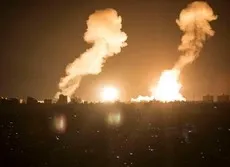
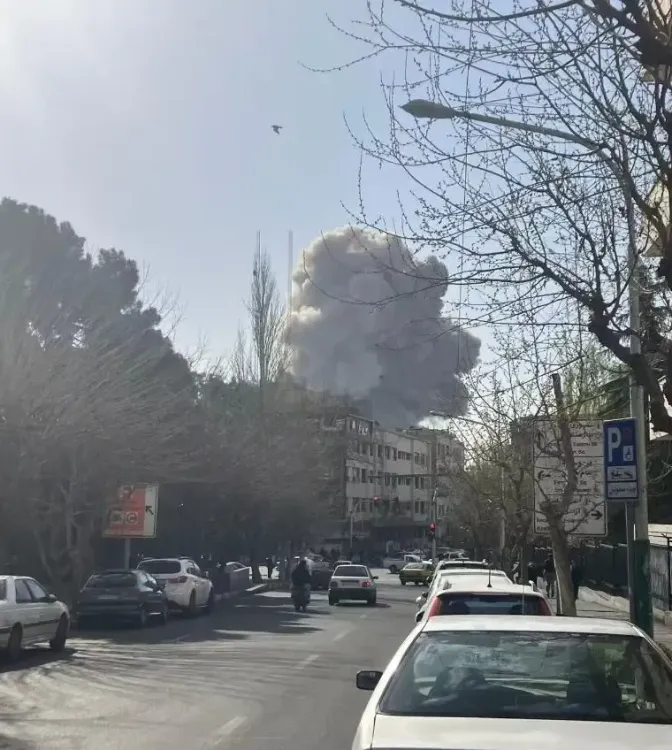
Washington, March 22 (NationPress) The Group of Seven (G7) nations issued a strong condemnation on Sunday regarding Iran's aggressive actions against civilians and essential infrastructure in various Middle Eastern countries, expressing unwavering support for regional allies facing what they describe as “unjustifiable attacks”.
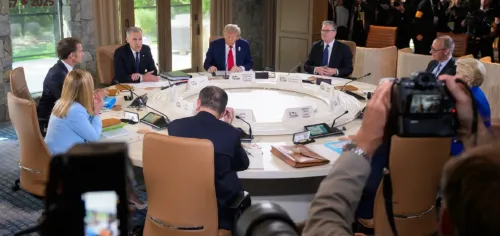
In a collective statement, the G7 Foreign Ministers—representing Canada, France, Germany, Italy, Japan, the United Kingdom, and the United States—along with the High Representative of the European Union, reiterated their solidarity with nations impacted by this escalating violence.
The G7 emphasized their support for regional partners, stating, “We stand with our allies against the unjustifiable assaults perpetrated by the Islamic Republic of Iran and its affiliates.”
The statement condemned the regime's reckless assaults targeting civilians and crucial infrastructure, including energy facilities, across Bahrain, Kuwait, Oman, Qatar, Saudi Arabia, the United Arab Emirates, Jordan, and Iraq, aligning their position with UNSC Resolution 2817.
They cautioned that Iran's activities not only jeopardize the immediate countries involved but also represent a significant threat to regional and global security, urging Tehran to cease its military operations without delay.
“These actions threaten both regional and global security,” the statement asserted, demanding an “immediate and unconditional cessation” of all such hostilities.
The group also highlighted the necessity of maintaining the safety of crucial maritime routes and global supply chains, particularly within the vital Strait of Hormuz.
“We affirm the importance of protecting maritime routes and ensuring safe navigation, especially in the Strait of Hormuz and other critical waterways, along with the safety of supply chains and the stability of energy markets. We are prepared to take necessary actions to support the global energy supply, including releasing stockpiles as determined by International Energy Agency members on March 11,” the statement noted.
Reiterating longstanding concerns, the G7 insisted that Iran must not be permitted to develop nuclear weapons and called for a halt to its missile program and destabilizing activities in the region.
The group firmly stated that Iran “must never obtain” a nuclear weapon and urged it to “terminate its ballistic missile program”, “end its destabilizing activities” in the region and beyond, and “stop the horrific violence and repression” against its own populace.
Furthermore, the G7 reaffirmed the right of affected nations to defend themselves against such aggressions.
“We back the rights of countries unjustifiably attacked by Iran or its proxies to defend their territories and safeguard their citizens. We reaffirm our staunch support for their security, sovereignty, and territorial integrity,” the statement concluded.
The G7 also denounced recent assaults in Iraq, especially those targeting diplomatic facilities and energy infrastructure.
“We condemn the audacious assaults in Iraq by Iran and its militias against diplomatic facilities and energy infrastructure, particularly in the Iraqi Kurdistan Region, and against US and Counter ISIS Coalition forces, as well as the Iraqi populace,” the statement noted.
Point of View
The G7's condemnation highlights the urgent need for a unified international stance against Iran's aggressive actions. The security and stability of the Gulf region are paramount, and supporting our allies is crucial in maintaining peace and preventing further escalation.
NationPress
21 Sept 2026
Frequently Asked Questions
What did the G7 condemn?
The G7 condemned Iran's attacks on civilians and crucial infrastructure in multiple Middle Eastern countries.
Which countries are represented in the G7?
The G7 consists of Canada, France, Germany, Italy, Japan, the United Kingdom, and the United States.
What actions did the G7 urge Iran to stop?
The G7 urged Iran to cease its military activities and halt its ballistic missile program.
What did the G7 emphasize regarding maritime safety?
The G7 emphasized the importance of safeguarding maritime routes and ensuring the safety of navigation, especially in the Strait of Hormuz.
What rights do affected nations have according to the G7?
The G7 supports the right of nations that are unjustifiably attacked by Iran or its proxies to defend their territories and protect their citizens.