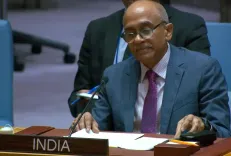
India-Canada ties reset: Piyush Goyal leads 100-member trade delegation to Ottawa

Synopsis
Piyush Goyal's arrival in Canada with over 100 business leaders is more than a trade mission — it is the most concrete signal yet that India-Canada ties have survived their worst diplomatic rupture in decades. With a $50 billion trade target by 2031 and CEPA back on the table, both governments appear to have chosen commerce over confrontation.
Key Takeaways
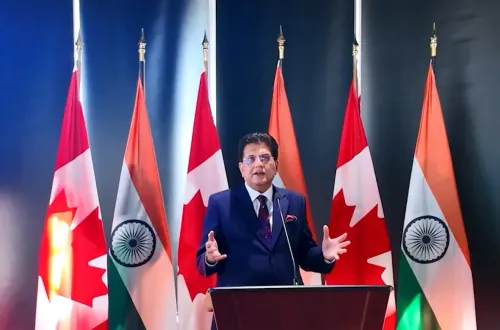
Union Minister Piyush Goyal is visiting Canada with a delegation of more than 100 Indian business leaders — described as the 'biggest delegation ever' from India to Canada.
High Commissioner Dinesh K.
Patnaik says ties have shifted from 'antagonistic' to 'extremely friendly' over the past several months.
Bilateral trade stands at roughly 32 billion Canadian dollars (~ 25 billion US dollars ); target is 50 billion US dollars by 2030–31 .
Goyal's visit aims to accelerate CEPA negotiations and signal the relationship has returned to normal.
Security agencies on both sides have resumed dialogue; Canada, under PM Mark Carney , is reportedly working to marginalise pro-Khalistan extremist networks.
India-Canada ties broke down in 2023 after Justin Trudeau alleged Indian involvement in the killing of Hardeep Singh Nijjar in British Columbia — a charge India rejected.
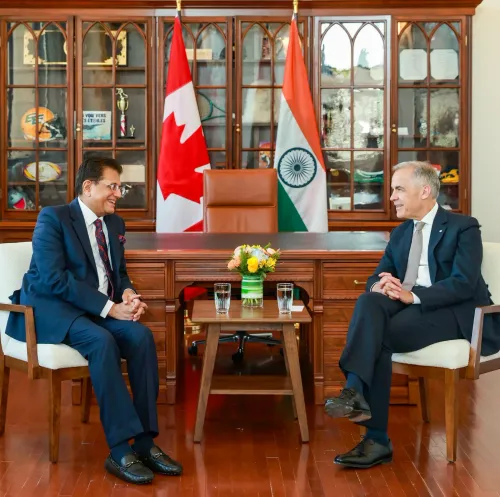
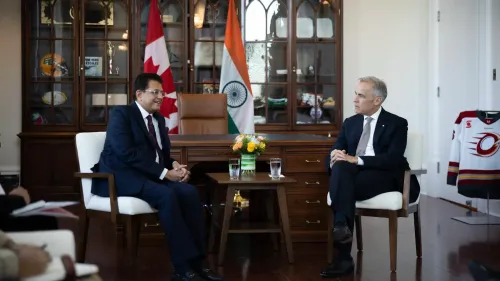
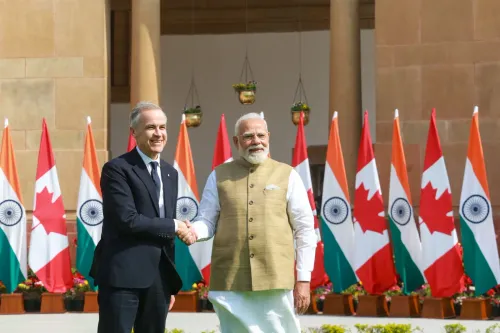
India and Canada have moved from a period of sharp diplomatic friction to what India's High Commissioner to Canada, Dinesh K. Patnaik, describes as an 'extremely friendly' phase, with security agencies, political leadership and business communities now actively engaged. The reset is being underscored by a landmark visit of Union Commerce and Industry Minister Piyush Goyal to Canada, accompanied by a delegation of more than 100 Indian business leaders — described by Patnaik as the 'biggest delegation ever' from India to that country.
A Visit That Signals a New Chapter
Patnaik, speaking ahead of Goyal's arrival, called the visit 'the beginning of a new phase' in bilateral ties. 'The very fact that this meeting is taking place is the success of the story,' he said. 'Even one year back one wouldn't have imagined an Indian minister coming with a hundred plus delegation to Canada.'
The delegation is scheduled to hold meetings with Canadian industry groups, pension funds, banks, logistics companies and diaspora leaders. The primary objective, according to the High Commissioner, is to 'ramp up the economic and commercial relationship very high' and give fresh momentum to the proposed Comprehensive Economic Partnership Agreement (CEPA).
Trade Targets and Economic Ambitions
Bilateral trade between India and Canada currently stands at approximately 32 billion Canadian dollars (nearly 25 billion US dollars). Both governments are aiming to more than double that figure, with Patnaik citing a target of around 50 billion US dollars by 2030 or 2031.
Key sectors identified for deeper cooperation include energy, critical minerals, fertilisers, AgriFood, artificial intelligence, quantum research and defence. Canada is also home to one of the world's largest Indian diaspora communities, making people-to-people ties a central pillar of the relationship.
Security Dialogue and Extremism
Patnaik said both governments had 'put aside the problems of the past' and restored cooperation across sectors, particularly on security. 'The national security advisors had come and gone. They have had discussions. The agencies are talking to each other. The police forces are talking, the investigating agencies are talking,' he said.
On the issue of pro-Khalistan extremist networks, the envoy said Canada had begun treating it as a domestic challenge. He credited the administration of Prime Minister Mark Carney with helping marginalise such elements. 'They're making money out of it. It became a thing, which is more of an economic activity than an ideological activity,' Patnaik said, citing 'gun running, drug smuggling, people trafficking, extortion' and organised crime.
Immigration: Reassurance for Indian Nationals
Patnaik acknowledged that recent Canadian immigration policy changes had affected many Indians, but offered reassurance. 'Indians need not worry,' he said. 'People here have a good opinion of them.' He attributed the disruptions to systemic misuse, saying Canada was working to 'get the benefit of good immigration without allowing the bad immigration to come in.'
Background: How Ties Unravelled and Recovered
India-Canada relations deteriorated sharply in 2023 after former Canadian Prime Minister Justin Trudeau alleged potential Indian government involvement in the killing of Khalistani separatist Hardeep Singh Nijjar in British Columbia. India rejected the allegations as 'absurd' and accused Ottawa of providing political space to extremist and anti-India elements. The diplomatic fallout included the expulsion of diplomats and a near-freeze on high-level engagement.
In recent months, both countries have moved to stabilise ties through diplomatic outreach and renewed security dialogue. Goyal's visit — the first by a senior Indian minister in years — is being seen as the clearest signal yet that the relationship has turned a corner.
Point of View
India is sending its largest-ever business delegation to Ottawa. The Carney factor matters here: unlike Trudeau, the new Canadian prime minister appears to have deprioritised the domestic political calculus that gave Khalistan-linked groups outsized influence. But the structural issues — Canadian immigration misuse, organised crime networks, and the unresolved Nijjar investigation — have not disappeared. A $50 billion trade target is achievable only if the political goodwill survives the next electoral cycle in both countries. The real test of this 'new phase' will come when the next friction point arrives, and whether the institutional channels now being rebuilt are strong enough to absorb it.
NationPress
19 Sept 2026
Frequently Asked Questions
Why is Piyush Goyal visiting Canada in 2025?
Union Commerce and Industry Minister Piyush Goyal is visiting Canada to accelerate bilateral economic engagement, push forward CEPA negotiations, and signal the normalisation of India-Canada relations. He is accompanied by a delegation of more than 100 Indian business leaders for meetings with Canadian industry, pension funds and diaspora groups.
What is the current state of India-Canada relations?
India-Canada ties have moved from a period of sharp diplomatic friction to a significantly warmer phase, according to India's High Commissioner Dinesh K. Patnaik. Security agencies, national security advisors and police forces on both sides have resumed dialogue, and high-level political engagement has been restored.
What caused the breakdown in India-Canada relations in 2023?
Relations deteriorated sharply in 2023 after former Canadian Prime Minister Justin Trudeau alleged potential Indian government involvement in the killing of Khalistani separatist Hardeep Singh Nijjar in British Columbia. India rejected the allegations as 'absurd' and accused Canada of sheltering anti-India extremist elements, leading to a diplomatic standoff.
What is the India-Canada trade target and which sectors are in focus?
Both countries are aiming to grow bilateral trade from the current roughly 25 billion US dollars to around 50 billion US dollars by 2030 or 2031. Key sectors include energy, critical minerals, fertilisers, AgriFood, artificial intelligence, quantum research and defence cooperation.
How are Indians in Canada affected by the immigration policy changes?
Recent Canadian immigration policy tightening has affected many Indian nationals, but High Commissioner Patnaik has offered reassurance, saying Canadians hold a positive view of Indians. He attributed the disruptions to systemic misuse of immigration channels and said Canada is working to reform the system while retaining the benefits of skilled migration.