Greece 24-hour strike disrupts transport, flights nationwide
Synopsis
ADEDY led a 24-hour nationwide strike in Greece that halted ferries, cut metro services and forced Aegean and SKY Express cancellations after staff at 15 airports walked out. Unions want restored 13th and 14th salaries, rent controls and price caps, drawing teachers, hospitals and private trades into a cost-of-living revolt.
Key Takeaways
ADEDY and allied unions staged a 24-hour nationwide strike in Greece on Wednesday, 25 November .
Metro, electric railway and tram services in Athens ran on sharply reduced schedules; ferries stayed docked nationwide.
Flight information staff at 15 regional airports walked out, prompting Aegean Airlines and SKY Express to cancel numerous flights.
Andreas Kargopoulos of OLME said thousands of teachers joined over poverty-level wages, unsafe school infrastructure and staff shortages.
Unions demanded restoration of the 13th and 14th bonus salaries, lower energy tariffs, VAT cuts, price caps and strict rent controls.
Private-sector unions in construction, accountancy and mining also took part in solidarity.
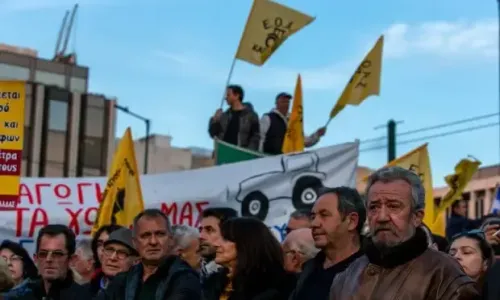
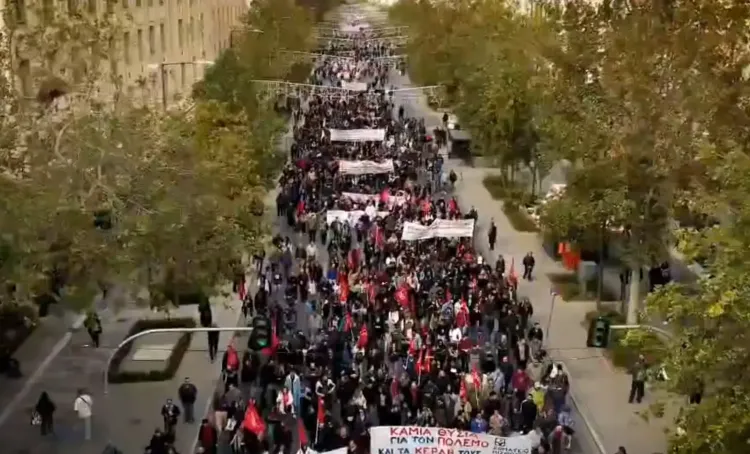
A 24-hour nationwide strike called by Greece's largest public-sector union, ADEDY, together with dozens of labour centres and trade unions, severely disrupted transport networks and essential public services across Greece on Wednesday, 25 November. Demonstrators marched towards the parliament building in Athens carrying banners and chanting slogans to demand higher wages and increased funding for pensions, healthcare and education.
Transport networks grind down
Public transport in the capital was heavily affected, with metro, electric railway and tram services operating on sharply reduced schedules. Maritime travel ground to a halt as ferries remained docked at ports across the nation, cutting a vital link for island communities as well as mainland travellers.
Air travel also suffered after flight information personnel at 15 regional airports joined the walkout, forcing domestic carriers Aegean Airlines and SKY Express to cancel numerous flights. The combination of grounded ferries and thinned airport operations concentrated disruption in the services households and businesses rely on daily.
Schools, hospitals and cities join the walkout
Parallel demonstrations were held in dozens of cities nationwide, affecting operations at public schools, state hospitals and various municipal departments. Andreas Kargopoulos, president of the Federation of Secondary Education State School Teachers (OLME), said thousands of educators had joined the strike to protest poverty-level wages, unsafe and unsuitable school infrastructure, and acute staff shortages.
Private-sector unions representing construction workers, accountants and miners, among several other industries, also took part in solidarity. The spread of participation underscored how cost-of-living pressure has cut across both public employment and private trades, rather than remaining a civil-service dispute alone.
What the unions are demanding
The protesting unions are pressing for substantial pay hikes and the restoration of the 13th and 14th annual bonus salaries for civil servants, which were abolished under earlier austerity measures. Their list also includes lower electricity and fuel tariffs, price caps on essential commodities, reduced value-added tax on basic goods, and urgent state intervention to ease the housing crisis, including strict rent controls.
In an official statement, ADEDY called upon the government to implement policies capable of effectively addressing Greece's pressing economic, labour and social challenges. Union leaders framed the walkout as a response to accumulated strain on household budgets, not a one-day protest over a single workplace grievance.
Why the strike matters
This comes amid lingering public discontent over living costs years after Greece's sovereign-debt crisis and the austerity programmes that followed. The 13th and 14th month salaries — extra annual payments that once formed a core part of public-sector compensation — remain a potent political symbol of those cuts. Notably, teachers, hospital staff, municipal workers, ferry crews and airport personnel joining a single 24-hour action meant the disruption landed on schools, clinics, ports and the skies at once.
The housing demand, including calls for strict rent controls, points to a second-order pressure: restoring pay alone may not offset rising rents and energy bills if prices stay elevated. Unions argue that poverty-level wages and staff shortages already undermine classrooms and other public services. Any government response will be measured against whether it addresses wages, bonuses, tariffs and housing together rather than treating the strike as a one-day inconvenience.
What happens next
The action was scheduled as a 24-hour strike, so services were expected to resume after the walkout window. Travellers, patients and parents were among those immediately affected; civil servants and allied private-sector workers form the core constituency behind the demands. Whether Athens opens talks on extra-month salaries, energy tariffs and rent will determine if this remains a one-day shutdown or a template for further industrial action.
Further union statements and any official government response will be closely watched in the coming days, particularly on pay restoration and price relief for essential goods.
Point of View
And treating it as nostalgia underestimates how those extra months still define household arithmetic. The more revealing signal is private-sector solidarity — construction, mining, accountancy — which suggests the squeeze is not confined to the civil service. Without a credible path on rents and energy, one-day strikes will keep returning as the default language of discontent.
NationPress
25 Nov 2026
Frequently Asked Questions
What is the Greece nationwide strike about?
It is a 24-hour nationwide walkout on Wednesday, 25 November, led by Greece's largest public-sector union ADEDY and dozens of allied labour centres. Unions are demanding higher wages, restored 13th and 14th bonus salaries, cheaper energy, price caps and action on the housing crisis.
Which services were affected by the Greece strike?
Metro, electric railway and tram services in Athens ran on reduced schedules, ferries remained docked nationwide, and numerous domestic flights were cancelled. Public schools, state hospitals and municipal departments were also disrupted, with parallel demonstrations in dozens of cities.
Why were flights cancelled in Greece during the strike?
Flight information personnel at 15 regional airports joined the walkout, forcing Aegean Airlines and SKY Express to cancel numerous flights. Combined with halted ferry services, the action hit both air and sea travel on the same day.
What are ADEDY and other unions demanding from the government?
They want substantial pay hikes, restoration of the 13th and 14th annual bonus salaries abolished under earlier austerity, lower electricity and fuel tariffs, price caps, reduced VAT on basic goods, and strict rent controls. ADEDY has called on the government to address Greece's economic, labour and social challenges.
Why did Greek teachers join the 24-hour strike?
OLME president Andreas Kargopoulos said thousands of educators joined to protest poverty-level wages, unsafe and unsuitable school infrastructure, and acute staff shortages. Teacher participation added to disruption at public schools alongside hospital and municipal walkouts.