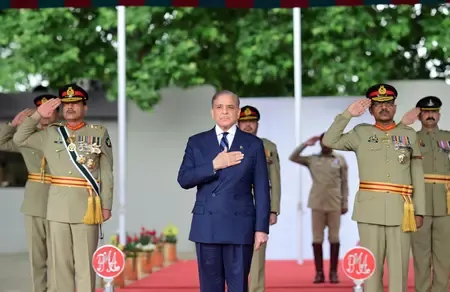
Asim Munir's expanded powers fuel Pakistan army impunity: Report

Synopsis
Pakistan's military now holds powers rivalling the eras of direct army rule, without staging a coup. In nine months, two laws placed all three services under Field Marshal Asim Munir. A new report warns this impunity is already visible, from PoK crackdowns to Kabul strikes that reportedly killed over 250 civilians.
Key Takeaways
A 9DASHLINE report says Field Marshal Asim Munir's expanded powers let Pakistan's military act with impunity.
The 27th Amendment , approved last November, created the post of Chief of Defence Forces , now held by Munir.
The Defence Forces of Pakistan Act , passed in August amid an opposition boycott, gave the CDF command over all three services.
Security forces in PoK have used violent crackdowns against a largely peaceful rights movement, the report said.
Pakistani air strikes on a Kabul rehab centre earlier this year reportedly killed more than 250 civilians ; Amnesty International called it a war crime.
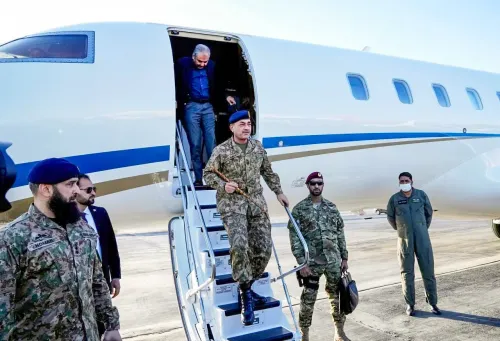
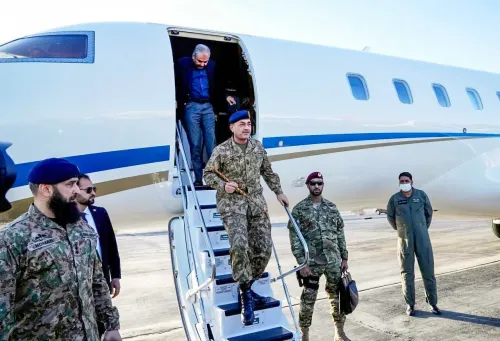
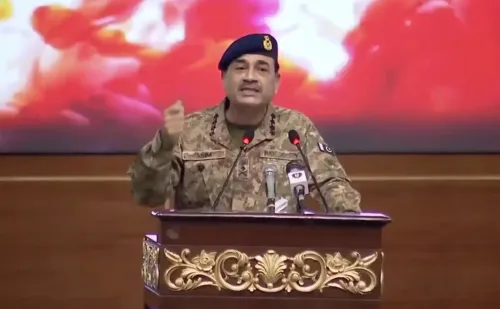
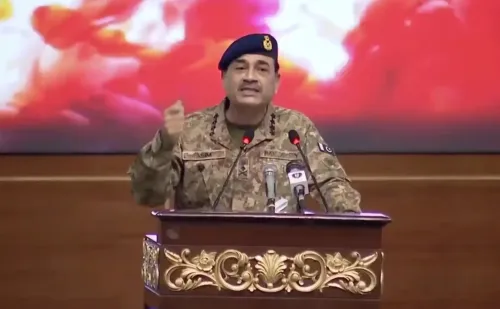
The sweeping new powers handed to Pakistan's Field Marshal Asim Munir have widened the military's ability to act with impunity, according to a report published in 9DASHLINE. The report warns that this concentration of authority poses serious risks to domestic political opponents, protest movements and neighbouring countries, including Afghanistan.
It argues that Pakistan's military has now consolidated powers comparable to those it held during periods of direct military rule. This comes even though no formal coup has taken place.
How the Military's Powers Expanded
The report describes a rapid sequence of legal changes under the ruling Pakistan Muslim League-Nawaz (PML-N) government. It notes that Pakistan has a history of military coups dating back to the 1950s. However, it says the current dominance differs from the circumstances surrounding the country's three major coups.
“In the space of just nine months, Pakistan’s ruling Pakistan Muslim League–Nawaz (PML-N) government has overseen one of the most sweeping expansions of military power in the country’s recent history,” the report stated.
According to the report, Pakistan's parliament approved the 27th Amendment to the constitution last November. The amendment created the office of Chief of Defence Forces (CDF), which Munir now holds. The post carries significant influence over the country's military command structure.
In August, the government passed the Defence Forces of Pakistan Act. The law gave the CDF operational command and control over all three branches of the military. It also made Munir the principal military adviser to Prime Minister Shehbaz Sharif.
The report noted that the legislation “passed through both houses of Pakistan’s parliament at ease, amid a boycott from the opposition,” despite widespread concern about the erosion of civilian oversight.
Risks to Dissent at Home
The report warned that the military's new powers could further destabilise Pakistan. It said the country could become more dangerous for human rights activists and government opponents. It added that greater suppression of dissent could aggravate existing resentment and deepen grievances among groups already at odds with the state.
In Pakistan-occupied Kashmir (PoK), security forces have already carried out violent crackdowns, according to the report. The targets were a largely peaceful grassroots movement seeking greater economic and political rights, along with electoral reforms. The report said weaker civilian oversight and institutional checks could further empower the security establishment to crush such movements by force.
Cross-Border Consequences in Afghanistan
The report said the effects of this impunity are equally visible beyond Pakistan's borders. Earlier this year, Pakistani air strikes on Afghanistan reportedly killed more than 250 civilians at a drug rehabilitation centre in Kabul. Organisations such as Amnesty International described the attack as a war crime.
Notably, according to the report, neither the Pakistani military nor Munir has been held accountable for the strike.
“By stripping away the remaining constraints that could rein in the military, Pakistan’s constitutional changes risk increasing the chances that such actions will reoccur. This danger is already apparent,” the report said.
It added that Pakistan carried out further air strikes on Afghanistan this month, placing more strain on already fraught relations with Kabul.
What Lies Ahead
The report cautioned that “a diplomatic off-ramp remains elusive, and each escalation increases the risk that Pakistan itself will face retaliatory strikes from the Taliban.”
With civilian checks weakened and cross-border tensions rising, regional capitals are likely to watch closely how Rawalpindi uses its newly codified authority in the months ahead.
Point of View
With parliament as a willing instrument. For India, this matters more than any headline from Islamabad. Munir now commands all three services and advises the prime minister directly, so decisions on the LoC and Afghanistan rest with one uniformed office. The Kabul strikes, with no accountability for a reported 250-plus civilian deaths, show what that office does when no one can stop it.
NationPress
28 Nov 2026
Frequently Asked Questions
What new powers has Asim Munir received?
As Chief of Defence Forces, Munir now has operational command and control over all three branches of Pakistan's military. He is also the principal military adviser to Prime Minister Shehbaz Sharif under the Defence Forces of Pakistan Act.
What is Pakistan's 27th Amendment?
The 27th Amendment is a constitutional change approved by Pakistan's parliament last November. It created the office of Chief of Defence Forces, which carries significant influence over the military command structure.
Why does the report say the Pakistani military can act with impunity?
The report argues that weakened civilian oversight and institutional checks have removed constraints on the military. It cites crackdowns in PoK and deadly air strikes in Afghanistan for which no one has been held accountable.
What happened in the Pakistani air strike on Kabul?
Pakistani air strikes earlier this year reportedly killed more than 250 civilians at a drug rehabilitation centre in Kabul. Amnesty International described the attack as a war crime.
How could this affect Pakistan-Afghanistan relations?
The report warns that further Pakistani strikes this month have strained ties with Kabul. It says each escalation raises the risk of retaliatory strikes from the Taliban, with no diplomatic off-ramp in sight.