Asim Munir's power grab: Pakistan drifting into institutionalised military rule
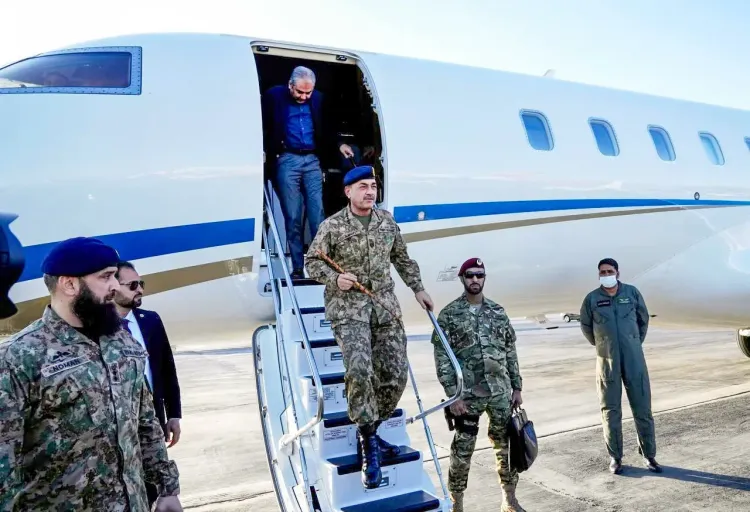
Synopsis
Pakistan is not experiencing a coup — it is experiencing something potentially more durable. The Defence Forces of Pakistan Act, 2026, passed amid an opposition walkout, legally embeds sweeping military authority in a single office held by Asim Munir, who is simultaneously Army Chief, CDF, and Field Marshal. A MEMRI report warns this is institutionalised authoritarianism, not a temporary takeover.
Key Takeaways
A MEMRI report warns Pakistan is moving toward institutionalised military rule under Army Chief General Asim Munir .
The Defence Forces of Pakistan Act, 2026 , passed on 20 August 2026 , grants the Chief of Defence Forces sweeping operational and administrative powers over all three armed services.
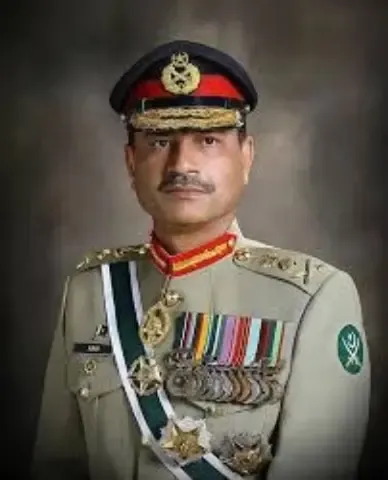
Munir simultaneously holds the offices of Chief of Army Staff and Chief of Defence Forces , and carries the five-star Field Marshal rank.
Human Rights Watch and Freedom House have documented intensified repression of journalists, political opponents and civil society in 2025–2026 .
Seven exiled journalists were sentenced in absentia to life imprisonment; Freedom House flagged a Pakistani transnational repression campaign targeting dissidents abroad as of March 2026 .
Amnesty International led a joint appeal in August 2026 documenting new curbs on foreign journalists and prolonged internet shutdowns in Pakistan-occupied Kashmir .
Pakistan has experienced direct military coups before, but a new report warns that under Army Chief General Asim Munir, the country is entering a qualitatively different phase — one where military dominance is being woven into the constitutional, judicial, economic and administrative fabric of the state rather than imposed through an outright takeover.
The assessment, published by the US-based Middle East Media Research Institute (MEMRI), argues that the shift marks a more durable and harder-to-reverse form of authoritarian entrenchment than Pakistan's previous periods of martial law.
The Defence Forces Act: A Legal Architecture for Military Supremacy
The Defence Forces of Pakistan Act, 2026, passed on 20 August 2026 amid an opposition walkout in parliament, is described by the MEMRI report as 'perhaps the most decisive step yet' in cementing military supremacy under Munir.
According to the report, the law grants the Chief of Defence Forces (CDF) operational command and control over all of Pakistan's armed forces, extending authority over 'organisation, administration, readiness, tri-service operations and personnel matters, including powers relating to the retirement, discharge, release and retention of members of the Army, Navy, and Air Force.'
Critically, Munir simultaneously holds the offices of Chief of Army Staff and Chief of Defence Forces, concentrating authority over all three services in a single individual. He also holds the five-star rank of Field Marshal, enjoys an extended tenure, and operates in an environment where civilian oversight of the military has, according to the report, progressively weakened.
Shrinking Civic Space and Intensified Repression
The MEMRI report argues that the authoritarian trajectory becomes unmistakable when expanding institutional reach is set against the simultaneous contraction of civic freedoms. Citing a Human Rights Watch report on 2025, it documented 'arbitrary detention, restrictions on media coverage, disruption of communications and the prosecution of civilians through military courts.'
Freedom House's 2026 findings, also cited in the report, noted that 'the military intimidates the media and enjoys substantial impunity,' while Pakistan's online environment is classified as 'Not Free' in Freedom House's internet-freedom assessment.
The pressure has reportedly persisted into 2026. An August 2026 joint appeal led by Amnesty International documented mounting restrictions on journalists and lawyers, punitive measures against broadcasters, prolonged internet disruptions in Pakistan-occupied Kashmir, and new curbs on the movement of foreign journalists outside Islamabad, Lahore and Karachi.
Transnational Repression: Dissidents Abroad Under Pressure
The crackdown is not confined to Pakistan's borders, the report warns. Freedom House flagged in March 2026 an intensifying Pakistani campaign of transnational repression, particularly targeting exiled journalists and dissidents through legal harassment.
According to the report, seven exiled journalists and commentators had been sentenced in absentia to life imprisonment. Meanwhile, British authorities were reportedly treating physical intimidation against Pakistani dissidents on UK soil as possible transnational repression — a significant diplomatic signal.
What This Means for Pakistan's Democratic Future
Unlike classic military coups, the current model embeds military authority within legal and constitutional structures, making it significantly harder to reverse through elections or judicial intervention alone. Analysts note that this mirrors patterns seen in other hybrid regimes where the armed forces retain decisive veto power over civilian governments without formally dissolving them.
With the Defence Forces of Pakistan Act, 2026 now in force and civilian checks weakening, the trajectory — according to the MEMRI report — points toward a consolidation of power that could define Pakistan's political landscape for years to come.
Point of View
The military has made its dominance far harder to challenge — in court, at the ballot box, or through international pressure. The Defence Forces of Pakistan Act, 2026 is not just an administrative reform; it is the codification of a veto-proof power structure. The simultaneous silencing of exiled critics through transnational repression suggests the military is not merely consolidating domestically but actively managing its international narrative. The question is not whether Pakistan has a democratic government — it technically does — but whether that government retains any meaningful autonomy.
NationPress
14 Oct 2026
Frequently Asked Questions
What is the Defence Forces of Pakistan Act, 2026?
The Defence Forces of Pakistan Act, 2026 is a law passed on 20 August 2026 that grants the Chief of Defence Forces (CDF) operational command, administrative authority, and personnel powers over Pakistan's Army, Navy, and Air Force. It was passed amid an opposition walkout and is seen by analysts as a key step in institutionalising military dominance under General Asim Munir.
How is Asim Munir consolidating power in Pakistan?
Asim Munir simultaneously holds the offices of Chief of Army Staff and Chief of Defence Forces, carries the five-star rank of Field Marshal, and benefits from an extended tenure. The 2026 Act legally concentrates authority over all three armed services in this single office, while civilian oversight mechanisms have reportedly weakened.
What does 'institutionalised military rule' mean in Pakistan's context?
Unlike a classic coup, institutionalised military rule embeds military authority within constitutional, judicial, and administrative structures, making it harder to reverse through elections or courts alone. The MEMRI report argues Pakistan is transitioning from periodic military takeovers to a permanent hybrid system where the armed forces hold structural veto power over civilian governments.
What human rights concerns have been raised about Pakistan in 2025–2026?
Human Rights Watch documented arbitrary detention, media restrictions, communication disruptions, and prosecution of civilians through military courts in 2025. Freedom House classified Pakistan's online environment as 'Not Free' and, in March 2026, warned of an intensifying transnational repression campaign targeting exiled journalists and dissidents, including seven sentenced in absentia to life imprisonment.
What is transnational repression and how does it apply to Pakistan?
Transnational repression refers to a government's efforts to silence critics living abroad through legal harassment, intimidation, or physical threats. Freedom House flagged in March 2026 that Pakistan was intensifying such a campaign, with British authorities reportedly treating physical intimidation of Pakistani dissidents in the UK as possible transnational repression.