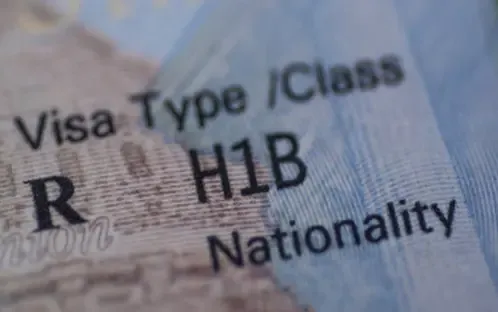
H-1B Fraud Crackdown Act: Penalties up to $250,000, 10-year bans proposed
Synopsis
A Republican-backed bill in the US House could transform the economics of H-1B fraud: fines jumping 50-fold to $250,000 and employer bans stretching to a decade. With nearly 60% of all national H-1B fraud probes reportedly focused in a single Texas region, the legislation is as much a regional accountability push as it is a national policy overhaul — and it lands squarely on industries heavily reliant on skilled visa workers.
Key Takeaways
Representative Beth Van Duyne of Texas introduced the H-1B Visa Fraud Crackdown Act (H.R.
10643) on 6 October 2025 .
Maximum civil penalty for wilful H-1B violations would rise from $5,000 to $100,000 ; penalties for worker displacement violations would jump to $250,000 .
Employer sponsorship bans would increase to a minimum of 5 years for serious violations and 10 years where US workers were displaced.
Immigration document fraud fines would increase to $1,000–$10,000 per document, and up to $20,000–$50,000 for repeat violations.
According to Van Duyne's office, nearly 60% of nationwide H-1B fraud investigations were concentrated in North Texas as of June.
The bill must pass both the US House and Senate and be signed by President Donald Trump before taking effect.
A Republican lawmaker in the United States has introduced a bill that would dramatically raise penalties for H-1B visa fraud, with civil fines for the most serious violations jumping to as much as $250,000 and employer sponsorship bans extending to a minimum of 10 years. The legislation, if enacted, would represent the stiffest crackdown on H-1B abuse in the programme's history.
What the H-1B Visa Fraud Crackdown Act Proposes
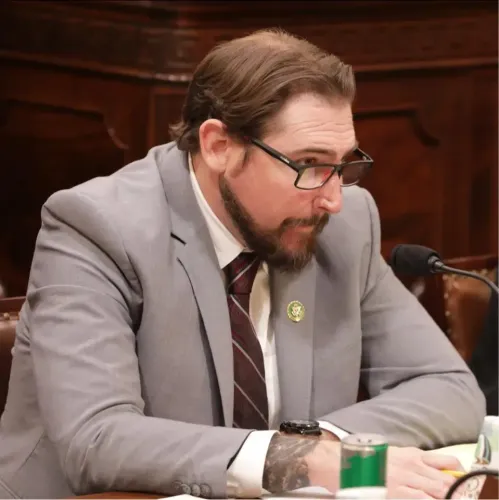
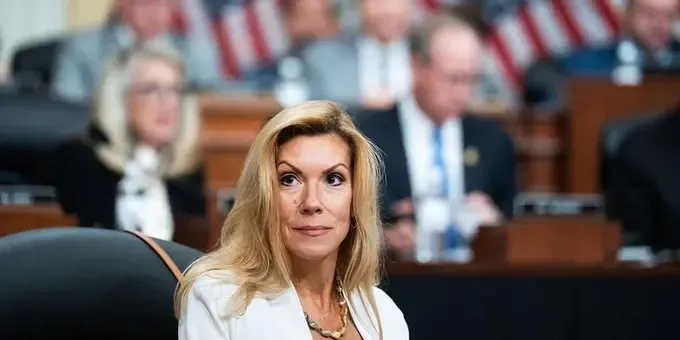
Representative Beth Van Duyne of Texas introduced H.R. 10643, titled the H-1B Visa Fraud Crackdown Act, on Monday, 6 October 2025. The two-page bill is co-sponsored by Republican Representatives Brian Babin, Pat Fallon, Brandon Gill, Keith Self, and Pete Sessions, all from Texas.
Under the current framework, the maximum civil penalty for wilful H-1B violations — which can include misrepresenting the nature of a job or underpaying a visa holder — stands at just $5,000. The bill would raise that ceiling to $100,000. For violations that also involve the deliberate displacement of American workers, the maximum civil penalty would surge from $35,000 to $250,000.
'When a business can lie to the government and push American workers aside for cheaper labor, and the worst it faces is a $5,000 fine, many view that as the cost of doing business,' Van Duyne said. 'The H-1B Visa Fraud Crackdown Act changes the penalties. American jobs should go to American workers, and fraudsters should face real accountability for their actions.'
Longer Sponsorship Bans for Violating Employers
Beyond financial penalties, the legislation would significantly lengthen the periods during which employers found responsible for serious wilful violations are barred from sponsoring new H-1B workers. The minimum ban would rise from two years to five years for serious wilful violations. Where those violations also involve displacement of US workers, the minimum ban would escalate from three years to 10 years.
Sharply Higher Fines for Immigration Document Fraud
The bill separately targets immigration document fraud. Penalties currently ranging from $250 to $2,000 per document would increase to between $1,000 and $10,000. For repeat violations following a prior order, fines would jump from the existing $2,000–$5,000 range to between $20,000 and $50,000 per document.
North Texas Fraud Allegations Behind the Push
Van Duyne linked the legislation directly to a concentrated pattern of alleged H-1B fraud in North Texas. According to her office, Homeland Security Secretary Mullin confirmed that as of June, nearly 60 per cent of all H-1B employer fraud investigations nationwide were concentrated in the North Texas region — a striking geographic skew that underscores the scale of the alleged problem.
Van Duyne's office further stated that Labor Department Inspector General D'Esposito visited North Texas in August and found nearly 500 instances of likely H-1B visa fraud within a single building, with no one answering doors at addresses where H-1B applications had been approved. Notably, those figures were presented by Van Duyne's office and were not contained in the text of the legislation itself.
'American workers should not lose opportunities because an employer is willing to break the law to get cheaper labor,' Van Duyne added. 'If a business decides it makes more economic sense to break the law and kick American workers to the curb, they should feel major pain for undercutting our economy and our hardworking employees.'
What Happens Next
The H-1B Visa Fraud Crackdown Act remains proposed legislation and has not become law. For the higher penalties to take effect, the bill would need to clear both chambers of the US Congress — the House of Representatives and the Senate — before being signed by President Donald Trump. This comes amid a broader political climate in which scrutiny of the H-1B programme has intensified, with enforcement activity and legislative proposals running in parallel. The bill's fate in a divided legislative calendar will be closely watched by American industry groups, immigration advocates, and Indian IT professionals who constitute a significant share of H-1B visa holders.
Point of View
But its real significance lies in what it reveals about enforcement geography — if 60% of national H-1B fraud probes are truly concentrated in a single Texas corridor, the problem is less systemic and more structural in specific labour-market pockets. Raising penalty ceilings matters only if the underlying detection and prosecution infrastructure scales up to match; past H-1B enforcement waves have often stalled at investigation rather than conviction. For India's large IT services sector — whose workforce makes disproportionate use of H-1B visas — the bill's passage would not merely raise compliance costs but could chill legitimate hiring pipelines if employers over-correct to avoid liability. The political optics, however, are clear: in the current US legislative climate, being on record against H-1B fraud is a near-zero-risk vote, which may explain the rapid co-sponsorship from five Texas Republicans.
NationPress
6 Oct 2026
Frequently Asked Questions
What is the H-1B Visa Fraud Crackdown Act?
The H-1B Visa Fraud Crackdown Act (H.R. 10643) is a proposed US law introduced by Representative Beth Van Duyne of Texas on 6 October 2025. It seeks to dramatically raise civil penalties for H-1B visa violations — up to $250,000 in the most serious cases — and extend employer sponsorship bans to as long as 10 years.
How much would H-1B violation fines increase under the new bill?
For serious wilful violations, the maximum civil penalty would rise from $5,000 to $100,000. Where violations also involve deliberate displacement of American workers, the cap would jump from $35,000 to $250,000. Document fraud penalties would separately increase to between $1,000 and $10,000 per document, and up to $50,000 per document for repeat offenders.
Why is North Texas specifically mentioned in connection with H-1B fraud?
According to Van Duyne's office, Homeland Security Secretary Mullin confirmed that as of June, nearly 60% of all H-1B employer fraud investigations nationwide were concentrated in North Texas. A Labor Department Inspector General visit in August reportedly found nearly 500 instances of likely H-1B fraud in a single building in the region.
Who co-sponsored the H-1B Visa Fraud Crackdown Act?
The bill is co-sponsored by five Republican representatives from Texas: Brian Babin, Pat Fallon, Brandon Gill, Keith Self, and Pete Sessions. All co-sponsors, like Van Duyne, represent Texas districts.
Has the H-1B Fraud Crackdown Act become law yet?
No. The bill is currently proposed legislation and has not become law. It must pass both the US House of Representatives and the Senate before being signed by President Donald Trump for the higher penalties to take effect.