Hanwha Aerospace halts Daejeon plant output after blast kills 5
Synopsis
A deadly explosion at Hanwha Aerospace's classified Daejeon plant — which builds Chunmoo rocket launchers and long-range missiles — has killed five workers and forced a partial production halt. The affected lines alone generated US$870 million in revenue last year, putting a spotlight on safety standards inside South Korea's rapidly expanding and globally sought-after defence industry.
Key Takeaways
An explosion at Hanwha Aerospace's Daejeon facility on 2 June 2025 killed five workers and injured two others .
Workers were cleaning propellant powder residue from propulsion-system tooling when the blast occurred.
The plant is a designated secret defence factory producing Chunmoo multiple rocket launchers and L-SAM missiles .
Affected production lines generated 1.32 trillion won (US$870 million) , or 4.94% of Hanwha Aerospace's total revenue of 26.7 trillion won .
DAPA has formed a task force and will provide technical expertise to the joint police-led investigation.
Authorities are examining the ignition source and the presence of flammable materials at the scene.
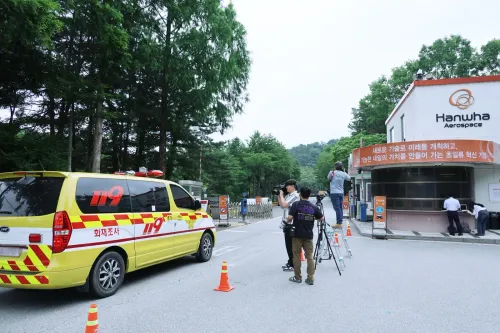
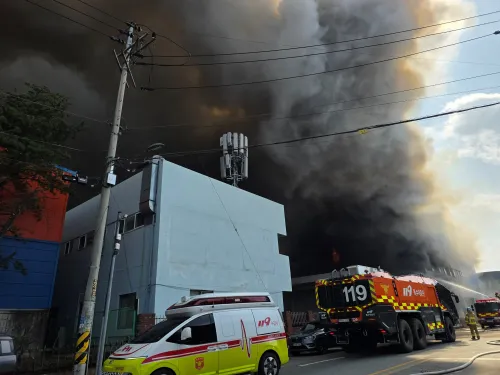
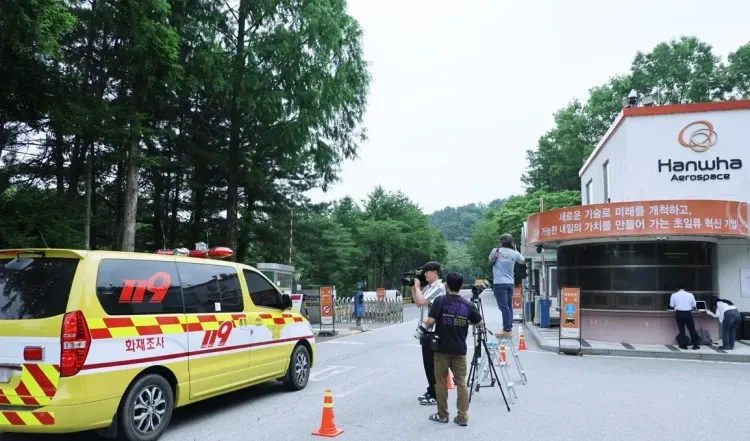
Hanwha Aerospace, a defence affiliate of Hanwha Group, has partially suspended production at its Daejeon facility following a deadly explosion that killed five workers and injured two others on Monday, 2 June 2025. The plant, located approximately 140 kilometres south of Seoul, was ordered to halt operations by South Korean labour authorities under the country's occupational safety laws.
What Triggered the Explosion
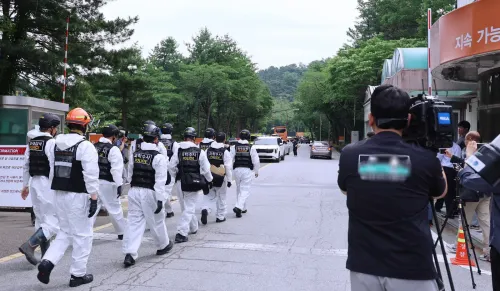
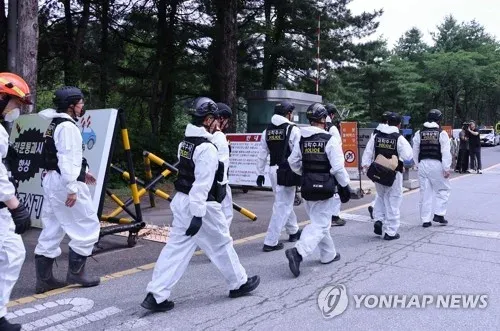
According to Hanwha Aerospace officials, workers were cleaning propellant powder residue from tools used in the production of propulsion systems at the time of the blast. Police have launched a joint investigation to determine the precise cause, with investigators focusing on identifying the source of ignition and examining whether flammable materials were present at the scene.
Strategic Significance of the Daejeon Plant
The Daejeon facility is no ordinary factory — it is designated a secret defence plant under South Korean law and manufactures critical weapons systems, including the Chunmoo multiple rocket launchers and long-range surface-to-air missiles (L-SAM). The affected production lines generated 1.32 trillion won (approximately US$870 million) in revenue last year, representing 4.94 percent of Hanwha Aerospace's total revenue of 26.7 trillion won, according to the company's regulatory filing.
Government Response and Investigation
The Defence Acquisition Program Administration (DAPA) confirmed on Tuesday that it has formed a dedicated task force to manage the situation. DAPA spokesperson Kim Joo-chul said at a press briefing: 'We will support, when necessary, the investigation by utilising our personnel and technical expertise of the Agency for Defence Development and the Defence Agency for Technology and Quality and other specialised institutions in the process of determining the cause of the accident.'
On concerns about potential inspection lapses at high-security defence facilities, Kim stated that the agency has been conducting annual inspections in accordance with relevant laws. The probe will also draw on technical assistance from affiliated defence research bodies.
Wider Implications for South Korea's Defence Industry
The incident raises serious questions about workplace safety protocols at South Korea's classified defence manufacturing sites, particularly those handling explosive propellants. Hanwha Aerospace has emerged as one of the world's fastest-growing arms exporters in recent years, with its artillery and missile systems in high global demand. A prolonged suspension of the Daejeon lines could affect delivery timelines for both domestic and international defence contracts. This is not the first time a propellant-related accident has drawn scrutiny to safety standards in South Korea's defence industrial base, and investigators' findings are expected to carry weight beyond this single incident.
Point of View
Winning contracts across Europe and the Middle East on the strength of rapid delivery and competitive pricing. That growth model depends on sustained output from precisely the kind of high-throughput, propellant-intensive facilities now under scrutiny. If investigators find systemic safety gaps rather than isolated human error, the regulatory fallout could slow production across multiple classified lines at a moment when global demand for Korean weapons systems is at a historic high. The question DAPA must answer is whether annual inspections are adequate for facilities operating at wartime-equivalent production tempos.
NationPress
19 Sept 2026
Frequently Asked Questions
What caused the explosion at Hanwha Aerospace's Daejeon plant?
Workers were cleaning propellant powder residue from tools used in propulsion system production when the explosion occurred on 2 June 2025. Investigators are still working to identify the exact ignition source and determine whether flammable materials contributed to the blast.
How many people were killed or injured in the Daejeon blast?
Five workers were killed and two others were injured in the explosion at the Daejeon facility. Police have launched a joint investigation into the accident.
What weapons does the Daejeon plant produce?
The Daejeon facility is a classified defence factory that manufactures the Chunmoo multiple rocket launcher systems and long-range surface-to-air missiles (L-SAM), among other weapons systems.
How significant is the Daejeon plant to Hanwha Aerospace's revenue?
The affected production lines at Daejeon generated 1.32 trillion won (approximately US$870 million) in revenue last year, accounting for 4.94 percent of Hanwha Aerospace's total revenue of 26.7 trillion won.
What is the South Korean government doing in response to the explosion?
The Defence Acquisition Program Administration (DAPA) has formed a task force to manage the situation and will provide technical expertise from specialised defence bodies to support the investigation. Labour authorities have also ordered a partial halt to operations at the facility under occupational safety laws.