Hormuz Strait mined: 2 tankers explode, IRGC hits US radar in Bahrain
Synopsis
Iran’s IRGC says six tankers hit mines in the Strait of Hormuz over two days, with one supertanker carrying 2 million barrels sinking in the Persian Gulf. In a near-simultaneous escalation, the IRGC struck a US air defence radar base in Bahrain with six drones — calling it the second phase of its retaliatory response. The world’s most critical oil chokepoint is now openly contested.
Key Takeaways
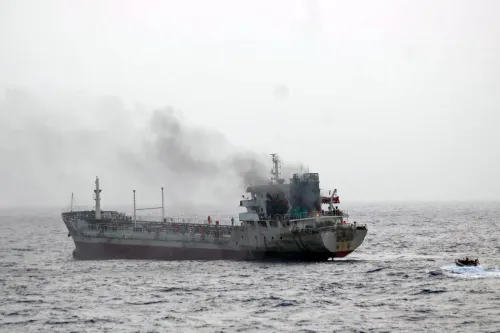
Two oil tankers exploded in the Strait of Hormuz on Monday, 17 November 2026 after hitting naval mines, according to Iran’s IRGC .
A total of six tankers reportedly struck mines across Sunday and Monday combined, per IRGC statements.
A supertanker carrying over 2 million barrels of oil caught fire and sank in the southern Persian Gulf after a Sunday blast.
The IRGC aerospace force struck a US air defence radar station at the Al-Riffa helicopter base in Bahrain using six drones , calling it the second phase of its retaliatory response.
The IRGC has warned oil companies against using the “unauthorised” southern route through Hormuz, which it says has been mined .
All details are drawn from IRGC statements; independent verification had not been confirmed at the time of publication.
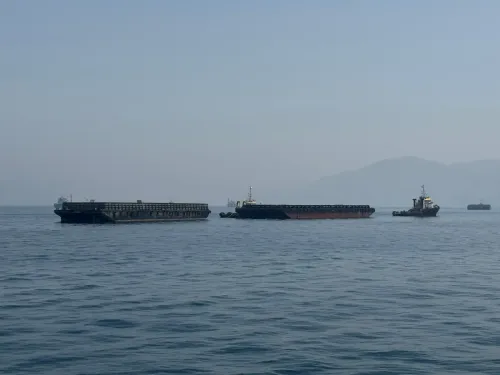
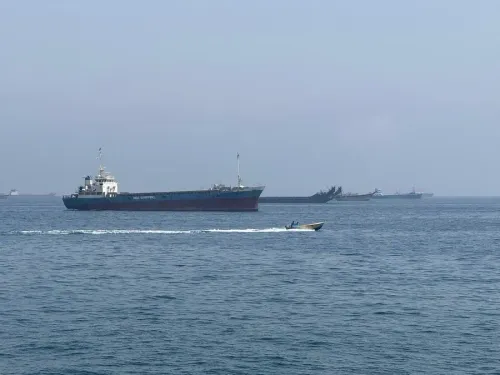
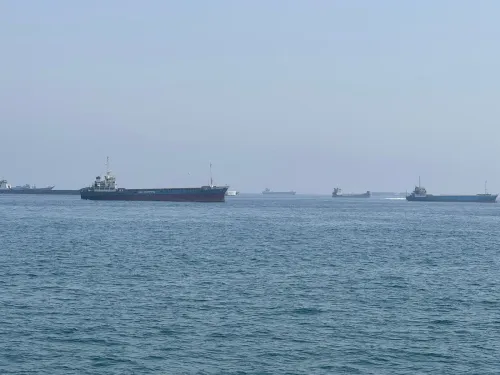
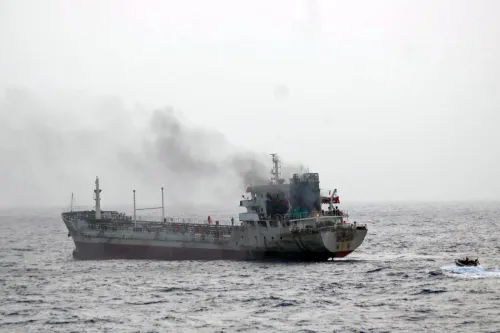
Two oil tankers attempting to pass through the Strait of Hormuz via what Iran's Islamic Revolutionary Guard Corps (IRGC) described as an “unauthorised” southern route exploded and caught fire on Monday, 17 November 2026, after hitting naval mines. The IRGC Navy confirmed the incident in a statement published on its official outlet Sepah News, warning all oil companies against using the mined corridor.
What Happened in the Strait
According to the IRGC Navy, the two tankers were allegedly attempting transit with the support of US fighter aircraft when they struck mines. The IRGC said a total of six tankers had similar experiences across Sunday and Monday combined, indicating a sustained pattern of confrontations in the strategically critical waterway.
On Sunday, two additional “violating” tankers reportedly exploded hours after hitting mines along the same route. One of them — described as a supertanker carrying over 2 million barrels of oil — caught fire after the blast and subsequently sank in the southern waters of the Persian Gulf. Separately, Iran’s conventional military navy also confirmed that two tankers caught fire Sunday and early Monday east of the Strait.
IRGC Drone Strike on US Radar Base in Bahrain
In a parallel escalation, the IRGC said its aerospace force launched a drone attack against a US air defence radar station at the Al-Riffa helicopter base in Bahrain. The strike reportedly involved six drones targeting the radar system and was described by the IRGC as the “second phase” of its “decisive and crushing” retaliatory response to what it characterised as “flagrant aggression” by the US Army against Iran.
The IRGC stated that the United States “has faced complete failure in its plan to smuggle oil in the Strait of Hormuz under the guise of escorting ships,” and accused Washington of attempting to distract global attention with “small and misguided” actions. It warned: “Any aggression by the US enemy will be met with a harsher and more crushing response.”
IRGC’s Official Warning to Shipping
The IRGC Navy issued an explicit warning to oil companies and tanker operators against using the “unauthorised” southern route through the Strait, which it said “has been mined.” The warning signals that Iran regards the southern corridor as a designated restricted zone under its own operational framework, though this claim has no standing under international maritime law.
Notably, the Strait of Hormuz is one of the world’s most critical energy chokepoints, through which roughly 20% of global oil trade passes daily. Any sustained mining or interdiction of the waterway carries the potential to trigger significant disruptions to global crude supplies and energy markets.
Broader Context and Escalation Pattern
This comes amid a wider confrontation between Iran and the United States in the Gulf region. The events described by the IRGC represent a marked escalation, with the tanker incidents and the Bahrain drone strike occurring in close succession. Independent verification of the IRGC’s claims — including casualty figures, the sinking of the supertanker, and the drone strike’s impact — has not been confirmed by third parties at the time of publication. All details here are drawn from IRGC statements as reported.
The US government and its regional allies had not issued a public response at the time this report was filed. The situation in the Strait of Hormuz is rapidly developing, and further escalation cannot be ruled out.
Point of View
A sinking supertanker, and a strike on allied-nation soil. If the IRGC’s account is even partially accurate, the global insurance and shipping calculus for Hormuz transits changes overnight. The deeper question is whether this is Iran testing a new operational doctrine or the opening of a sustained campaign — and Washington’s silence at time of publication makes that harder to read.
NationPress
16 Nov 2026
Frequently Asked Questions
What happened to the oil tankers in the Strait of Hormuz?
According to Iran’s IRGC, two oil tankers attempting to use an “unauthorised” southern route through the Strait of Hormuz exploded and caught fire on Monday after hitting naval mines. A total of six tankers reportedly had similar experiences across Sunday and Monday, with one supertanker carrying over 2 million barrels sinking in the Persian Gulf.
What did the IRGC strike in Bahrain?
The IRGC said its aerospace force attacked a US air defence radar station at the Al-Riffa helicopter base in Bahrain using six drones. It described the strike as the second phase of its retaliatory response to what it called US aggression against Iran.
Why is the Strait of Hormuz so significant for global energy?
The Strait of Hormuz is the world’s most critical oil chokepoint, with roughly 20% of global oil trade passing through it daily. Any sustained mining or blockade of the strait can cause significant disruptions to international crude supply and trigger sharp moves in global energy prices.
Has the IRGC’s account been independently verified?
Independent verification of the IRGC’s claims — including the number of tankers hit, the sinking of the supertanker, and the impact of the Bahrain drone strike — had not been confirmed by third parties at the time of publication. All details are attributed to IRGC statements published on its official outlet Sepah News.
What warning has Iran issued to shipping companies?
The IRGC Navy explicitly warned oil companies and tanker operators against using the “unauthorised” southern corridor through the Strait of Hormuz, stating that the route “has been mined.” The warning carries no standing under international maritime law but represents a direct operational threat to commercial shipping.