Iran IRGC mines disable tankers in Hormuz Strait for 3rd day running
Synopsis
For the third consecutive day, Iran's IRGC has reported oil tankers hitting naval mines in the Strait of Hormuz — the most acute disruption to the world's most critical oil-transit chokepoint since the 1980s tanker war. With over 4 million barrels of oil reportedly disabled in one night alone, and Iran's army chief warning of 'heavier blows' against any aggressor, the crisis is escalating fast with no diplomatic off-ramp in sight.
Key Takeaways
Iran's IRGC navy reported two 'violating' oil tankers hit naval mines and caught fire in the Strait of Hormuz on 14 November 2026 .
This is the third consecutive day of such incidents — similar events were reported on Wednesday and Thursday .
On Wednesday night alone, two supertankers carrying more than 4 million barrels of oil were reportedly disabled.
Iran banned safe passage for vessels affiliated with Israel or the United States from 28 February onwards, following strikes on Iranian territory.
Army Chief General Amir Hatami warned of 'even heavier blows' if Iran faces further aggression.
No independent confirmation of vessel identities or casualties was immediately available.
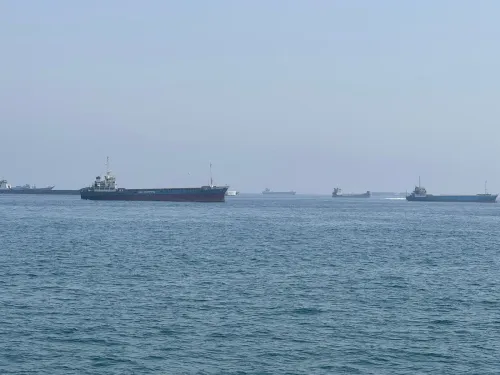
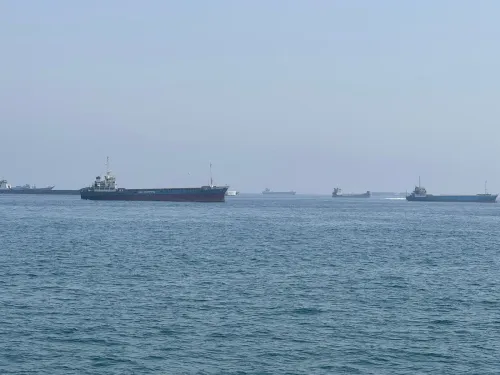
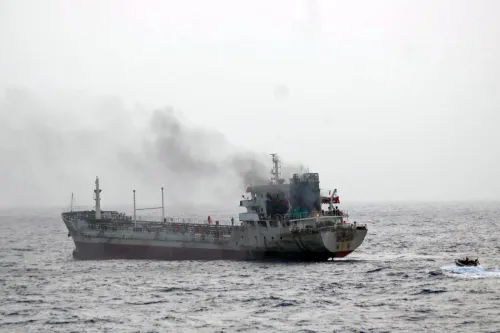
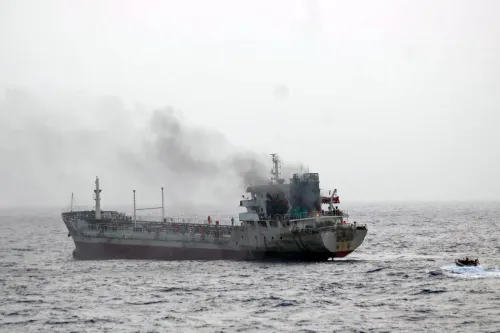
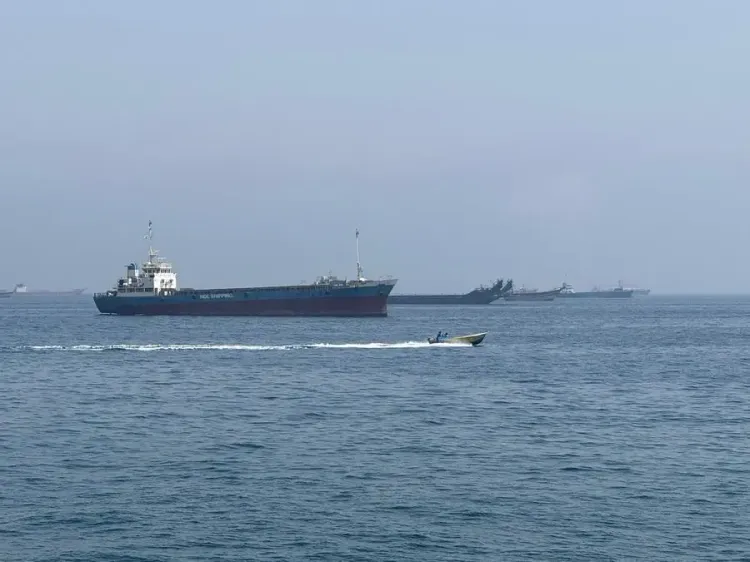
The navy of Iran's Islamic Revolutionary Guard Corps (IRGC) announced on Friday, 14 November 2026 that two more 'violating' oil tankers exploded and caught fire after striking naval mines while attempting to cross the Strait of Hormuz through what it described as an 'unauthorised' route. The incident — the third such episode in as many days — marks a sharp escalation of Iran's maritime enforcement campaign in one of the world's most critical oil-transit chokepoints.
What the IRGC Said
In a statement carried by the IRGC's official outlet Sepah News on Friday night local time, the navy identified one of the stricken vessels as a supertanker and said both ships had switched off their radar and navigation systems before attempting the crossing. The IRGC issued a pointed warning to shipowners and shipping companies globally, stating that the 'same fate' awaits any vessel that tries to transit the strait without prior coordination with its traffic-control centre or in disregard of Iranian regulations.
A Pattern Across Three Consecutive Days
The Friday incident follows two near-identical episodes earlier in the week. On Thursday, the Iranian Army reported that two 'violating' tankers caught fire after entering what it called the 'forbidden and unsafe' region east of the Strait of Hormuz, again after disregarding repeated warnings and turning off radar systems. On Wednesday night, the IRGC navy said two 'violating' supertankers — collectively carrying more than 4 million barrels of oil — were disabled by explosions while crossing the strait despite what it described as 'frequent warnings' that the southern route was 'unauthorised and unsafe.' Three separate mine-strike incidents in roughly 72 hours suggest a sustained enforcement posture rather than isolated events.
Iran's Broader Strategic Posture
Tehran tightened its grip on the Strait of Hormuz on 28 February, barring safe passage to vessels belonging to or affiliated with Israel and the United States following what Iran characterised as joint strikes on its territory. The Strait of Hormuz is the transit corridor for roughly 20% of global seaborne oil, making any sustained disruption of shipping there a potential shock to international energy markets.
Also on Thursday, Chief Commander of Iran's Army General Amir Hatami underscored the armed forces' readiness to counter any potential threat, particularly air defence units. 'If the enemy makes a mistake once again and commits an act of aggression against our country, it will face even heavier blows,' Hatami said, according to the army's official website.
Global Shipping Implications
The successive mine incidents raise serious questions for global shipping operators. Vessels transiting the strait without registering with Iran's traffic-control centre now face demonstrated — not merely threatened — physical risk. Industry watchers note that this is reminiscent of the tanker-war episodes of the 1980s, when shipping insurance premiums in the Gulf spiked sharply. A repeat of that dynamic could raise freight and energy costs at a time when global supply chains remain sensitive to geopolitical shocks. No independent confirmation of vessel identities, nationalities, or casualty figures was immediately available.
Point of View
With no apparent international mechanism to stop it. The ban on Israeli- and US-affiliated vessels, enforced since February, has now escalated into active kinetic action, yet the global diplomatic response has been muted. With the Strait of Hormuz carrying roughly one-fifth of seaborne oil, the question mainstream coverage underplays is not whether this affects energy markets — it already does — but whether the absence of a coordinated shipping-protection response emboldens further escalation.
NationPress
14 Nov 2026
Frequently Asked Questions
What happened in the Strait of Hormuz on 14 November 2026?
Iran's IRGC navy reported that two 'violating' oil tankers exploded and caught fire after striking naval mines while attempting to cross the Strait of Hormuz through what Iran described as an 'unauthorised' route. Both vessels had reportedly switched off their radar and navigation systems before the incident.
How many tanker incidents have occurred this week in the Strait of Hormuz?
There have been three reported mine-strike incidents across Wednesday, Thursday, and Friday — roughly 72 hours. Wednesday's incident alone reportedly disabled two supertankers carrying more than 4 million barrels of oil.
Why is Iran restricting shipping in the Strait of Hormuz?
Iran tightened its grip on the strait from 28 February, barring safe passage to vessels belonging to or affiliated with Israel and the United States, following what it described as joint strikes on Iranian territory. Vessels that do not coordinate with Iran's traffic-control centre are declared to be taking an 'unauthorised' route.
What did Iran's army chief say about further military threats?
Chief Commander General Amir Hatami, speaking on Thursday, said Iran's armed forces — especially air defence units — were on full readiness. He warned that if 'the enemy makes a mistake once again and commits an act of aggression,' Iran would respond with 'even heavier blows.'
What is the global significance of the Strait of Hormuz?
The Strait of Hormuz is the transit corridor for approximately 20% of global seaborne oil. Any sustained disruption to shipping there can affect international energy prices and supply chains, making these incidents of direct concern to importing nations including India.