IRGC navy disables two oil tankers by blasts in Strait of Hormuz
Synopsis
Iran's IRGC navy has disabled two supertankers by explosions in the Strait of Hormuz — the world's top oil chokepoint — after they allegedly ignored transit warnings. With over 4 million barrels at stake and Iran's armed forces chief simultaneously threatening 'asymmetric operations' against the US and Israel, the incident marks a serious escalation with direct implications for global oil supply.
Key Takeaways
Iran's IRGC navy says two supertankers were disabled by explosions in the Strait of Hormuz on Wednesday night, 12 November 2026 .
The tankers were collectively carrying more than 4 million barrels of oil , according to Sepah News .
A third oil tanker had reportedly caught fire earlier on Wednesday after hitting naval mines east of the strait.
The IRGC warned any vessel cooperating with the US military or switching off navigation systems in the strait would face the same fate.
Chief of Staff Ali Abdollahi warned the US and Israel against 'new miscalculation', threatening 'asymmetric operations' on orders from Supreme Leader Mojtaba Khamenei .
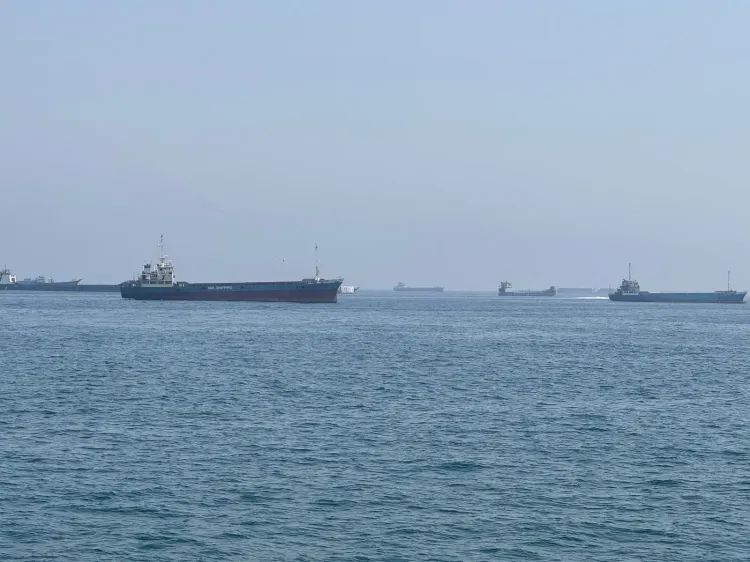
Iran's Islamic Revolutionary Guard Corps (IRGC) navy announced on Thursday, 13 November 2026, that two 'violating' supertankers were disabled by explosions while transiting the Strait of Hormuz on Wednesday night. The tankers were collectively carrying more than 4 million barrels of oil, according to the IRGC's statement published on its official outlet, Sepah News.
What the IRGC Said
According to Sepah News, the IRGC navy said both supertankers had proceeded through the strait despite repeated warnings from its traffic control centre about the 'unauthorised and unsafe' nature of the southern route. The navy described the passage as a deliberate defiance of its directives, though it did not identify the flag states or operators of the vessels.
Separately, the IRGC navy had announced on Wednesday that an earlier 'violating' oil tanker had caught fire after hitting naval mines east of the Strait of Hormuz in the early hours of that day. The navy said its forces were actively monitoring the strait's eastern waters and reiterated that safe passage requires coordination with Iranian armed forces and compliance with maritime regulations.
Iran's Warning to Vessels and Foreign Militaries
The IRGC issued a pointed warning that any vessel switching off its navigation systems in the Strait of Hormuz or the Persian Gulf, or cooperating with the US military in crossing the waterway's 'unauthorised' southern route, would face the same fate. The warning signals a sharp escalation in Iran's posture over transit rules in one of the world's most critical oil shipping lanes.
Notably, Chief of Staff of the Iranian Armed Forces Ali Abdollahi on Wednesday separately warned the United States and Israel against 'any new miscalculation', stating that 'any point that serves as a focal point for threats against the existence of the sacred establishment of the Islamic Republic of Iran will become a direct target of asymmetric operations.' He added, in a message carried by Iranian state media, that the armed forces would carry out orders from Supreme Leader Mojtaba Khamenei without hesitation.
Strategic Significance of the Strait of Hormuz
The Strait of Hormuz is the world's most critical oil chokepoint, with an estimated 20% of global oil trade transiting through it. Any sustained disruption to passage rights risks triggering immediate spikes in global crude prices and supply chain strain for major importers, including India, China, and Japan. This comes amid already elevated tensions in the Middle East, making the incident a flashpoint with far-reaching geopolitical implications.
What Happens Next
The incidents represent a marked intensification of Iran's enforcement actions in the strait. Shipping insurers, tanker operators, and importing nations are likely to review routing and security protocols for vessels in the region. International maritime authorities have not yet formally responded to the latest developments. How Washington and Tel Aviv respond to Abdollahi's threat will be closely watched in the coming days.
Point of View
Which depends heavily on Gulf oil transiting Hormuz, the closures raise both energy security and diplomatic exposure questions. Mainstream coverage tends to frame this as an Iran-US standoff; the larger risk is what a prolonged Hormuz crisis does to Asian import bills and insurance premiums for tankers, which could transmit into domestic fuel prices well before any military exchange occurs.
NationPress
12 Nov 2026
Frequently Asked Questions
What happened to the oil tankers in the Strait of Hormuz?
Iran's IRGC navy says two supertankers were disabled by explosions while transiting the Strait of Hormuz on Wednesday night, 12 November 2026, after allegedly ignoring repeated warnings about using an 'unauthorised' southern route. The tankers were collectively carrying more than 4 million barrels of oil, according to the IRGC's statement on Sepah News.
Why did Iran target the tankers?
According to the IRGC, the vessels proceeded through the strait's southern route despite warnings from its traffic control centre that the route was 'unauthorised and unsafe'. The navy also accused the tankers of cooperating with the US military in crossing the waterway, which Iran considers a violation of its maritime directives.
What is Iran's warning to future vessels?
The IRGC navy warned that any vessel switching off its navigation systems in the Strait of Hormuz or the Persian Gulf, or cooperating with the US military in crossing the 'unauthorised' southern route, would face the same fate as the disabled tankers.
What did Iran's armed forces chief say about the US and Israel?
Chief of Staff Ali Abdollahi warned the United States and Israel against 'any new miscalculation' on Wednesday, saying that any location serving as a focal point for threats against Iran would become a 'direct target of asymmetric operations'. He said the armed forces would act on orders from Supreme Leader Mojtaba Khamenei without hesitation.
Why does the Strait of Hormuz matter for global oil supply?
The Strait of Hormuz is the world's most critical oil chokepoint, with an estimated 20% of global oil trade passing through it daily. Disruptions there directly affect crude oil prices and supply chains for major importers including India, China, and Japan, making any escalation in the region a global energy security concern.