Houthis report 28 airstrikes across Yemen as multi-front fighting intensifies
Synopsis
The Houthis report 760 cumulative airstrikes since the latest escalation began — and their seizure of Mocha port, Dhubab, and Mayyun Island in the Bab al-Mandab Strait has raised the stakes far beyond Yemen's borders. Control of a global shipping chokepoint is now at the heart of a multi-front war with no ceasefire in sight.
Key Takeaways
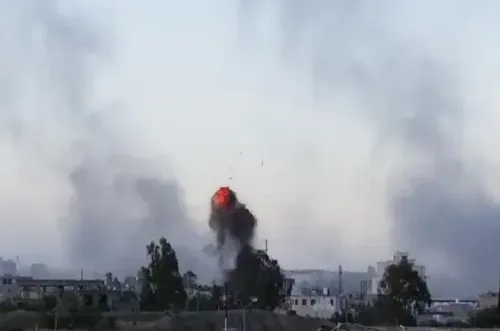
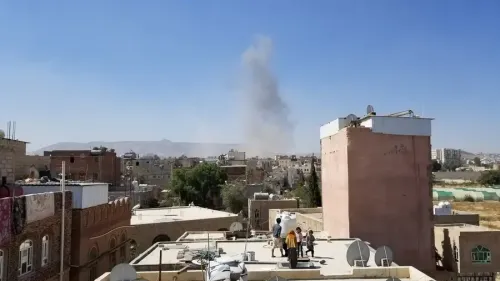
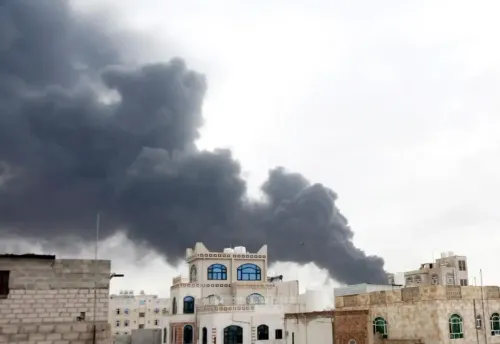
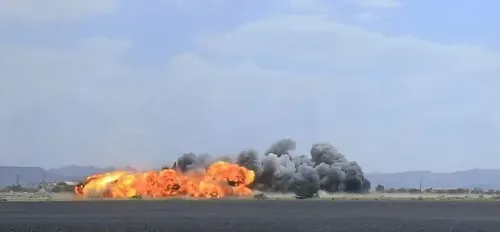
Houthi spokesperson Yahya Sarea reported 28 airstrikes across Taiz , Marib , and Al-Jawf provinces in the 24 hours to 21 September 2026 .
Strikes were reportedly carried out by F-15 and Typhoon jets from Saudi air bases at Khamis Mushait and Taif .
Cumulative strikes since the latest escalation began stand at 760 , according to the Houthis; Saudi Arabia has not confirmed the figures.
Houthis seized the port city of Mocha on 10 September and Mayyun Island in the Bab al-Mandab Strait on 11 September .
Government forces say they retook several positions in western Taiz on Sunday, but overall front lines remain contested.
Yemen's conflict dates to late 2014 ; a 2022 UN-brokered truce that had eased hostilities has effectively broken down.
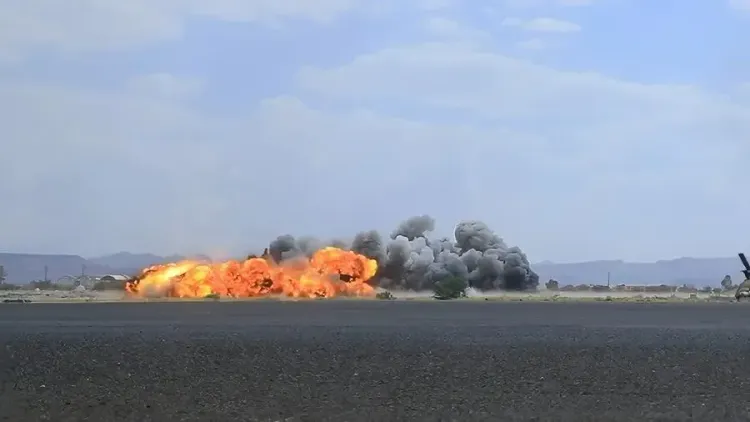
Yemen's Houthi group has reported that 28 airstrikes struck three provinces over a 24-hour period ending 21 September 2026, as ground battles between Houthi forces and internationally recognised Yemeni government troops continued across multiple fronts simultaneously. The strikes mark a further escalation in one of the world's longest-running conflicts.
Strike Details and Targets
Houthi military spokesperson Yahya Sarea stated on Sunday that F-15 and Typhoon fighter jets, operating from Saudi Arabian air bases at Khamis Mushait and Taif, carried out the strikes across the southwestern province of Taiz, the oil-rich northeastern province of Marib, and the northern province of Al-Jawf. Sarea placed the cumulative strike count since the latest escalation began at 760. Saudi Arabia had not commented on the latest figures at the time of reporting.
Separately, Houthi-run al-Masirah TV reported that an airstrike struck a telecommunications tower in Al-Jawf, while areas of northern Saada province along the Saudi border reportedly came under artillery fire.
Ground Battle in Taiz
On the ground, government forces and Houthi fighters remained locked in fierce combat in southwestern Yemen, where frontline positions have shifted repeatedly in recent days. A government military source said on Sunday that government forces had retaken several positions in western Taiz, though the broader front lines remained largely unchanged amid continued fighting.
Houthi Territorial Gains Along the Red Sea Coast
The current intensity follows a rapid Houthi push along Yemen's southwestern Red Sea coast. The group reportedly seized the Taiz province port city of Mocha on 10 September, before pushing southward to capture Dhubab and seize Mayyun Island — situated in the strategically critical Bab al-Mandab Strait — by 11 September. Government forces are now reportedly attempting to block further Houthi advances along the mountainous approaches to the strait, a chokepoint for global maritime trade.
Background and Broader Context
Yemen's civil war began in late 2014 when the Houthis seized the capital Sanaa and large swathes of northern Yemen. A Saudi-led coalition intervened in March 2015 in support of the internationally recognised government. A UN-brokered truce in 2022 largely halted major hostilities, but the latest escalation has unravelled much of that fragile calm. The recent Houthi coastal offensive represents the sharpest territorial shift since that truce took hold. Control of the Bab al-Mandab Strait — through which an estimated 10% of global trade passes — lends the current phase outsized geopolitical significance beyond Yemen's borders.
With government forces struggling to stabilise frontlines and no ceasefire framework currently reported to be active, further escalation in the coming days cannot be ruled out.
Point of View
And any sustained Houthi presence there will pressure international actors far beyond the Saudi-led coalition. The 760-strike figure, reported exclusively by the Houthis and unverified by Riyadh, is a reminder that information warfare is as active as the air campaign. What mainstream coverage risks underplaying is that the 2022 truce's collapse was not sudden — it was a slow erosion that has now produced the sharpest territorial shift in years, with no mediating framework currently in place to arrest it.
NationPress
21 Sept 2026
Frequently Asked Questions
How many airstrikes have hit Yemen in the latest escalation?
According to Houthi military spokesperson Yahya Sarea, 28 airstrikes struck three Yemeni provinces — Taiz, Marib, and Al-Jawf — in the 24 hours ending 21 September 2026. The Houthis put the cumulative strike count since the latest escalation began at 760; Saudi Arabia had not confirmed the figures at the time of reporting.
Which areas did the Houthis recently capture along the Red Sea coast?
The Houthis reportedly seized the Taiz province port city of Mocha on 10 September, followed by Dhubab and Mayyun Island in the Bab al-Mandab Strait on 11 September. These gains give the group a foothold at one of the world's most strategically significant maritime chokepoints.
Why is the Bab al-Mandab Strait significant?
The Bab al-Mandab Strait is a narrow waterway between Yemen and the Horn of Africa through which an estimated 10% of global maritime trade passes. Houthi control of Mayyun Island, situated in the strait, raises concerns about potential disruption to international shipping routes.
What is the current status of ground fighting in Yemen?
Government forces and Houthi fighters remain locked in combat across southwestern Yemen, particularly in Taiz. A government military source said on Sunday that government forces retook several positions in western Taiz, though the broader front lines remained largely unchanged.
How did the Yemen conflict begin?
Yemen's civil war began in late 2014 when the Houthis seized the capital Sanaa and much of northern Yemen. A Saudi-led coalition intervened in March 2015 in support of the internationally recognised government. A UN-brokered truce in 2022 largely halted major hostilities, but the latest escalation has unravelled that ceasefire arrangement.