IAEA chief confirms 'initial exchange' with Iran on nuclear inspections
Synopsis
IAEA chief Rafael Grossi has confirmed a technical-level exchange with Iran over nuclear inspections — but Tehran is already drawing red lines, refusing IAEA access to bombed facilities until sanctions are lifted. The gap between US Vice President Vance’s ‘major milestone’ framing and Iran’s conditions reveals how far apart the two sides still are.
Key Takeaways
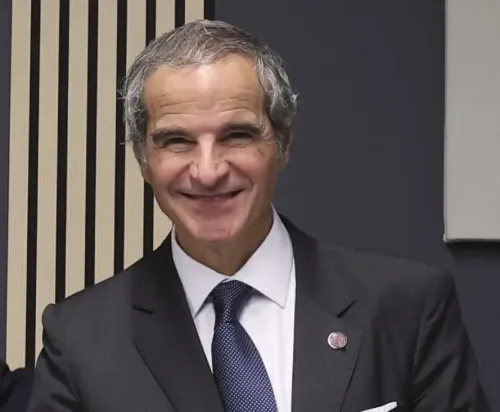
IAEA Director General Rafael Grossi confirmed an ‘initial exchange’ with Iran at the technical level on Friday, 26 June .
The exchange took place last weekend at Burgenstock , central Switzerland, following the US-Iran peace memorandum of understanding .
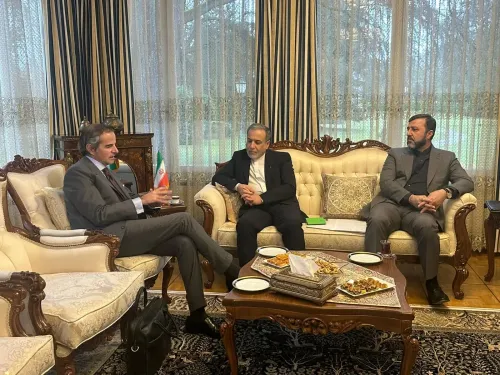
A senior Iranian diplomat stated on Wednesday that Iran will not grant IAEA access to nuclear facilities bombed by the US and Israel .
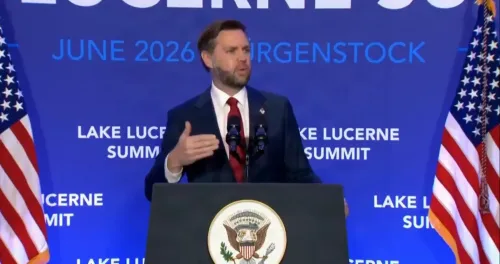
US Vice President J.D.
Vance described Iran’s agreement to invite IAEA inspectors as a ‘major milestone’ in denuclearisation talks.
Iran has linked any facility access to a final agreement with Washington and the termination of all sanctions.
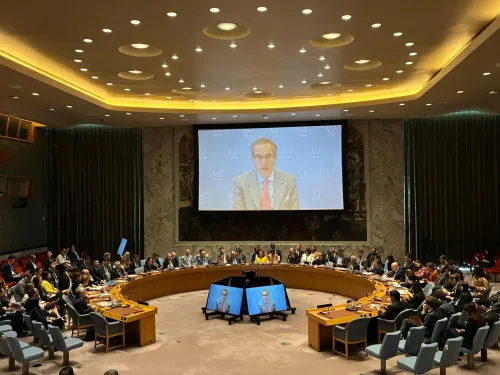
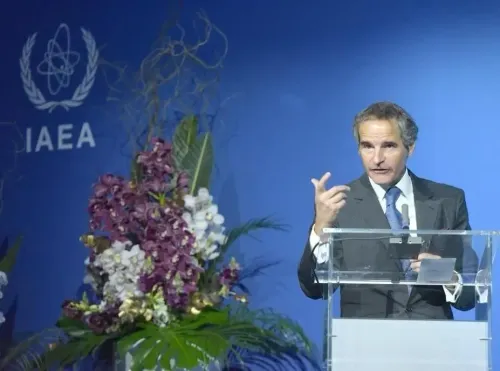
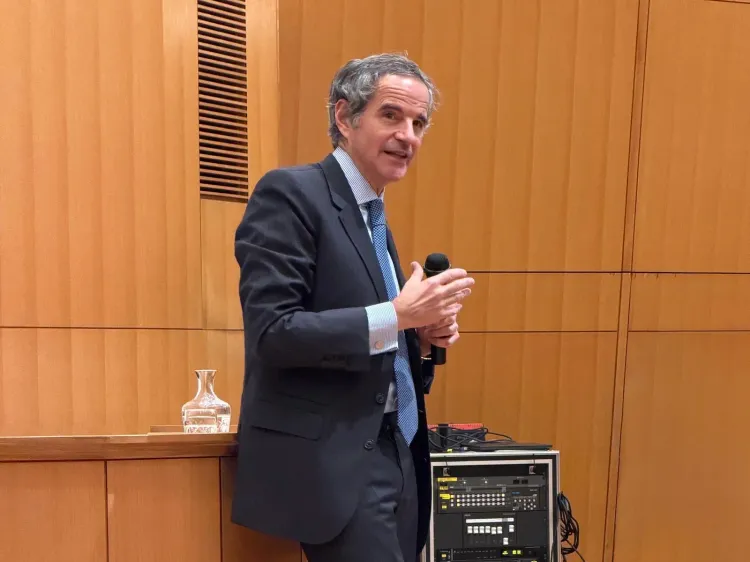
International Atomic Energy Agency (IAEA) Director General Rafael Grossi confirmed on Friday, 26 June that the nuclear watchdog has held an initial exchange with Iranian officials regarding nuclear inspections. Grossi made the disclosure at a press conference in Tokyo, marking the first public acknowledgement of direct technical contact between the two sides following a US-Iran peace memorandum of understanding.
What Grossi Said in Tokyo
“We had an initial exchange with the Iranian side at the technical level,” Grossi told reporters in Tokyo. He confirmed the exchange took place last weekend at Burgenstock in central Switzerland, on the sidelines of broader diplomatic activity in the region. Grossi had earlier indicated that the IAEA would pursue inspections in Iran in light of the recently signed US-Iran peace memorandum.
Iran’s Contradictory Position
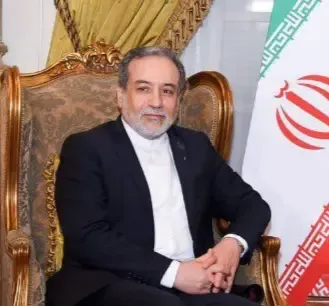
Despite the positive signals from Washington and the IAEA, a senior Iranian diplomat stated on Wednesday that Iran has no intention of granting the IAEA access to nuclear facilities that were bombed by the United States and Israel. The diplomat said such matters would be addressed exclusively within the framework of a potential final agreement with Washington, and only after the other party takes practical steps to lift all sanctions.
This contradicts the framing offered by US officials, and underscores that significant gaps remain between the two sides despite the diplomatic momentum.
Vance Calls It a 'Major Milestone'
US Vice President J.D. Vance said on Monday that Iran had agreed to allow IAEA inspectors back into the country, describing the development as a major breakthrough in negotiations aimed at permanently ending Tehran’s nuclear weapons programme and easing tensions across the Middle East.
Speaking to reporters after the Burgenstock talks, Vance said the development ranked among the most significant achievements of the ongoing negotiations involving the United States, Iran, and regional partners.
“The Iranians have agreed to invite IAEA inspectors back into their country,” Vance asserted. “That is a major milestone for the American people, and the first step in permanently denuclearising or permanently ending a nuclear weapons programme in Iran.”
Vance had also expressed confidence that inspector-level conversations with the IAEA could begin “as soon as today,” though the Iranian diplomat’s subsequent statement cast doubt on that timeline.
What Happens Next
The divergence between US optimism and Iran’s stated conditions signals that while technical-level dialogue has begun, a formal inspection agreement remains contingent on broader negotiations. The IAEA’s ability to access bombed facilities — a key transparency benchmark — appears to hinge on sanctions relief, a demand Washington has not publicly committed to meeting on Iran’s terms. Diplomatic observers will watch whether the Burgenstock exchange translates into a concrete inspection schedule in the coming days.
Point of View
But Iran’s insistence on linking IAEA access to sanctions relief means the sequencing question — who moves first — remains unresolved. Without clarity on that, the Burgenstock exchange risks becoming a talking point rather than a turning point.
NationPress
25 Sept 2026
Frequently Asked Questions
What did IAEA chief Rafael Grossi say about Iran nuclear inspections?
Grossi confirmed on 26 June that the IAEA had an ‘initial exchange’ with Iranian officials at the technical level, which took place at Burgenstock in Switzerland. He had earlier indicated the IAEA would pursue inspections in light of the US-Iran peace memorandum of understanding.
Has Iran agreed to allow IAEA inspectors back in?
US Vice President J.D. Vance said on Monday that Iran agreed to invite IAEA inspectors back into the country, calling it a major milestone. However, a senior Iranian diplomat said on Wednesday that Iran will not provide access to nuclear facilities bombed by the US and Israel until a final agreement is reached and sanctions are lifted.
What is the US-Iran peace memorandum of understanding?
It is a recently signed agreement between the United States and Iran that formed the basis for renewed diplomatic engagement, including discussions on nuclear inspections. The IAEA has indicated it would carry out inspections in Iran in view of this memorandum, though the terms of facility access remain disputed.
Why is Iran refusing IAEA access to bombed nuclear facilities?
A senior Iranian diplomat stated that access to facilities struck by the US and Israel would be addressed only within a potential final agreement with Washington and only after practical steps are taken to end all sanctions. Iran is effectively conditioning transparency on sanctions relief.
Where did the IAEA-Iran technical exchange take place?
The exchange took place at Burgenstock in central Switzerland last weekend, on the margins of broader diplomatic talks involving the US, Iran, and regional partners.