How Will Pakistan's 27th Constitutional Amendment Affect Balochistan?
Synopsis
The 27th Constitutional Amendment in Pakistan is set to have dire consequences in Balochistan, where human rights abuses and political exclusion are rampant. Experts warn that this legislation could effectively erase the last vestiges of judicial independence, crippling the legal avenues available to the oppressed. What will this mean for the people of Balochistan?
Key Takeaways
The 27th Constitutional Amendment threatens judicial independence in Pakistan.
Balochistan may experience the most severe consequences of this amendment.
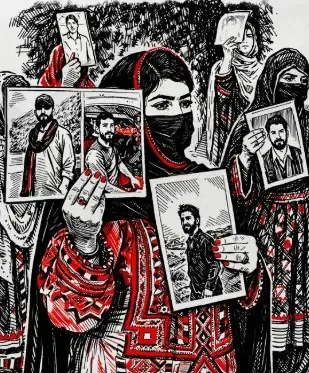
There have been documented cases of enforced disappearances and extrajudicial killings in Balochistan.
The amendment limits the ability of individuals to seek legal remedies.
Human rights organizations are raising alarms about the potential for increased oppression.
Berlin, Jan 30 (NationPress) Experts and human rights advocates based in Berlin have raised alarms that the 27th Constitutional Amendment implemented in Pakistan will diminish judicial independence and amplify executive power, leading to diminished safeguards for individuals already enduring human rights violations and political marginalization, as reported by local media.
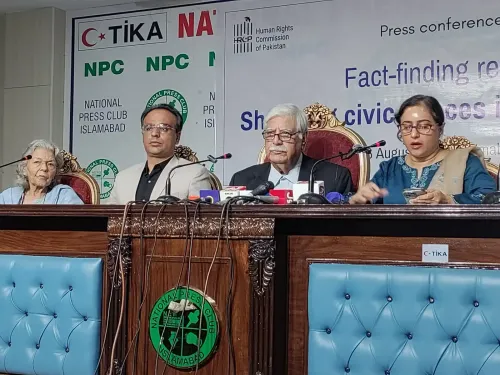
Political analyst Rafiullah Kakar and Human Rights Council of Balochistan (HRCB) Executive Director Abdullah Abbas were part of the debate moderated by former BBC correspondent Sahar Baloch, according to The Balochistan Post. During the discussion, Abbas expressed that the amendment will have a profound effect in Balochistan, a region where rights organizations have documented enforced disappearances and extrajudicial killings.
"This legislation is applicable throughout Pakistan, but Balochistan presents a unique situation. Prolonged dehumanization and a state-sponsored narrative against dissent have facilitated — and often justified — the most serious human rights abuses," Abbas remarked.
He noted that in Balochistan, the Constitution is nearly nonexistent in practice. "With the 27th Amendment, even the scant remaining hope for legal redress is being snuffed out."
Abbas emphasized that revisions to Pakistan’s Anti-Terrorism Act effectively legalize forced disappearances. "What China executed against the Uyghurs through legal manipulation and surveillance is now being mirrored in Balochistan," he stated, calling the situation the "institutionalization of oppression," as reported by The Balochistan Post.
Kakar highlighted that the amendment "fundamentally alters" the dynamic between the judiciary and executive by constraining the courts' power to review or contest executive actions.
He further indicated that this change will restrict the capacity of individuals, activists, and civil society organizations to pursue legal remedies. He noted that while rights are not formally rescinded, "their enforceability collapses when courts lose authority."
On Tuesday, a prominent human rights organization disclosed that three additional Baloch civilians were forcibly disappeared by Pakistani forces in Balochistan province.
These recent occurrences emerge against a backdrop of increasing incidents of enforced disappearances and extrajudicial killings throughout the province.
Condemning these events, Paank, the Baloch National Movement's Human Rights Department, reported that 40-year-old Ali Ahmed Reki, a teacher from Surab district, was abducted on January 24 from Ganjh Chowk in provincial capital Quetta by personnel from Pakistan’s Counter Terrorism Department (CTD). His current whereabouts remain unknown.
The rights organization also indicated that a 25-year-old doctor, Shahzain Ahmed from Surab, was taken on the same day and at the same location by CTD.
Bringing attention to the atrocities against civilians in Balochistan, Paank further highlighted the enforced disappearance of 22-year-old Junaid Ahmed, a student from Surab. He was abducted on January 23 at the Children’s Hospital, Quarry Road in Quetta by CTD.
Point of View
It is imperative to recognize the serious implications of the 27th Constitutional Amendment in Pakistan. While the legal landscape evolves, the importance of upholding judicial independence and safeguarding human rights cannot be underestimated. This amendment may have far-reaching consequences, particularly in regions like Balochistan, where the protection of civil liberties is already under threat.
NationPress
20 Sept 2026
Frequently Asked Questions
What is the 27th Constitutional Amendment?
The 27th Constitutional Amendment in Pakistan is a legislative change that aims to alter the balance of power between the judiciary and the executive, primarily increasing executive authority.
How does the amendment affect Balochistan?
The amendment is expected to have a particularly severe impact in Balochistan, where human rights abuses are prevalent and judicial independence is already compromised.
What are enforced disappearances?
Enforced disappearances refer to the abduction of individuals by state authorities or affiliated groups, followed by a refusal to acknowledge their fate or whereabouts.
What has been the response from human rights organizations?
Human rights organizations have condemned the amendment and its implications, stressing that it could lead to further institutionalized repression in Balochistan.
Why is judicial independence important?
Judicial independence is crucial for upholding the rule of law, protecting human rights, and allowing individuals to seek justice against abuses of power.