Imran Khan's medical appeal to Pakistan judges raises global alarm over jail conditions
Synopsis
Imran Khan's reported warning that he may 'not return alive' in prison has crystallised growing global unease over his detention — with 21 former cricket captains, British and American lawmakers, and international rights voices all weighing in. As his wife Bushra Bibi separately seeks specialist eye care and court orders allegedly go unimplemented, the case is fast evolving from a domestic political dispute into a question of Pakistan's international standing.
Key Takeaways
Imran Khan , 74 , has reportedly appealed to Pakistan's senior judges for urgent medical treatment, warning he may 'not return alive.' His wife Bushra Bibi is separately seeking transfer to a specialist hospital for rapidly deteriorating eyesight.
Khan has been imprisoned since August 2023 ; in January 2025 he was sentenced to 14 years in the Al-Qadir Trust land corruption case, with Bushra Bibi receiving 7 years .
21 former international cricket captains — including Sunil Gavaskar , Kapil Dev , Greg Chappell , and Steve Waugh — appealed to PM Shehbaz Sharif for proper medical access in August 2026 .
Pakistani officials deny mistreatment, saying Khan has received hundreds of visits from family, lawyers, and doctors.
Reports allege coordinated online campaigns targeted foreign lawmakers who raised concerns; PTI attributes this to pro-establishment accounts, which Islamabad denies.
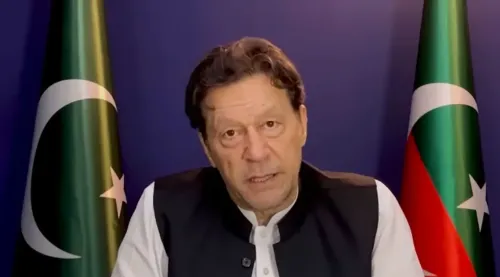
Pakistan's former Prime Minister Imran Khan, now in his third year of incarceration, has reportedly appealed directly to the country's senior judiciary for urgent medical treatment for himself and his wife, Bushra Bibi — a move that has intensified international concern over the 74-year-old leader's condition behind bars. The appeal, reportedly conveyed through his lawyer Salman Safdar, warns of deteriorating health and signals a deepening crisis around one of South Asia's most prominent political prisoners.
Khan's Medical Appeal and What It Claims
In the letter addressed to Pakistan's senior judges, Khan reportedly warned that deteriorating health and extended isolation had left him fearing he 'may not return alive.' He alleged that court orders mandating specialist medical treatment had not been fully implemented, and said doctors had cautioned him about risks including brain haemorrhage and cardiac arrest.
Bushra Bibi has separately sought transfer to a specialist hospital, citing rapidly deteriorating eyesight. Court filings by her legal team allege she suffers from severe vision problems requiring urgent ophthalmological care, with lawyers also citing poor sanitary conditions and delayed access to specialists inside prison.
International Cricket Fraternity Weighs In
In August 2026, Sunil Gavaskar, Kapil Dev, and Dilip Vengsarkar joined 21 former international cricket captains in a collective appeal to Pakistan Prime Minister Shehbaz Sharif, urging proper medical attention for Khan. The initiative was reportedly led by Australia's former captain Greg Chappell and included England's Michael Atherton.
Other signatories reportedly comprised Allan Border, Ian Chappell, Clive Lloyd, David Gower, and Steve Waugh, among others — an unusually high-profile intervention from the global sporting community into a political detention case.
Islamabad's Response and Allegations of Online Harassment
Pakistani officials have pushed back firmly. Information Minister Attaullah Tarar and others assert that Khan has received hundreds of visits from family members, lawyers, and medical professionals since his imprisonment. Islamabad categorically rejects allegations of mistreatment.
Separately, several reports have alleged coordinated online campaigns targeting British and American lawmakers who raised concerns over Khan's detention. According to these reports, pro-establishment social media accounts were alleged to have been used to discredit foreign politicians voicing support for the jailed leader. PTI has said these campaigns are intended to suppress international scrutiny; Pakistani officials reject the characterisation of state-sponsored harassment.
Khan's Legal Cases and the Broader PTI Crisis
Khan has been in jail since August 2023, initially in connection with the Toshakhana gifts case. In January 2025, he was sentenced to 14 years in jail in a land corruption case — the Al-Qadir Trust matter involving GBP 190 million — while Bushra Bibi received a seven-year term in the same proceedings. Additional cases linked to the 9 May 2023 unrest remain active. Both deny wrongdoing, with PTI maintaining the charges are politically motivated; the Pakistan government rejects this.
Khan's three sisters have been organising nationwide demonstrations; they were detained in September under public safety legislation, though the two younger sisters were reportedly released recently.
Historical Parallels and What's at Stake
Khan's supporters have invoked the case of former Prime Minister Zulfikar Ali Bhutto, who was executed at Rawalpindi Jail in 1979 after a conviction later described by Pakistan's own Supreme Court as a miscarriage of justice. While the two cases are legally distinct, the parallel underscores the stakes in Pakistani political history when a prominent leader faces the full weight of the state.
Compounding the picture is a worsening security situation in Khyber Pakhtunkhwa — PTI's traditional stronghold — where violence attributed to Tehreek-e-Taliban Pakistan (TTP)-linked groups has resurged, adding political pressure on the PTI-led provincial administration that is at odds with the federal government.
As international debate over Khan's detention broadens to encompass judicial independence, prisoners' rights, and democratic accountability, the coming weeks will likely determine whether Pakistan's courts respond to the medical appeals — or whether the pressure escalates further on the global stage.
Point of View
It signals a reputational cost that Islamabad can no longer dismiss as PTI propaganda. The medical appeal's most striking detail is the allegation that existing court orders for specialist treatment have not been implemented; if accurate, that is not a political claim but a judicial compliance failure. Pakistan's establishment faces a narrowing window: continued stonewalling risks cementing an international narrative of a state willing to let a political rival die in custody — a comparison to Bhutto that no government should want to invite.
NationPress
17 Nov 2026
Frequently Asked Questions
What has Imran Khan requested in his medical appeal?
Khan has reportedly appealed to Pakistan's senior judges for urgent specialist medical treatment for himself and his wife Bushra Bibi, warning that deteriorating health and prolonged isolation have left him fearing he may 'not return alive.' He also alleges that court orders for specialist care have not been fully implemented.
What are the charges that led to Imran Khan's imprisonment?
Khan has been imprisoned since August 2023, initially in connection with the Toshakhana gifts case. In January 2025, he was sentenced to 14 years in the Al-Qadir Trust land corruption case involving GBP 190 million. Additional cases linked to the 9 May 2023 unrest also remain active. Both he and his party PTI deny wrongdoing, calling the cases politically motivated.
Why did former cricket captains write to Pakistan's Prime Minister about Imran Khan?
In August 2026, 21 former international cricket captains — including India's Sunil Gavaskar, Kapil Dev, Dilip Vengsarkar, and Australia's Greg Chappell — wrote to PM Shehbaz Sharif urging proper medical treatment for Khan. The appeal reflected growing international concern over the conditions of his detention.
What is Pakistan's official position on allegations of Imran Khan's mistreatment?
Information Minister Attaullah Tarar and other officials have stated that Khan has received hundreds of visits from family members, lawyers, and doctors since his imprisonment. Pakistan's government rejects claims of mistreatment and denies allegations of state-sponsored online harassment targeting foreign critics.
What is the historical parallel Khan's supporters are drawing?
Khan's supporters have drawn comparisons to former Prime Minister Zulfikar Ali Bhutto, who was executed at Rawalpindi Jail in 1979 — a conviction later assessed by Pakistan's own Supreme Court as one that did not meet fair-trial standards. The two cases are legally distinct, but the parallel underscores concerns about the safety of prominent political prisoners in Pakistani custody.