Jal Shakti Minister Paatil meets BJP Punjab leadership in Chandigarh
Synopsis
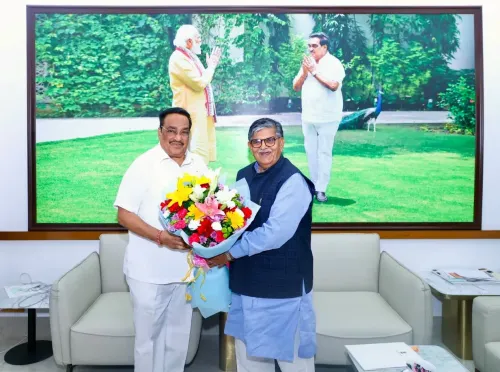
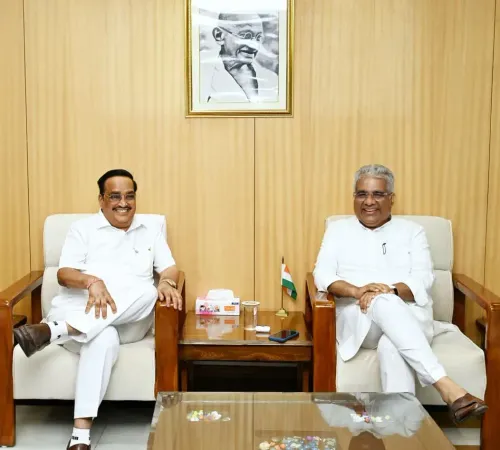
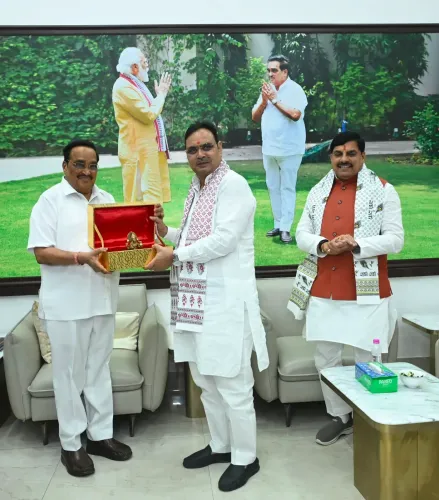
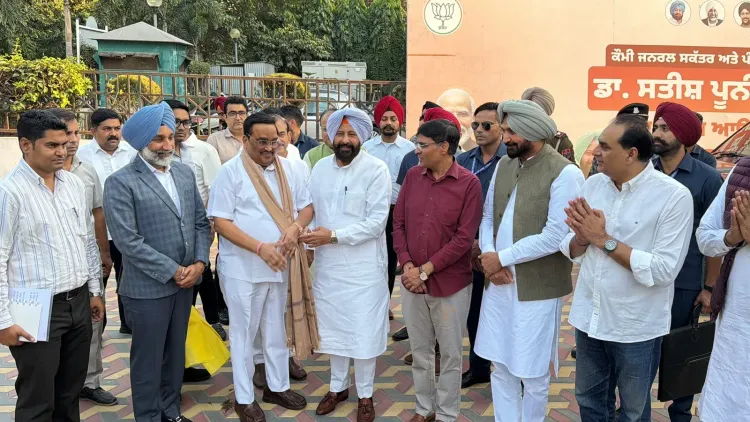
Union Jal Shakti Minister C. R. Paatil held an organisational meeting with BJP Punjab president Kewal Singh Dhillon and senior leaders in Chandigarh on November 17, focusing on cadre activation, public outreach, and party strengthening under PM Modi's 'Viksit Bharat' vision ahead of the 2027 Punjab assembly elections.
Key Takeaways
Union Jal Shakti Minister C.
Paatil visited the BJP Punjab Pradesh headquarters in Chandigarh on November 17, 2026 .
He met Punjab BJP state president Kewal Singh Dhillon and senior party office-bearers in a closed-door session.
Discussions centred on strengthening party organisation, increasing grassroots worker participation, and public service delivery issues.
The meeting was framed under PM Narendra Modi 's leadership and the 'Viksit Bharat' (Developed India) national development vision.
Paatil pledged commitment to the goals of an 'Empowered Organisation, Prosperous Punjab and Developed India.' The meeting is consistent with the BJP's pattern of central-state organisational reviews ahead of the 2027 Punjab assembly elections .
With Punjab's political calendar ticking toward 2027, Union Jal Shakti Minister C. R. Paatil landed in Chandigarh on Tuesday, November 17 for a closed-door sit-down with the BJP Punjab state leadership — the kind of central-state check-in that signals the party is already in mission mode for the state.
What was discussed at the Chandigarh headquarters
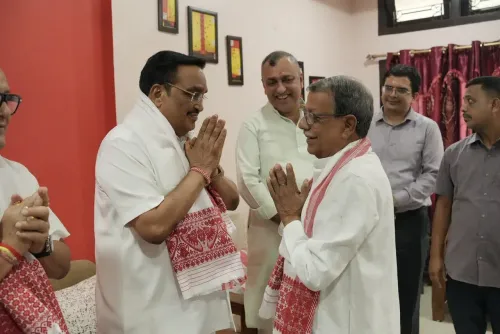
Paatil met Punjab BJP state president Kewal Singh Dhillon and senior office-bearers at the party's Punjab Pradesh headquarters in Chandigarh. In the post, Paatil described the meeting as an 'aatmiya mulakat' ('warm, personal meeting') and said the discussions covered three distinct threads: strengthening the party organisation in Punjab, boosting active participation of grassroots workers, and reviewing issues tied to public service delivery.
The agenda was notably ground-up. Not a press conference, not a policy announcement — a room of organisational hands talking through cadre discipline and outreach. That is precisely the kind of internal review central leaders undertake when a state election is on the horizon.
The 'Developed India' frame woven into the meet
Paatil anchored the meeting explicitly to Prime Minister Narendra Modi's development vision, stating that all efforts — from organisational expansion to public welfare — are being carried forward 'with full commitment under the able leadership and guidance of respected Prime Minister Narendra Modi.' He closed with a three-part pledge: 'Sashakt Sangathan, Samriddh Punjab aur Viksit Bharat' — 'Empowered Organisation, Prosperous Punjab and Developed India.'
The 'Viksit Bharat' (Developed India) framing is a recurring national motif the BJP has anchored to the 2047 centenary of Independence. Invoking it at a state-level organisational meeting is a deliberate signal: Punjab's internal party work is being positioned as a local chapter of a national story.
Why a central minister is walking the Punjab beat
Central BJP leaders periodically hold exactly these kinds of reviews with state units — aligning messaging, assessing cadre health, and ensuring state machinery is synchronised with New Delhi's narrative. Paatil's own background as a former Gujarat BJP state president makes him a natural emissary for this kind of organisational outreach: he has built a party machine from the ground up before.
Punjab is a state the BJP has historically struggled to consolidate on its own, and the 2022 assembly elections delivered a bruising result. With 2027 now firmly in view, meetings like this — attended by the state president and senior functionaries — are how a party rebuilds momentum from the inside out. Worker activation and local-level public engagement are the unglamorous, essential groundwork.
A central minister in Chandigarh. The state president in the room. 'Viksit Bharat' on the lips. The organisational rebuild in Punjab has begun in earnest — and the clock is running.
Point of View
Structured, and strategically timed. The BJP's repeated invocation of 'Viksit Bharat' at state-level internal meetings signals an effort to stitch local cadre energy to the national leadership's development brand, an approach that worked for the party in Gujarat and is now being replicated in harder terrain. Punjab has been an organisational weak spot for the BJP since it lost the alliance with the Shiromani Akali Dal, and deploying a minister with Paatil's grass-roots party-building credentials to energise the state unit suggests New Delhi is treating the 2027 campaign as a serious rebuilding project rather than a symbolic exercise.
NationPress
17 Nov 2026
Frequently Asked Questions
Why did C. R. Paatil visit Chandigarh in November 2026?
Union Jal Shakti Minister C. R. Paatil visited Chandigarh on November 17, 2026 to meet BJP Punjab state president Kewal Singh Dhillon and senior party leaders for an organisational review meeting focused on strengthening the party structure, increasing worker participation, and aligning with PM Modi's 'Viksit Bharat' vision.
Who is Kewal Singh Dhillon?
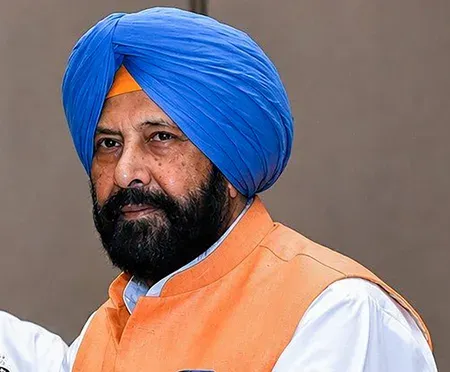
Kewal Singh Dhillon is the president of the BJP's Punjab state unit, based in Chandigarh, and was the host of the November 17 meeting with Union Minister C. R. Paatil.
What is the BJP's 'Viksit Bharat' goal mentioned in the meeting?
'Viksit Bharat,' meaning 'Developed India,' is PM Narendra Modi's vision for India to become a fully developed nation by 2047, the centenary of Independence. The BJP regularly invokes it at state-level meetings to align local party work with the national development narrative.
Is C. R. Paatil involved in BJP organisational work beyond Jal Shakti?
Yes. Besides being the Union Minister of Jal Shakti, C. R. Paatil is a senior BJP leader and former Gujarat BJP state president, giving him extensive party-building experience that the central leadership deploys in state-level organisational outreach.
What are the next Punjab assembly elections and why does this meeting matter?
Punjab's next assembly elections are expected in 2027 . The Chandigarh meeting is widely seen as part of the BJP's early groundwork to rebuild cadre strength and public outreach in a state where it has faced significant organisational challenges since 2022.