India backs Right to Development Covenant at UN General Assembly
Synopsis
At the UN General Assembly in New York, India's MEA Secretary Sibi George called for the early adoption of the Covenant on the Right to Development on the 40th anniversary of the landmark 1986 Declaration — extending New Delhi's consistent Global South advocacy into one of the UN's most consequential ongoing multilateral debates.
Key Takeaways
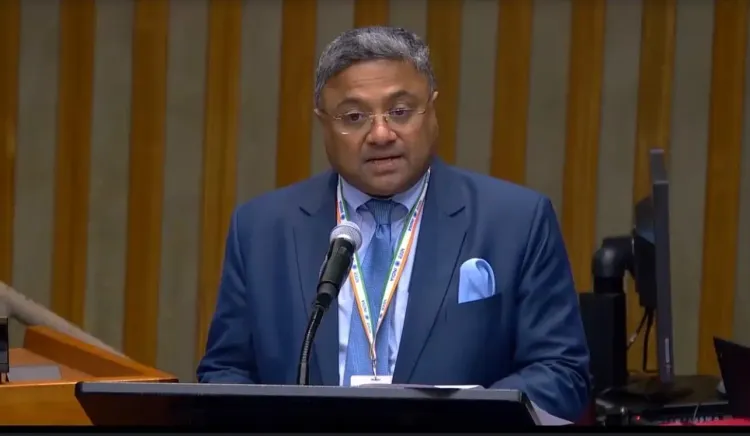
MEA Secretary (West) Sibi George delivered India's national statement at the UN General Assembly high-level segment in New York on 24 September 2026 .
India reaffirmed its commitment to inclusive development , international cooperation , and multilateral reform .
India supported the early adoption of the Covenant on the Right to Development .
The session commemorated the 40th anniversary of the Declaration on the Right to Development , adopted in 1986 .
The UN acknowledged that while progress on poverty and education has been significant, it 'remains uneven' and a persistent global funding gap continues to constrain many states.
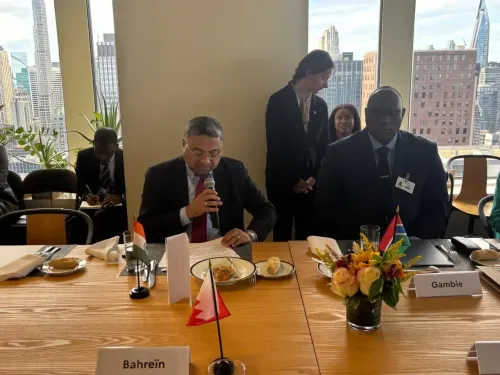
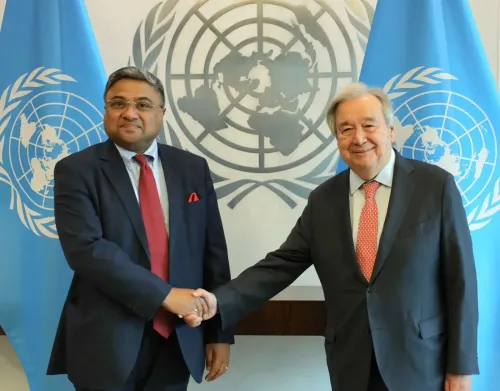
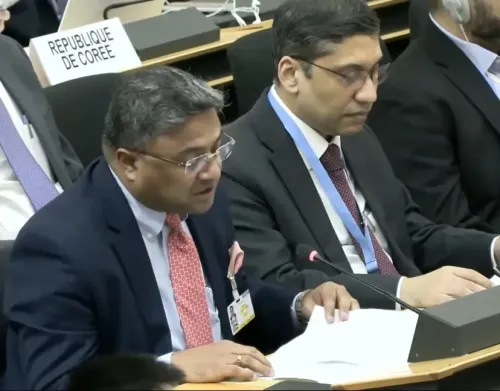
Ministry of External Affairs (MEA) Secretary (West) Sibi George on 24 September 2026 reaffirmed India's commitment to inclusive development, international cooperation, and multilateral reform at the United Nations General Assembly in New York, calling for the early adoption of the Covenant on the Right to Development. George delivered India's national statement at the high-level segment commemorating the 40th anniversary of the Declaration on the Right to Development.
India's Position at the High-Level Segment
Speaking before the UN high-level segment, George underlined that the right to development is not merely an aspirational goal but a foundational framework for global equity. India's backing of the Covenant's early adoption signals New Delhi's intent to push for a binding or near-binding multilateral instrument that can operationalise the principles set out in the 1986 Declaration. This is consistent with India's broader foreign policy stance — championing the Global South at multilateral forums including the G20 and BRICS.
What the Declaration on the Right to Development Stands For
The Declaration on the Right to Development, adopted by the UN General Assembly in 1986, proclaims that the right to development is an inalienable human right, entitling every person and all peoples to participate in, contribute to, and enjoy economic, social, cultural, and political development. According to the UN, the past four decades have seen significant progress — including lifting hundreds of millions out of extreme poverty and expanding access to education and healthcare — yet progress remains deeply uneven across nations.
The Persistent Gaps the Anniversary Highlights
According to a UN statement, many states continue to face structural obstacles that constrain their development prospects, compounded by a persistent global funding gap. The UN noted that the 40th anniversary presents a unique opportunity to reaffirm the right to development as a central framework for addressing contemporary global challenges, advancing 'a more inclusive, sustainable and equitable future for all.' Critics of the current multilateral architecture have long argued that without enforceable commitments, declarations of this nature risk remaining aspirational.
India's Broader Multilateral Reform Push
India's statement fits into a pattern of active engagement at the UN on issues of development finance, equitable global governance, and reform of multilateral institutions. New Delhi has consistently argued that legacy frameworks — built in the post-World War II era — do not adequately reflect the weight or needs of the developing world. The push for early Covenant adoption is, in that sense, an extension of India's voice-of-the-Global-South positioning that has defined its diplomacy in recent years.
The debate around formalising the Covenant is expected to continue through the current session of the UN General Assembly, with developing nations likely to form a coalition to advance its adoption timeline.
Point of View
However, depends on coalition-building that goes well beyond one national statement.
NationPress
24 Sept 2026
Frequently Asked Questions
What did India say at the UN General Assembly's Right to Development session?
India's MEA Secretary (West) Sibi George reaffirmed New Delhi's commitment to inclusive development, international cooperation, and multilateral reform, and called for the early adoption of the Covenant on the Right to Development at the UN General Assembly high-level segment on 24 September 2026.
What is the Declaration on the Right to Development?
The Declaration on the Right to Development is a UN General Assembly resolution adopted in 1986 that recognises development as an inalienable human right, entitling every person and all peoples to participate in and benefit from economic, social, cultural, and political development. It has guided international efforts on poverty eradication, social inclusion, and sustainable development for four decades.
What is the Covenant on the Right to Development?
The Covenant on the Right to Development is a proposed international instrument that would give legally operative force to the principles contained in the 1986 Declaration. India has publicly supported its early adoption, reflecting its broader push for reform of the multilateral development architecture.
Why does India support multilateral reform at the UN?
India has consistently argued that existing multilateral institutions, designed in the post-World War II era, do not adequately represent the interests of developing nations and the Global South. Supporting frameworks like the Right to Development Covenant is part of New Delhi's broader diplomatic push for a more equitable global governance structure.
What challenges does the Right to Development Declaration still face after 40 years?
According to the UN, despite four decades of progress in poverty reduction and access to education and healthcare, progress remains uneven. Many states face structural obstacles and a persistent global funding gap, and no binding legal instrument has yet been adopted to enforce the Declaration's principles.