India-Africa economic ties enter reciprocal phase, supply chains in focus

Synopsis
India and Africa are moving beyond aid-and-trade dynamics into genuine co-investment territory. A $450 million Engineers India Ltd contract for a $16 billion refinery in Kenya — backed by Africa's richest man — signals what a new reciprocal industrial partnership could look like, with critical minerals, energy, and manufacturing all on the table.
Key Takeaways
A new report says India-Africa economic ties are entering a reciprocal phase driven by deepening investment and industrial partnerships.
Engineers India Ltd signed a $450 million contract with Aliko Dangote to oversee a planned $16 billion refinery and petrochemical complex in Lamu, Kenya .
The facility is designed to process 7 lakh barrels of crude oil per day .
Africa's reserves of critical minerals , energy resources, and agricultural commodities could bolster India's supply chains .
High-potential sectors for Indian companies include cement, pharmaceuticals, renewable energy, automobiles , and agricultural processing .
The report calls for greater African value addition to improve economic returns while giving Indian industry more reliable sourcing.
The economic relationship between India and Africa is entering a new, more reciprocal phase, as deepening investment flows and industrial partnerships reshape a partnership that has historically been weighted toward aid and trade, according to a new report. The shift signals a structural evolution — from donor-recipient dynamics toward co-investment and shared industrial value chains.
A Landmark Deal as Proof of Concept
The report cited a $450 million contract signed by Engineers India Ltd — a Government of India-owned enterprise — with Aliko Dangote, Africa's wealthiest businessman, to oversee construction of a planned $16 billion refinery and petrochemical complex in Lamu, Kenya. The greenfield facility is expected to process 7 lakh barrels of crude oil per day, making it one of the most ambitious energy infrastructure projects on the continent. The deal illustrates how African capital and entrepreneurial ambition can be paired with India's engineering, technology, and industrial expertise — a template the report suggests could be replicated across sectors.
Why This Matters for India's Supply Chains
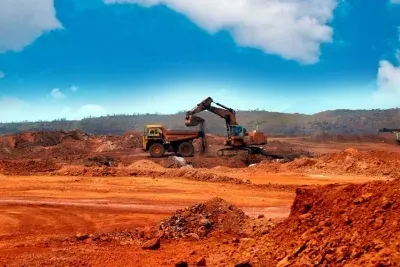
Africa holds significant reserves of critical minerals, energy resources, and agricultural commodities — inputs for which India's demand is growing rapidly. For New Delhi, deepening industrial ties with African nations offers a pathway to supply chain diversification at a time when global sourcing is being stress-tested by geopolitical disruptions and logistics volatility. According to the report, India stands to gain more reliable and diversified sources of raw material supply, while Africa gains a large, long-term buyer with consistent demand. The arrangement, if institutionalised, could reduce Africa's dependence on commodity exports to single markets — a vulnerability that has historically suppressed economic returns for the continent.
Opportunities for Indian Industry
For Indian companies, the report identifies Africa as both a production base and an emerging consumer market. Establishing factories and processing plants on the continent offers several advantages: lower logistics costs for regional distribution, local value addition, and access to an increasingly integrated African market rather than a fragmented collection of national economies. Sectors flagged as high-potential include cement, fertilisers, petroleum refining, automobiles, pharmaceuticals, agricultural processing, renewable energy, and logistics. Expanding urban centres and rising demand for energy, healthcare, mobility, and consumer goods are expected to create substantial new markets across the continent.
Africa's Infrastructure Deficit as an Opening
The continent's infrastructure gap — spanning roads, railways, ports, electricity grids, and digital networks — represents both a challenge and an opportunity. Africa can leverage India's proven expertise in developing affordable infrastructure and technology in resource-constrained environments, the report noted. India's experience in building low-cost digital public infrastructure, rural connectivity, and scalable healthcare systems positions it as a credible partner for African governments seeking to link producers with consumers and regional markets without incurring prohibitive costs.
The Mutual Gains Framework
'Greater African processing and value addition can create better economic returns for African economies while giving Indian industry more diversified and reliable sources of supply,' the report stated. This framing marks a departure from earlier narratives around India-Africa engagement, which tended to emphasise concessional financing and technical assistance rather than equity partnerships and shared industrial output. This comes amid broader global competition for influence and resources in Africa, with China, the United States, and the European Union each intensifying their own economic overtures to the continent. India's approach — centred on engineering capability, pharmaceutical access, and digital infrastructure — offers a differentiated proposition, though execution and financing scale remain open questions.
Point of View
Indian expertise, shared upside. The real test is whether this becomes a replicable model or a one-off headline. India's window is real but not guaranteed — China's infrastructure financing in Africa runs deeper, and the EU's Global Gateway is mobilising. New Delhi needs a financing architecture that can match its engineering credibility, or the reciprocal phase risks remaining aspirational.
NationPress
29 Sept 2026
Frequently Asked Questions
What is the new phase in India-Africa economic relations?
According to a recent report, India and Africa are moving into a reciprocal phase where investment and industrial partnerships are deepening beyond traditional aid and trade. Both sides stand to gain — India from Africa's critical minerals and commodities, and Africa from India's engineering, technology, and industrial expertise.
What is the Engineers India Ltd deal with Aliko Dangote about?
Engineers India Ltd, a Government of India-owned company, signed a $450 million contract with Aliko Dangote — Africa's richest businessman — to oversee construction of a planned $16 billion refinery and petrochemical complex in Lamu, Kenya. The facility is designed to process 7 lakh barrels of crude oil per day.
How could Africa strengthen India's supply chains?
Africa holds significant reserves of critical minerals, energy resources, and agricultural commodities that India increasingly needs. Deeper industrial ties could give Indian companies more diversified and reliable sourcing, reducing dependence on geopolitically sensitive supply routes.
Which sectors offer the most opportunity for Indian companies in Africa?
The report identifies cement, fertilisers, petroleum refining, automobiles, pharmaceuticals, agricultural processing, renewable energy, and logistics as high-potential sectors. Indian firms with proven capabilities in these areas can serve regional African markets while contributing to local employment and skills development.
Why is Africa's infrastructure deficit relevant to India?
Africa's gaps in roads, railways, ports, electricity, and digital networks represent an opening for Indian companies experienced in building affordable infrastructure in resource-constrained environments. Closing this gap is also essential for linking African producers to regional and global markets.