India's mining partnership in Africa offers value-chain edge over rivals
Synopsis
While China, the EU, and Gulf states compete for Africa's mineral riches, India is pitching a different model — one built on beneficiation, skill-sharing, and joint ventures rather than raw extraction. With a $12 billion development partnership and PM Modi's Namibia visit reinforcing the message, New Delhi is making a calculated bid to become Africa's preferred industrial partner in the critical minerals era.
Key Takeaways
India's beneficiation-led investment model in Africa's mining sector is being positioned as an alternative to extraction-only partnerships offered by Western and Gulf powers.
Africa holds nearly 30 per cent of global critical mineral reserves but has historically exported raw ore with minimal value addition.
India's development partnership with Africa is valued at over $12 billion , according to Prime Minister Narendra Modi .
Modi's 2025 visit to Namibia highlighted beneficiation and Africa's Agenda 2063 for industrialisation as pillars of India's engagement.
India's model emphasises joint ventures in processing, skill-sharing, digital public infrastructure, and local employment creation.
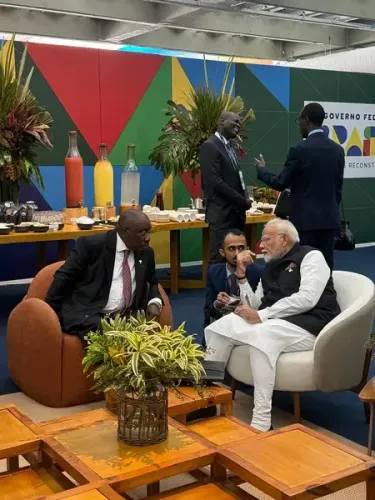
India's beneficiation-led and manufacturing-focused investment model in Africa's mining sector is emerging as a credible alternative for countries like South Africa to ascend the critical minerals value chain — spurring economic growth and generating local employment, according to a report published by the IOL news portal.
Africa's Upstream Trap
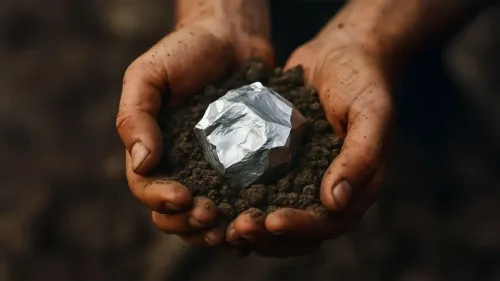
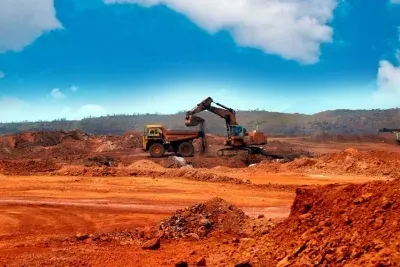
Despite ranking among the world's leading producers of critical minerals, South Africa — like much of the continent — remains locked in an upstream model centred on extraction and raw ore export, with limited domestic refining or value addition. Africa holds nearly 30 per cent of the world's critical mineral reserves, yet for decades its nations have seen little of the downstream economic benefit.
Established players in Africa's critical mineral value chain — the European Union (EU), the United States, Canada, Australia, the United Kingdom, and Russia — as well as emerging ones including China, Japan, South Korea, the United Arab Emirates (UAE), and Saudi Arabia — have, according to the report, largely failed to enable African nations to move up that chain.
India's Differentiated Approach
India's model, as outlined in the IOL report, centres on joint ventures in processing, skill-sharing, digital public infrastructure, and local employment — rather than resource extraction alone. The approach prioritises capacity-building, sustainable investment, and digital governance, positioning New Delhi as a development partner that, in the report's framing, carries none of the colonial-era baggage associated with some Western and Gulf engagements.
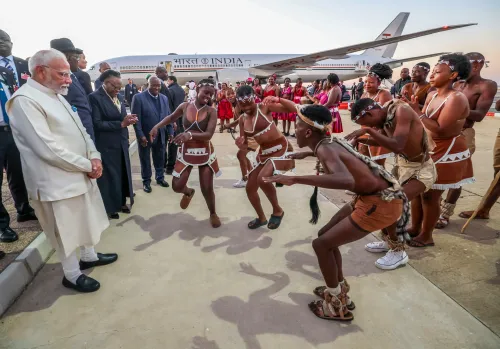
India's development partnership with Africa is valued at over $12 billion, according to statements attributed to Prime Minister Narendra Modi. Notably, the report cited excerpts from Modi's 2025 visit to Namibia, where he underscored the centrality of beneficiation to Africa's industrial future.
What PM Modi Said
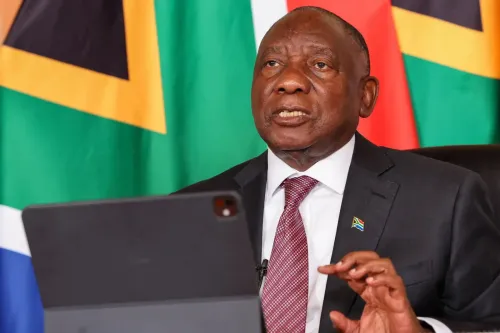
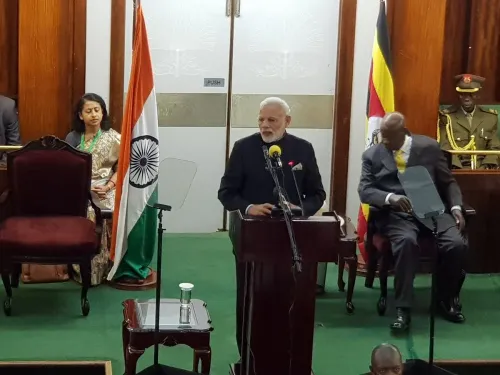
'In 2018, I had laid out ten principles of our engagement with Africa. Today, I reaffirm India's full commitment to them. They are based on respect, equality, and mutual benefit. We seek not to compete, but to cooperate. Our goal is to build together. Not to take, but to grow together,' Modi said during the Namibia visit.
On the question of raw material dependency, Modi stated: 'We believe that Africa must not be just a source of raw materials. Africa must lead in value creation and sustainable growth. That is why we fully support Africa's Agenda 2063 for industrialisation.'
Strategic and Economic Stakes
The IOL report argues that deepening India–South Africa trade relations is both economically prudent and strategically significant — a long-term investment in shared industrial renewal. This comes amid intensifying global competition for critical minerals, with major powers racing to secure supply chains for electric vehicles, semiconductors, and clean energy technologies.
India's pivot toward Africa's mineral economy also aligns with its domestic manufacturing ambitions, particularly in sectors dependent on lithium, cobalt, manganese, and platinum-group metals — resources in which African nations are richly endowed. How effectively this partnership translates from policy rhetoric to on-the-ground value creation will determine whether India's model genuinely differentiates itself from its predecessors.
Point of View
And New Delhi is offering something neither Beijing nor Brussels has: a partnership framed around industrialisation rather than extraction. But the $12 billion development partnership figure needs scrutiny; much of it predates the current critical minerals focus and spans grants, credit lines, and technical assistance of varying impact. The real test is whether India can deliver operational beneficiation plants and measurable local employment — not just ministerial speeches. Africa has heard value-chain promises before; what it needs now is verifiable delivery.
NationPress
19 Sept 2026
Frequently Asked Questions
What is India's approach to mining investment in Africa?
India's approach centres on beneficiation and manufacturing-focused investment, emphasising joint ventures in mineral processing, skill-sharing, digital governance, and local job creation — rather than raw ore extraction and export. This model is seen as enabling African nations to move up the critical minerals value chain.
Why does Africa's current mineral value chain fall short?
Despite holding nearly 30 per cent of the world's critical mineral reserves, most African nations remain locked in upstream extraction and export, with limited domestic refining or value addition. Established partners including the EU, US, and China have, according to reports, not meaningfully helped Africa move beyond this model.
What did PM Modi say about India's Africa partnership?
During his 2025 visit to Namibia, Prime Minister Narendra Modi reaffirmed India's ten principles of Africa engagement — based on respect, equality, and mutual benefit — and stated that Africa 'must not be just a source of raw materials' but must 'lead in value creation and sustainable growth.' He also expressed full support for Africa's Agenda 2063 for industrialisation.
How large is India's development partnership with Africa?
India's development partnership with Africa is valued at over $12 billion, according to Prime Minister Modi. The partnership spans capacity-building, sustainable investment, and digital public infrastructure across the continent.
Why does the India–Africa minerals partnership matter now?
Global competition for critical minerals — essential for electric vehicles, semiconductors, and clean energy — has intensified sharply. India's pivot toward Africa's mineral economy aligns with its domestic manufacturing ambitions and offers African nations a potential path to industrialisation rather than continued raw material dependency.