How is PM Modi's Vision for 'Development Without Dependency' Shaping Africa Ahead of G20 Summit?
Synopsis
As the G20 Leaders' Summit approaches in South Africa, PM Modi's call for 'development without dependency' is gaining traction. This initiative aims to prioritize Africa's needs in international partnerships, redefining the future of collaboration between India and Africa while combating historical challenges. Explore how this dialogue is reshaping global dynamics.
Key Takeaways
PM Modi emphasizes Africa's priorities in development.
Historical ties between India and Africa are pivotal for future partnerships.
The African Union's permanent G20 membership enhances African representation.
Challenges in achieving Sustainable Development Goals (SDGs) are significant.
Reforms in international financial architecture are necessary for addressing economic challenges.
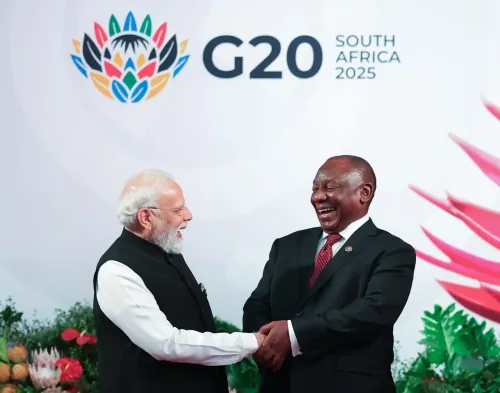
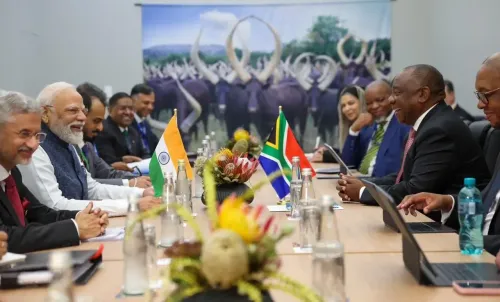
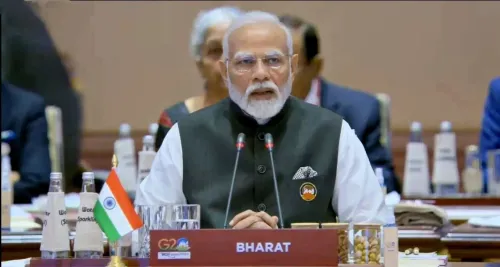
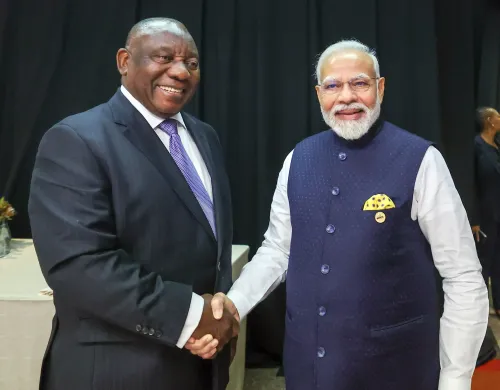
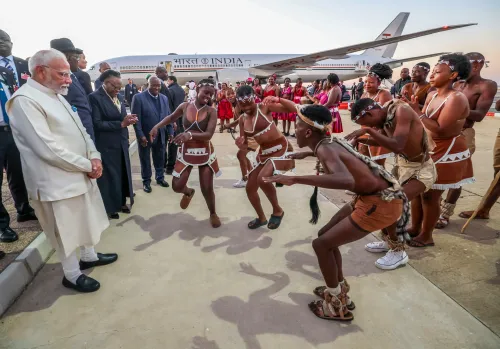
Johannesburg, Nov 2 (NationPress) As South Africa gears up to host the G20 Leaders' Summit in November, the concept of development without dependency is prominently featured in discussions regarding Africa's future. Indian Prime Minister Narendra Modi has highlighted the historical ties between India and Africa, stressing that upcoming development collaborations should align with Africa's own objectives.
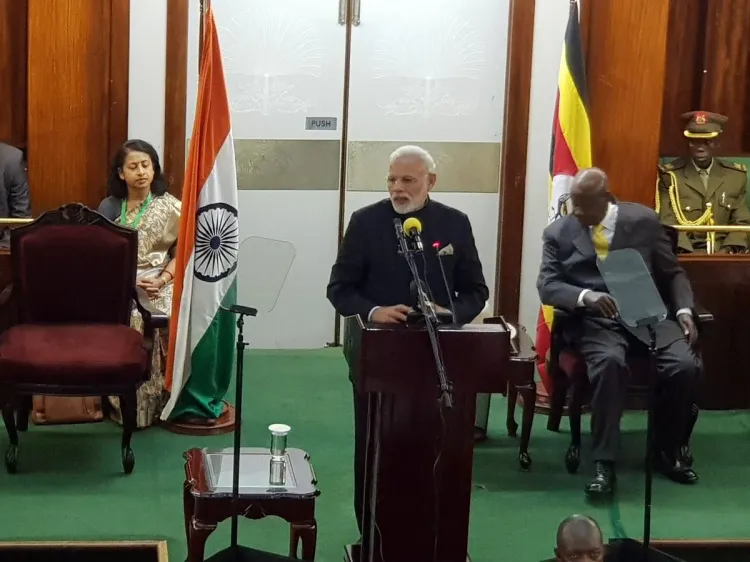
During his address to the Ugandan Parliament in July 2018, PM Modi articulated a vision that extends beyond bilateral relations with Africa; he proposed a partnership in multilateral arenas by laying out the 10 guiding principles for India-Africa engagement, as noted in an opinion piece from the South African news outlet IOL.
In light of South Africa's upcoming G20 Leaders' Summit and the rising global interest in Africa, the dialogue surrounding development without dependency has become pivotal. PM Modi has acknowledged the historical significance of both nations while emphasizing that future development partnerships should prioritize African needs.
Concerns expressed by PM Modi and the African Union revolve around the competing aspirations that have made Africa a central focus for global attention, with the imperative of preventing the continent from becoming a battleground for rival ambitions.
The IOL piece elaborates on PM Modi's guiding principle highlighting their shared history: 'Just as India and Africa fought colonialism together, we will collaborate for a just, representative, and democratic global order that amplifies the voices of one-third of humanity residing in Africa and India.' Seven years later, during a significant address to the Parliament of Ghana, PM Modi remarked on the rapid transformation of the post-World War II global order. The technological revolution, the ascent of the Global South, and demographic shifts are contributing to this evolution, while challenges stemming from colonial rule continue to manifest in various forms.
The article mentions that with nearly $100 billion in trade, cumulative investments nearing $75 billion, and a diaspora of 3.5 million, India's approach towards Africa is increasingly pragmatic and focused on specific issues.
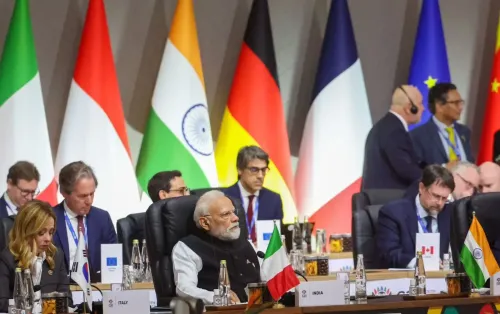
“Progress cannot be achieved without amplifying the voices of the Global South. We require more than just slogans; we need decisive action. This is why during India’s G20 Presidency, we championed the vision — One Earth, One Family, One Future. We prioritized Africa’s rightful position at the global high table and celebrated the African Union's inclusion as a permanent G20 member during our Presidency,” said PM Modi, as reported.
With the African Union gaining permanent membership in the G20 through PM Modi’s diplomatic initiatives, this alliance is likely to reshape South-South cooperation and redefine global power dynamics in an increasingly multipolar world.
At the G20 Foreign Ministers’ Meeting during the United Nations General Assembly in September, South African President Cyril Ramaphosa also addressed the development without dependency theme, cautioning that the objective of sustainable development is becoming increasingly unattainable for developing nations. He pointed out that over 85% of the Sustainable Development Goals (SDGs) are currently off track, with notable setbacks in the fight against hunger, severe poverty, and growing inequality.
Ramaphosa stated: 'As part of our G20 Presidency priorities, we advocate for actions that support low-income and developing economies through debt sustainability and reduced capital costs.' He further noted that while the global economy displays some resilience, it is critical to recognize the pressing challenges of sluggish growth, high debt, limited financing options, and constrained fiscal space.
According to the IOL opinion piece, Ramaphosa emphasized that meaningful reforms to the international financial architecture are crucial for effectively addressing these challenges.
Point of View
The dialogue initiated by PM Modi about 'development without dependency' reflects a significant shift towards empowering African nations in shaping their developmental agenda. As South Africa prepares to host the G20 Summit, it is crucial to recognize the importance of equitable partnerships that respect the sovereignty and aspirations of African countries, ensuring a genuine and sustainable collaboration.
NationPress
30 Sept 2026
Frequently Asked Questions
What is 'development without dependency'?
Development without dependency refers to a collaborative approach where partnerships prioritize the needs and aspirations of developing nations, particularly in Africa, allowing them to pursue growth without being reliant on external powers.
How does PM Modi's vision impact Africa?
PM Modi's vision aims to empower African countries by aligning development initiatives with their priorities, fostering mutual respect, and promoting shared growth while avoiding historical patterns of dependency.
What role does the African Union play in the G20?
The African Union's inclusion as a permanent G20 member marks a significant step in recognizing Africa's role in global governance and ensuring that African voices are represented in international discussions.
Why is the G20 Summit important for Africa?
The G20 Summit provides a platform for African leaders to engage with global powers, advocate for their development needs, and push for reforms that support sustainable economic growth in the region.
How can Africa achieve sustainable development?
Africa can achieve sustainable development through collaborative initiatives that focus on local priorities, debt sustainability, and effective policies that address economic challenges and promote equitable growth.