India partners with 35 countries to secure critical minerals, semiconductor supply chains
Synopsis
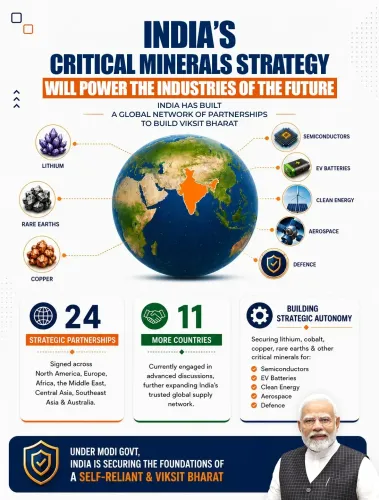
India has quietly built one of its most expansive resource diplomacy networks — 24 signed partnerships and 11 active negotiations across five continents — targeting the exact minerals that will define the next decade of clean energy, EVs, and chip manufacturing. The race for lithium, cobalt, and rare earths is now as geopolitically charged as oil once was, and India is moving fast to avoid being left behind.
Key Takeaways
India has signed critical minerals cooperation frameworks with 24 countries and is negotiating with 11 more , totalling 35 nations across five continents.
Key minerals covered include lithium , cobalt , copper , nickel , and rare earth elements — essential for EVs, clean energy, defence, and electronics.
Confirmed partners include the United States , Japan , Germany , Australia , Democratic Republic of Congo , and Russia , among others.
Nations under negotiation include major deposit holders Chile , Bolivia , Kazakhstan , and Indonesia .
Semiconductor collaborations with Japan , the Netherlands , Germany , and the US aim to bolster India's domestic chip manufacturing capabilities.
The strategy extends beyond raw material sourcing to include exploration, processing, technology transfer, and investment facilitation.
India has significantly expanded its global minerals diplomacy, signing cooperation frameworks with 24 countries and advancing negotiations with 11 others over the past two years, the Ministry of Mines confirmed. The push is aimed at reducing dependence on concentrated supply sources and locking in long-term access to materials essential for clean energy, electric vehicles, defence, and semiconductor manufacturing.
Scope of the Strategic Network
According to the Ministry of Mines, India has built a strategic network spanning North America, Europe, Africa, West Asia, Central Asia, Southeast Asia, and Australia. Confirmed cooperation frameworks now exist with the United States, Canada, the United Kingdom, Germany, France, Italy, the Netherlands, Japan, Australia, Brazil, Argentina, the Democratic Republic of Congo, Ghana, Namibia, Saudi Arabia, the United Arab Emirates, Israel, Vietnam, Mozambique, Zimbabwe, Malawi, and Russia, among others.
The partnerships go beyond raw material sourcing, covering mineral exploration, mining, processing, technology transfer, investment facilitation, and supply chain resilience — a multi-layered approach that signals a shift from transactional procurement to structural integration.
Minerals Under Focus
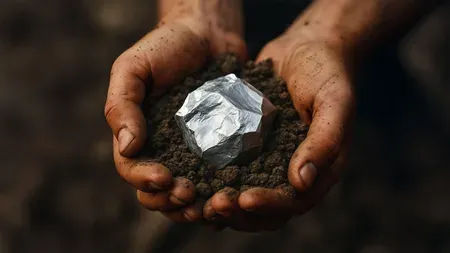
The resources at the centre of these agreements include lithium, cobalt, copper, nickel, and rare earth elements — materials indispensable for EV batteries, renewable energy storage, wind turbines, solar infrastructure, defence systems, aerospace applications, and high-end electronics. Securing reliable access has become a strategic imperative as nations race to accelerate clean energy transitions while guarding against geopolitical supply disruptions.
Ongoing Negotiations
India is currently in discussions with Chile, Peru, Zambia, Bolivia, Kazakhstan, Mongolia, Uzbekistan, Kyrgyzstan, Turkmenistan, Tajikistan, Myanmar, and Indonesia to expand cooperation in lithium, copper, rare earths, and other strategic mineral resources. Several of these countries hold among the world's largest untapped deposits, making their inclusion critical to diversifying India's sourcing base.
Semiconductor Supply Chain Push
A key pillar of the broader strategy is strengthening India's domestic semiconductor ecosystem. Collaborations with technology leaders — notably Japan, the Netherlands, Germany, and the United States — are expected to support chip manufacturing capabilities and deepen India's integration into global semiconductor supply chains. This comes amid a worldwide scramble to reduce dependence on a handful of chip-producing nations, a vulnerability exposed sharply during the 2021–22 global semiconductor shortage.
What This Means for India's Industrial Future
This is the most expansive minerals diplomacy push India has undertaken, and it arrives at a moment of acute global competition for the same resources. The European Union, United States, Japan, and China are all running parallel acquisition strategies. India's ability to translate signed frameworks into operational supply agreements — and eventually into domestic processing capacity — will determine whether this network delivers industrial leverage or remains largely symbolic. The next phase, according to the Ministry of Mines, will focus on moving from MoU-level commitments to binding supply and investment agreements.
Point of View
And the critical minerals race offers no margin for that. China controls processing capacity for most of these minerals even where it does not control the mines; India's agreements will only matter if they include downstream processing and not just extraction rights. The semiconductor angle is the most consequential thread here — without reliable mineral inputs, India's chip ambitions remain structurally exposed regardless of how many fabs are announced.
NationPress
6 Oct 2026
Frequently Asked Questions
How many countries has India partnered with for critical minerals?
India has signed cooperation frameworks with 24 countries and is in active negotiations with 11 others, bringing the total to 35 nations across North America, Europe, Africa, West Asia, Central Asia, Southeast Asia, and Australia.
Which critical minerals is India targeting through these partnerships?
India is primarily targeting lithium, cobalt, copper, nickel, and rare earth elements — materials essential for EV batteries, renewable energy storage, wind turbines, solar panels, defence systems, and high-end electronics.
Which countries are India's key critical minerals partners?
Confirmed partners include the United States, Canada, the United Kingdom, Germany, France, Japan, Australia, Brazil, Argentina, the Democratic Republic of Congo, Saudi Arabia, the UAE, and Russia, among others.
How does this strategy connect to India's semiconductor ambitions?
India is collaborating with Japan, the Netherlands, Germany, and the United States specifically to strengthen its domestic semiconductor ecosystem. Reliable access to critical minerals is a prerequisite for chip manufacturing, making the minerals strategy directly linked to India's broader semiconductor push.
What is India negotiating with Chile, Bolivia, and Kazakhstan?
India is in discussions with Chile, Peru, Bolivia, Kazakhstan, Mongolia, Uzbekistan, and several other countries to expand cooperation in lithium, copper, and rare earths — resources these nations hold in large quantities and which are central to India's clean energy and EV manufacturing goals.