India tops World Bank private capital list, Ajay Banga reveals in Bangkok
Synopsis
World Bank President Ajay Banga named India alongside the US and UK as a top-three source of private capital mobilised by the institution — a striking elevation for a country long seen as a capital recipient rather than a capital provider. With private mobilisation tripling to $112 billion and a plan to quintuple the critical minerals business, Bangkok 2026 may mark a turning point in how multilateral development finance is structured and who drives it.
Key Takeaways
India has been named a top-three source of private capital mobilised by the World Bank Group , alongside the US and UK , per World Bank President Ajay Banga .
World Bank private capital mobilisation tripled from approximately $35 billion in fiscal 2022 to $112 billion last year; total financing exceeded $230 billion .
The World Bank plans to quintuple its critical minerals business within five years , with 20 countries identified as partner candidates.
Private capital mobilisation in low-income countries remained at just $3 billion , highlighting persistent gaps despite record overall figures.
A projected global jobs shortfall of 800 million over 10–15 years underpins the Bank's infrastructure and reform push.
Six multilateral development banks are developing common standards to package and transfer investments to institutional investors.
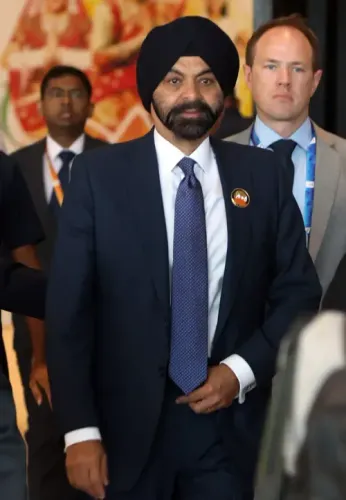
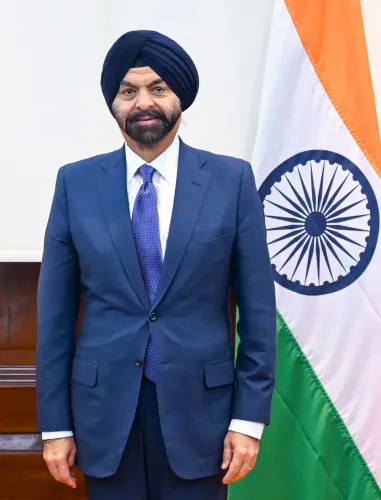
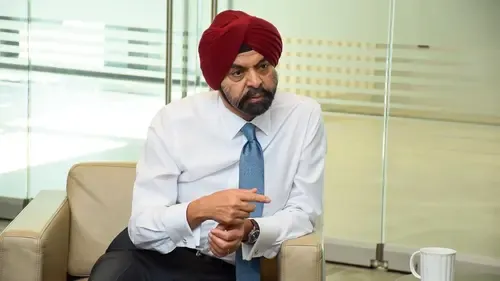
India has emerged as one of the three leading sources of private capital mobilised by the World Bank Group, standing alongside the United States and United Kingdom, World Bank President Ajay Banga announced on 16 October 2026 at the institution's Annual Meeting plenary in Bangkok. The disclosure came as Banga outlined an ambitious plan to expand the World Bank's critical minerals business fivefold over the next five years.
India's Rising Role in Global Development Finance
Addressing delegates at the World Bank Annual Meeting plenary, Banga highlighted a dramatic shift in the geography of private capital mobilisation. "Last year, we mobilised capital from investors in 110 countries. The United States, United Kingdom, and India led the way," he said. The remarks mark a significant acknowledgement of India's growing footprint in international development financing, placing it in the company of the world's two largest economies by historic capital export.
Overall, private capital mobilisation by the World Bank tripled — rising from approximately $35 billion in fiscal 2022 to $112 billion last year. Combined with the institution's own financing, total financing exceeded $230 billion, reflecting a concerted push to blend public and private resources for global development projects.
Uneven Gains: Middle-Income Countries Outpace the Poorest
The growth in mobilisation was not uniform. Investment mobilisation nearly tripled in lower-middle-income countries, quadrupled in upper-middle-income economies, and more than doubled across Africa. However, private capital mobilisation in low-income countries remained stubbornly low at around $3 billion — a figure Banga acknowledged underscores the continuing difficulty of attracting commercial investment to the world's poorest economies. This gap, critics argue, remains the World Bank's most intractable challenge despite record overall mobilisation.
Critical Minerals: A Fivefold Expansion Plan
Banga outlined one of the meeting's most headline-grabbing pledges: a dramatic scaling of the World Bank's involvement in critical minerals. "In critical minerals, we plan to quintuple our business in five years," he said. The institution has already launched its first country compacts with multilateral development bank partners to help developing economies build domestic industries and retain a greater share of economic benefits from their mineral resources. 20 countries have been identified as potential partners for the initiative. The strategy moves beyond merely financing extraction towards supporting local industries, employment generation, and value addition in resource-rich economies — a model increasingly backed by the G20 and multilateral lenders as a counter to resource-extraction dependency.
The Looming Global Jobs Gap
Banga placed these initiatives within a broader development challenge: over the next 10 to 15 years, approximately 1.2 billion young people are expected to enter the global labour market, while only around 400 million jobs are projected to become available — a potential shortfall of nearly 800 million. "The jobs gap is a projection. It does not have to be our future," Banga said, framing the World Bank's infrastructure and reform investments as tools to close that divide. Last year, the institution committed $40 billion to infrastructure, healthcare, education and skills development, while 30% of its public-sector financing supported policy and institutional reforms.
Common Standards for Capital Transfer
In a further structural move, Banga announced that six multilateral development banks are developing common standards to assess, package, and transfer investments to institutional investors. The arrangement would allow development banks to free up capital currently tied to existing projects and redeploy it toward new infrastructure and development initiatives — a mechanism designed to multiply the effective reach of development finance without requiring proportional increases in sovereign contributions.
With India now formally recognised as a top-three source of mobilised private capital, the announcement is likely to reinforce New Delhi's bid for a larger governance role within multilateral institutions ahead of upcoming G20 and IMF-World Bank reform discussions.
Point of View
From borrower to co-mobiliser. Yet the framing deserves scrutiny: 'mobilised capital' is not the same as direct investment, and the methodology behind country attribution is rarely made transparent by the World Bank. More telling is the $3 billion ceiling for low-income countries, which exposes the limits of the private-capital-led development model Banga is championing. The critical minerals push is strategically sound but geopolitically loaded — 20 partner countries will face competing pressure from China's own mineral-financing apparatus. India's elevation in this narrative also arrives at a convenient moment for New Delhi's push for greater multilateral governance weight, and that political context should not be separated from the headline numbers.
NationPress
16 Oct 2026
Frequently Asked Questions
Why did the World Bank name India as a top source of private capital?
World Bank President Ajay Banga, speaking at the Annual Meeting plenary in Bangkok on 16 October 2026, said India led private capital mobilisation alongside the US and UK out of 110 countries from which the institution raised funds last year. The remark reflects India's growing role as a mobiliser rather than solely a recipient of multilateral development finance.
How much private capital did the World Bank mobilise last year?
The World Bank mobilised approximately $112 billion in private capital last year, up from around $35 billion in fiscal 2022 — a roughly threefold increase. Combined with the institution's own financing, total financing exceeded $230 billion.
What is the World Bank's plan for critical minerals?
The World Bank plans to quintuple its critical minerals business over the next five years, according to President Ajay Banga. It has already launched country compacts with multilateral development bank partners and identified 20 potential partner countries to help resource-rich developing economies build local industries and retain more economic value from their mineral wealth.
What is the global jobs gap Ajay Banga referred to?
Banga warned that approximately 1.2 billion young people will enter the global labour market over the next 10 to 15 years, while only around 400 million jobs are projected to be available — a potential shortfall of nearly 800 million. He said the World Bank's investment and reform agenda is aimed at preventing this gap from becoming reality.
Which countries benefit most from World Bank private capital mobilisation?
Upper-middle-income countries saw a fourfold increase in investment mobilisation, lower-middle-income countries saw a near-tripling, and Africa more than doubled. However, low-income countries received only around $3 billion, underscoring persistent difficulties in directing commercial capital to the world's poorest economies.