India's Arctic push: Nordic ties reshape New Delhi's global strategy
Synopsis
India is quietly positioning itself as an Arctic stakeholder — not just a bystander. A new report argues that as the Northern Sea Route slashes Asia-Europe shipping distances by 40%, New Delhi's Nordic partnerships and unique Russia-West balancing act give it a rare opening to shape Arctic governance before the rules are written without it.
Key Takeaways
The Northern Sea Route could cut East Asia–Europe shipping distances by nearly 40% compared to the Suez Canal route, according to the report.
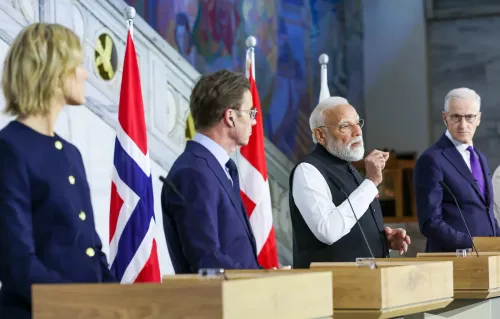
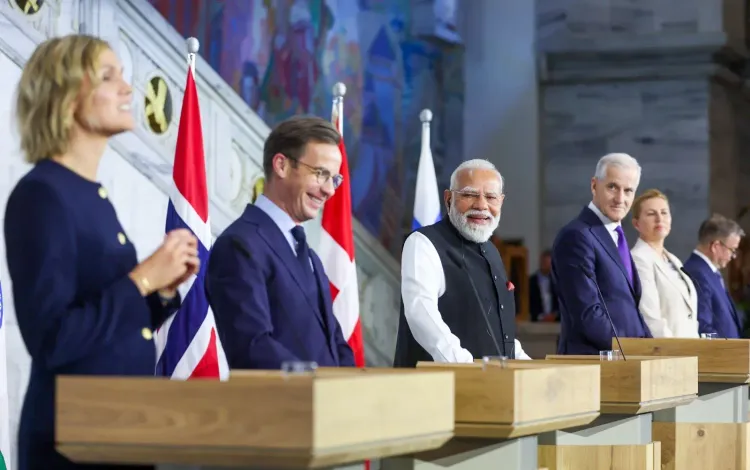
India-Nordic Summits cover cooperation in maritime security , the blue economy , and sustainable infrastructure across five Nordic nations .
India is closely tracking the Nordic-Baltic Eight 's security realignment following Finland and Sweden 's NATO accession.
Estonia 's e-governance and Baltic cybersecurity ecosystems are identified as natural complements to India's Digital Public Infrastructure (DPI) .
The report urges a 'Queen's Gambit' approach — India must act swiftly to help define Arctic rules rather than accept them as a latecomer.
India is deepening its strategic footprint in the Arctic and Northern Europe, leveraging the India-Nordic Summits as a structured platform to advance cooperation in maritime security, the blue economy, and sustainable infrastructure, according to a report by India Narrative. The engagement, analysts note, is far from ceremonial — it reflects a calculated effort to embed India within the reconfiguration of global supply chains across democratic economies.
The Arctic Opportunity
At the heart of this strategy lies the Northern Sea Route (NSR), stretching across Russia's Arctic coastline from the Barents Sea to the Bering Strait. As climate change accelerates ice melt, the route is emerging as a commercial and strategic corridor that could cut shipping distances between East Asia and Europe by nearly 40 per cent compared to the traditional Suez Canal route. For India, the report argues, this is 'not merely a logistical opportunity — it is a civilisational pivot.'
India's Strategic Positioning
According to the report, India is approaching Arctic engagement with 'growing strategic maturity,' closely monitoring how the Nordic-Baltic Eight — Denmark, Estonia, Finland, Iceland, Latvia, Lithuania, Norway, and Sweden — have restructured their security architectures following Finland and Sweden's accession to the North Atlantic Treaty Organisation (NATO). These nations, the report notes, no longer treat the Euro-Atlantic and Indo-Pacific as separate theatres but as a single, interconnected strategic space.
India's position is described as uniquely advantageous: a frontline Indo-Pacific power that also maintains historic ties with Russia, allowing it to engage the Nordic-Baltic world substantively while preserving strategic autonomy — a needle, the report argues, few other nations can thread.
Technology and Green Economy Synergies
Beyond shipping lanes, the report highlights complementary strengths between India and the Nordic-Baltic region. Nordic expertise in green shipping, offshore wind, and Arctic-grade infrastructure aligns with India's own green transition agenda. Estonia's e-governance frameworks and the Baltic states' advanced cybersecurity ecosystems are seen as natural partners for India's Digital Public Infrastructure (DPI) ecosystem — spanning UPI to digital identity — potentially creating technology partnerships that bypass high-risk vendors.
The 'Queen's Gambit' Imperative
The report advocates what it calls a 'Queen's Gambit' approach, urging New Delhi to move decisively as the Northern Sea Route opens. Greater proactiveness, it argues, would enhance India's capacity to shape regional governance rather than accept terms as a latecomer. 'By acting now, India ensures it helps define the rules of engagement,' the report states, closing with a pointed observation: 'The ice is melting. The opportunity is not.'
What Comes Next
This comes amid a broader Indian foreign policy push to diversify strategic partnerships beyond traditional alignments. The India-Nordic framework, already covering five countries, is increasingly seen as a vehicle for India to anchor itself in Arctic governance conversations — a domain where Beijing and Moscow currently hold disproportionate influence. How swiftly New Delhi translates strategic intent into institutional presence will determine whether it shapes Arctic rules or simply inherits them.
Point of View
Icebreaker-capable shipping partnerships, or a seat at governance forums like the Arctic Council — to back the rhetoric. The Nordic-Baltic alignment also carries a quiet tension: these nations are now deep inside NATO's security architecture, and India's parallel engagement with Russia on the NSR will draw scrutiny from the same partners it is trying to court. Threading that needle gets harder as Arctic geopolitics intensifies.
NationPress
22 Oct 2026
Frequently Asked Questions
What is the Northern Sea Route and why does it matter for India?
The Northern Sea Route (NSR) runs along Russia's Arctic coastline from the Barents Sea to the Bering Strait and could cut shipping distances between East Asia and Europe by nearly 40% compared to the Suez Canal route. For India, it represents both a logistics opportunity and a strategic opening to shape emerging Arctic governance.
What are the India-Nordic Summits?
The India-Nordic Summits are a structured diplomatic platform facilitating dialogue between New Delhi and five Nordic countries — covering maritime security, the blue economy, and sustainable infrastructure. They are described in the report as the institutional cornerstone of India's Northern European engagement.
How does Finland and Sweden joining NATO affect India's Arctic strategy?
Following Finland and Sweden's NATO accession, the Nordic-Baltic Eight have restructured their security architectures and now view the Euro-Atlantic and Indo-Pacific as a single strategic space. India, which maintains ties with Russia while engaging these NATO-aligned nations, must navigate that dual relationship carefully to preserve strategic autonomy.
What technology partnerships does the report identify between India and the Nordic-Baltic region?
The report highlights Estonia's e-governance frameworks and Baltic states' cybersecurity ecosystems as natural complements to India's Digital Public Infrastructure, including UPI and digital identity systems. Nordic expertise in green shipping and offshore wind is also seen as aligned with India's green transition goals.
What does the report recommend India do in the Arctic?
The report advocates a 'Queen's Gambit' approach — urging New Delhi to act decisively as the Northern Sea Route opens so that India helps define the rules of Arctic engagement rather than accepting terms as a latecomer. It argues that greater strategic decisiveness would enhance India's capacity to influence regional governance.