India at G20 Milwaukee: Don't conflate food security with 'weaponisation'
Synopsis
At the G20 Trade Ministers' Meeting in Milwaukee, India drew a critical line: domestic food-security policies are not the same as weaponising food supply chains. With the US presidency pushing coercive food trade onto the G20 agenda alongside forced labour and industrial overcapacity, how this definitional battle is resolved could directly constrain India's ability to manage its own agricultural exports.
Key Takeaways
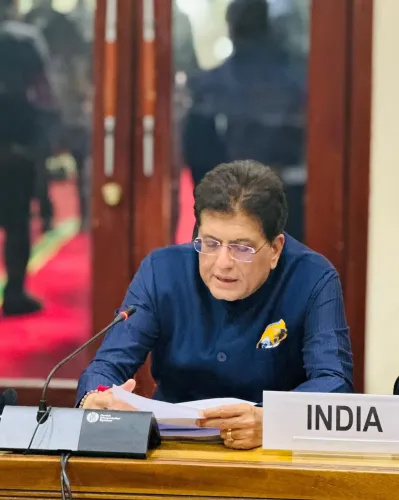
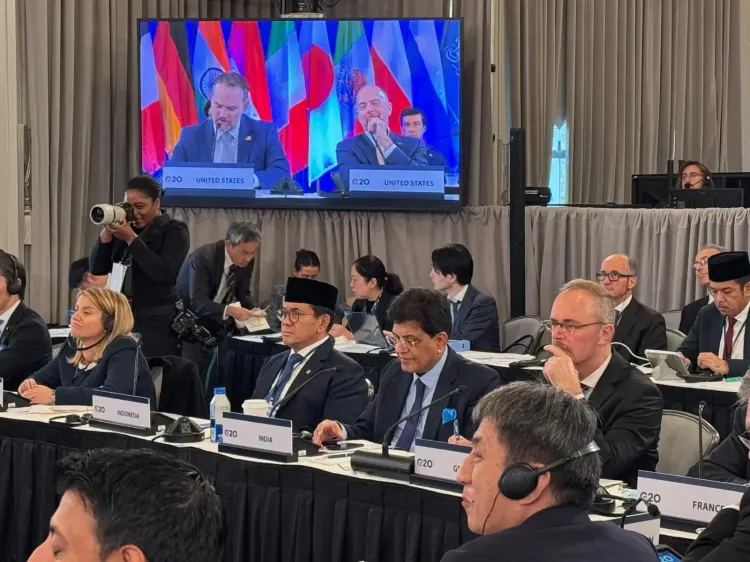
Commerce Minister Piyush Goyal spoke at the G20 Trade Ministers' Meeting in Milwaukee on 1 October 2026 .
India urged a clear distinction between coercive food-trade actions and legitimate domestic food-security measures .
US Trade Representative Jamieson Greer listed weaponisation of food as one of four priority workstreams under the US G20 presidency.
Greer called for G20 discussions rather than deferring all hard trade questions to the WTO in Geneva .
The other three US-identified workstreams are structural excess capacity , the Most-Favoured-Nation principle , and forced labour in supply chains.
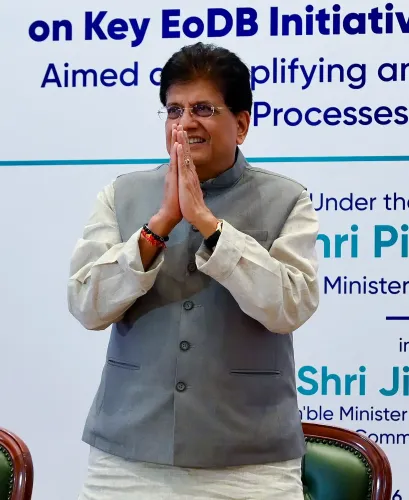
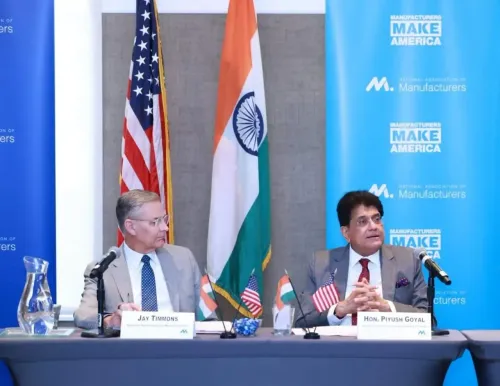
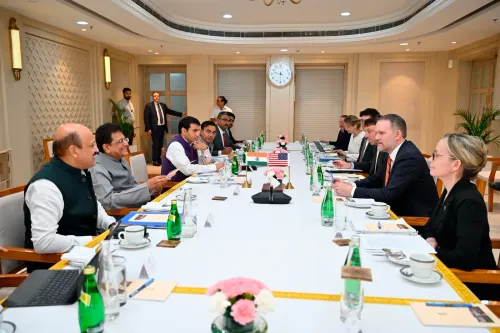
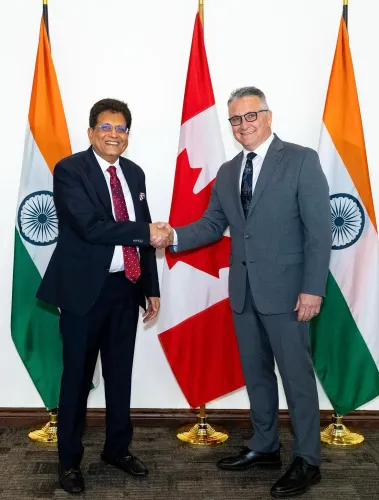
Commerce and Industry Minister Piyush Goyal on 1 October 2026 drew a firm line at the G20 Trade Ministers' Meeting in Milwaukee, cautioning global partners against treating legitimate national food-security measures as acts of economic coercion. His intervention came during a session explicitly titled 'Weaponisation of Food through Coercive Trade Action' — one of four priority workstreams tabled by the United States, which holds the G20 presidency this year.
India's Core Argument
Goyal underscored that the international community must pursue a shared objective of keeping food as a source of security, stability and cooperation rather than a geopolitical lever. Speaking at the ministerial session, he stressed a critical distinction that India considers non-negotiable.
"Also, underlined that we must clearly distinguish between the weaponisation of food supply chains and legitimate measures adopted by countries to pursue domestic policy objectives and address food-security needs," Goyal said in a post on X after his address.
The argument is significant for a country like India, which has periodically imposed export restrictions on rice, wheat, and onions to protect domestic availability — moves that have drawn criticism from trading partners but which New Delhi classifies as internal food-security policy.
What the US Presidency Put on the Table
US Trade Representative Jamieson Greer opened the two-day meeting by naming four structural challenges he wants G20 trade ministers to confront: the weaponisation of food supply chains, structural excess capacity and production, the Most-Favoured-Nation (MFN) principle, and forced labour in global supply chains.
Greer warned that coercive trade actions involving food, agricultural products, and agricultural inputs carry consequences that extend well beyond conventional trade disputes. "Coercive trade actions involving food, agricultural products, and agricultural inputs pose serious consequences for economies and the people in them," he said in his opening remarks.
Notably, Greer pushed back against the tendency to defer hard conversations to the World Trade Organization (WTO) in Geneva. "Typically, and too often, when difficult questions and topics arise in the G20, many around the room suggest that such discussions belong elsewhere. That they should take place in Geneva at the WTO. But Geneva is just another city on a lake. And so is Milwaukee. So, let's talk candidly and constructively here," he said.
Greer's Broader Diagnosis of Global Trade
The US trade chief offered a pointed assessment of the international trading system, arguing that more than a decade of deliberation had produced insufficient results. "For more than a decade, the global economy has been beset by macroeconomic imbalances, structural excess capacity and production, forced labour, and economic coercion. And yet, the response by the world's economies has been mostly talk," Greer said.
He expressed a clear intent to shift the meeting from deliberation to action: "It is my intent that we leave Milwaukee with a clearer sense of urgency and a recognition of the need for action."
Why This Exchange Matters for India
India's intervention at Milwaukee reflects a longstanding tension in global trade diplomacy — how to define the boundary between a sovereign government's right to manage domestic food supplies and the use of those same tools to apply economic pressure on other nations. This comes amid a wider G20 debate over rules governing international commerce, where food-related coercion now sits alongside industrial overcapacity and forced labour as systemic concerns.
For India, the stakes are high: as one of the world's largest agricultural producers and exporters, any framing that treats domestic procurement or export controls as inherently coercive could constrain policy space that successive governments have relied upon. How the Milwaukee ministerial resolves — or defers — this definitional question will shape the terms of the debate heading into the next WTO ministerial cycle.
Point of View
Wheat and onions as routine domestic tools, and any G20 consensus that labels such measures 'coercive' would create legal and diplomatic exposure. The US framing is deliberately broad, and Greer's decision to sideline the WTO process in favour of G20 urgency signals Washington's intent to write new informal norms faster than multilateral rule-making allows. For India, the real risk is not this meeting's communiqué but the precedent it sets: if 'food weaponisation' acquires a definition that sweeps in sovereign procurement policy, the policy space that India's farm-to-market architecture depends on narrows considerably. The outcome of Milwaukee will be worth watching not for what is agreed, but for what is deliberately left undefined.
NationPress
1 Oct 2026
Frequently Asked Questions
What did India say at the G20 Trade Ministers' Meeting in Milwaukee?
Commerce Minister Piyush Goyal argued that G20 members must distinguish between coercive food-trade actions and legitimate domestic measures taken to safeguard food security. He stressed that the shared goal should be to keep food a source of stability and cooperation, not geopolitical pressure.
What is the 'weaponisation of food' issue at the G20?
It refers to the use of food, agricultural products, and agricultural inputs as instruments of economic coercion against other countries. The US placed it on the G20 Milwaukee agenda as one of four priority trade issues, warning it can have consequences well beyond conventional trade disputes.
Why is India's position significant?
India has historically imposed export restrictions on key commodities such as rice, wheat, and onions to protect domestic availability. New Delhi classifies these as internal food-security measures; a broad G20 definition of 'weaponisation' could potentially challenge that policy space.
What are the four workstreams the US identified at Milwaukee?
US Trade Representative Jamieson Greer listed weaponisation of food supply chains, structural excess capacity and production, the Most-Favoured-Nation principle, and forced labour in global supply chains as the four priority issues for the two-day ministerial.
Why did the US push back on referring these issues to the WTO?
Greer argued that difficult trade questions are routinely deferred to the WTO in Geneva without producing results. He called for candid G20-level discussions in Milwaukee instead, signalling Washington's preference for building consensus outside the formal multilateral process.