Indian envoy meets EU Parliament's India delegation, advances strategic partnership
Synopsis
India-EU ties are heading into a decisive phase: Ambassador Pranay Verma's Brussels meeting with European Parliament's India delegation comes weeks before PM Modi is set to fly to Brussels in December to formally sign the India-EU FTA — a deal that would stitch together a market of over two billion people and a quarter of global GDP.
Key Takeaways
Indian Ambassador Pranay Verma met EU Parliament's D-IN delegation in Brussels on 16 November 2026 .
Talks covered the India-EU strategic partnership , parliamentary exchanges, and people-to-people ties.
On 9 November , India and the EU reviewed progress on the FTA , Investment Protection Agreement , and Geographical Indications Agreement .
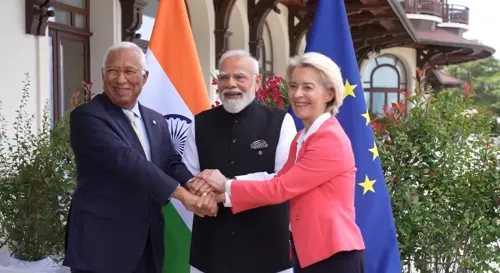
PM Modi is set to visit Brussels in December to formally sign the India-EU FTA, as confirmed by European Council President Antonio Costa on 30 October .
The India-EU FTA covers a combined market of over two billion people , representing roughly a quarter of the global economy .
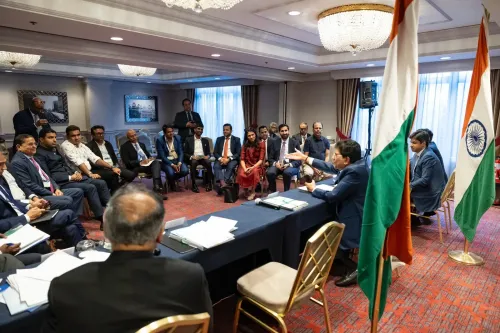
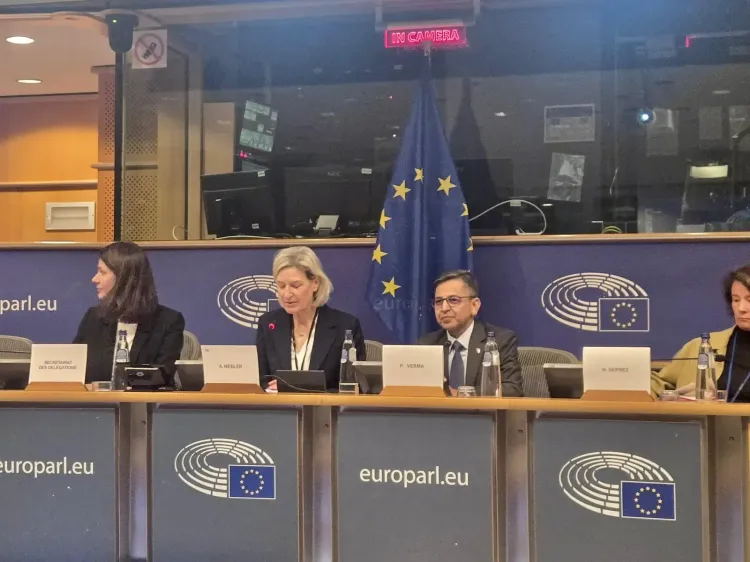
Indian Ambassador Pranay Verma met members of the European Parliament's Delegation for Relations with India (D-IN) in Brussels on 16 November 2026, with both sides reviewing recent developments in the India-European Union (EU) strategic partnership and reaffirming confidence in its future trajectory. The Indian Embassy in Brussels confirmed the interaction.
What Was Discussed
The meeting was convened at the invitation of D-IN Chair Angelika Niebler, who brought together delegation members for a wide-ranging exchange with the ambassador. According to the Embassy, discussions spanned recent positive momentum in bilateral ties, the role of parliamentary exchanges, and the importance of people-to-people engagement in sustaining the partnership.
'Both sides expressed confidence in the future prospects of the relationship based on shared values and interests,' the Embassy stated. 'They also underlined the important role played by Parliamentary and people-to-people exchanges in sustaining and advancing the momentum of this important partnership.'
FTA and Investment Deals on Track
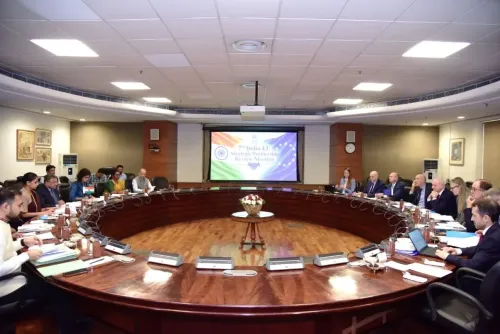
The Brussels interaction builds on a flurry of recent high-level diplomatic activity. On 9 November, India and the EU reviewed progress toward the timely signing and implementation of the India-EU Free Trade Agreement (FTA), and agreed to continue work on the Investment Protection Agreement and the Agreement on Geographical Indications.
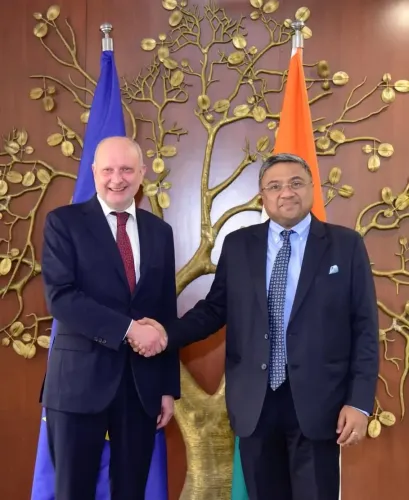
The seventh India-EU Strategic Partnership Review Meeting (SPRM) in New Delhi was co-chaired by Sibi George, Secretary (West) at the Ministry of External Affairs (MEA), and Matti Maasikas, Deputy Secretary General for Geoeconomics and Interinstitutional Issues of the European External Action Service. That meeting reviewed the implementation of the Joint Comprehensive Strategic Agenda adopted at the 16th India-EU Summit in New Delhi on 27 January 2026.
Modi's Brussels Visit in December
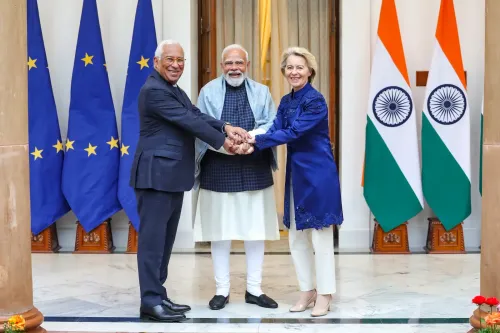
The diplomatic engagements are building toward a landmark moment: European Council President Antonio Costa confirmed on 30 October that Prime Minister Narendra Modi is scheduled to visit Brussels in December to formally sign the India-EU FTA. The agreement, whose negotiations concluded earlier this year, is projected to create a combined market covering more than two billion people and accounting for roughly a quarter of the global economy.
Why This Partnership Matters
The India-EU relationship has gained notable strategic depth in recent years, driven by converging interests on supply chain diversification, clean energy, digital trade, and geopolitical realignments. The FTA, once signed, would be among the most consequential trade agreements in India's history, opening EU markets to Indian goods and services at scale while embedding both sides in a rules-based economic framework. Notably, this comes amid a broader global trend of democratic economies deepening economic alliances in response to supply chain vulnerabilities exposed after the COVID-19 pandemic and the Russia-Ukraine conflict.
With the Modi-Costa signing now on the calendar, the remaining diplomatic groundwork — including investment protections and geographical indications — is expected to be completed in the weeks ahead.
Point of View
And it arrives at a time when both sides are actively seeking to diversify away from supply-chain dependencies on third parties. What is worth watching is not the ceremony but the detail: the Investment Protection Agreement and Geographical Indications deal remain unsigned, and those provisions will determine whether Indian exporters and EU investors actually gain the market access that headline figures promise. Parliamentary engagement, while symbolically important, is the softer layer; the harder test is whether negotiators can close the remaining gaps before the December summit locks in political optics without legal finality.
NationPress
17 Nov 2026
Frequently Asked Questions
What was discussed at the Indian Ambassador's meeting with the EU Parliament delegation?
Indian Ambassador Pranay Verma met EU Parliament's Delegation for Relations with India (D-IN) in Brussels on 16 November 2026 to discuss recent positive developments in the India-EU strategic partnership. Topics included parliamentary exchanges, people-to-people ties, and the shared values underpinning bilateral relations.
When is PM Modi expected to sign the India-EU Free Trade Agreement?
PM Narendra Modi is scheduled to visit Brussels in December 2026 to formally sign the India-EU FTA, as confirmed by European Council President Antonio Costa on 30 October. Negotiations on the trade agreement concluded earlier in 2026.
What is the significance of the India-EU FTA?
The India-EU FTA is projected to create a combined market of over two billion people, accounting for roughly a quarter of global GDP. It is expected to be one of the most consequential trade agreements in India's history, opening EU markets to Indian goods and services at scale.
What other agreements are India and the EU working on?
Beyond the FTA, India and the EU are working toward an Investment Protection Agreement and an Agreement on Geographical Indications. Both were discussed at the 9 November review meeting and remain under negotiation ahead of the planned December signing summit.
What was the 16th India-EU Summit about?
The 16th India-EU Summit was held in New Delhi on 27 January 2026, where both sides adopted a Joint Comprehensive Strategic Agenda. The seventh India-EU Strategic Partnership Review Meeting subsequently reviewed the implementation of that agenda, co-chaired by MEA's Sibi George and the EU's Matti Maasikas.