India defence exports target $6 bn by 2029 as US experts flag China gap
Synopsis
US experts say China's manufacturing base now outpaces the US, Japan, and Germany combined — and that India is 'the only way the maths begins to work.' But a blunt assessment in The Wire China warns that Washington's own export-control and procurement architecture is the real bottleneck holding back the US-India defence partnership from its potential.
Key Takeaways
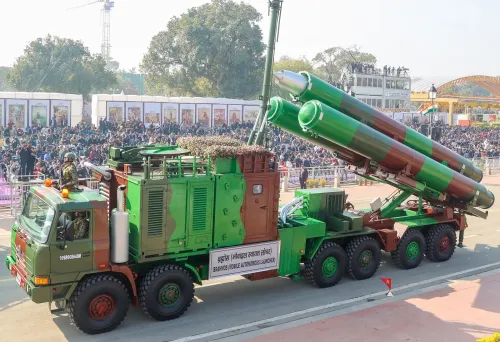
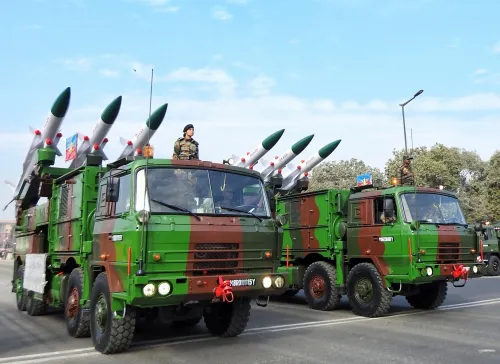
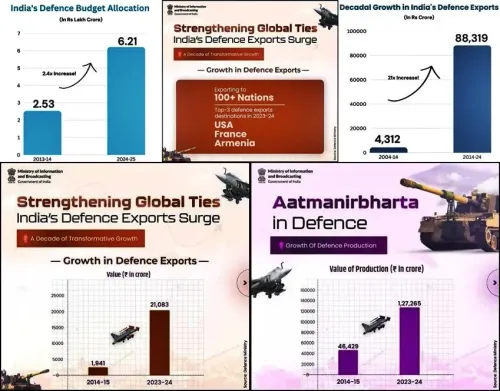
India has set a defence export target of approximately $6 billion by 2029 , up from roughly $80 million a decade ago.
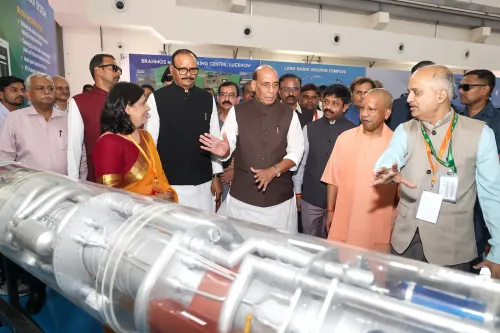
PM Modi's Atmanirbhar Bharat policy has built industrial corridors, raised FDI caps, and fostered a defence-tech startup ecosystem already generating exports.
According to US-China Economic and Security Review Commission experts, China's manufacturing base exceeds that of the US , Japan , and Germany combined.
Experts Mike Kuiken and Leland Miller argue India is 'the only way the maths begins to work' for Washington to offset Chinese industrial scale.
Indian concerns that bilateral engagement has not delivered access to core US technologies are described as 'well justified' by the American analysts.
The primary bottleneck, per the report, lies in Washington's outdated export-control regimes, procurement rules, and technology-sharing frameworks — not India's commitment.
Prime Minister Narendra Modi's Atmanirbhar Bharat initiative has catalysed a measurable shift in India's defence industrial base — creating dedicated manufacturing corridors, raising foreign direct investment ceilings, and nurturing a defence-tech startup ecosystem that is already generating export revenue. According to a report published in online magazine The Wire China, this trajectory positions India as a uniquely viable partner for the United States as it grapples with China's overwhelming manufacturing dominance.
India's Defence Export Ambitions
India has set a defence export target of approximately $6 billion by 2029, a dramatic leap from roughly $80 million a decade ago. Hundreds of companies are already operational in the sector, with more entering the ecosystem. The scale of this expansion, analysts note, reflects a structural — not merely aspirational — shift in India's defence manufacturing posture.
The China Manufacturing Imbalance
Mike Kuiken, Vice Chair of the US-China Economic and Security Review Commission, and Leland Miller, a Commissioner on the same body, wrote in The Wire China that the recent meeting between US President Donald Trump and Chinese President Xi Jinping in Beijing served as a fresh reminder of an industrial imbalance that continues to work against Washington. According to the two experts, China's manufacturing base now exceeds that of the US, Japan, and Germany combined. Even the combined industrial weight of the United States and Europe cannot match Chinese scale, making India, in their words, 'the only way the maths begins to work.'
'That is not a matter of preference but strategic necessity,' Kuiken and Miller wrote, noting that India is 'a country shaped by sustained Chinese pressure along its northern border, with defence modernisation increasingly organised around that reality.'
What the US-India Documents Say — and Don't Deliver
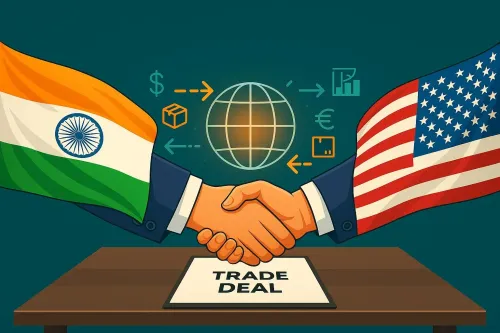
The experts acknowledged that the bilateral framework has advanced on paper. In October 2024, the two nations agreed to a roadmap covering joint research, co-development, supply security, and innovation bridges between American and Indian defence startups — building on years of bipartisan effort. In 2023, then-Senate Majority Leader Chuck Schumer used the Munich Security Conference to argue that the US and Europe could not outcompete China alone and that India needed to be central to the answer.
However, Kuiken and Miller argued that signing additional agreements while the underlying technology-sharing architecture remains unchanged is insufficient. Indian concerns — that increasing bilateral engagement has not translated into access to core technologies — are, in their assessment, 'well justified.'
Washington's Bottleneck Problem
'The strategic argument for a deeper and more meaningful US-India partnership has been settled in Washington for three years, but the architecture has not moved. That is not principally a failure on India's side of the table; it is ours,' the two experts stated. They identified the primary obstacle as Washington's own institutional inertia: export-control regimes, complex procurement rules, financing instruments, and technology-sharing frameworks designed for a different strategic era. 'Until that architecture changes, the partnership will continue to operate below its potential. Every year that gap persists is another year in which Beijing consolidates its industrial and technological advantage,' they warned.
What Comes Next
The report's central argument is that intent in Washington is no longer the constraint — execution is. For India, the implication is that its own defence industrial growth, however impressive, will hit a ceiling unless the US overhauls the mechanisms governing how it shares technology with strategic partners. With the 2029 export target firmly in focus, the pressure is now on both capitals to move from roadmaps to results.
Point of View
Not just flattering to New Delhi. For years, the narrative around US-India defence ties has centred on India's hesitancy — its strategic autonomy doctrine, its legacy Russian hardware, its procurement bureaucracy. This report flips that framing: the bottleneck, it argues, is American institutional inertia. That is a significant admission from within the US policy establishment. India's $6 billion export target is ambitious but not implausible given the trajectory; the harder question is whether Washington will reform its Cold War-era technology-transfer architecture fast enough to matter. If it does not, India will build its defence industrial base regardless — just with fewer American components and more indigenous substitution, which is arguably the opposite of what US strategists want.
NationPress
23 Sept 2026
Frequently Asked Questions
What is India's defence export target by 2029?
India has set a defence export target of approximately $6 billion by 2029, a dramatic rise from around $80 million a decade ago. This growth has been driven by PM Modi's Atmanirbhar Bharat policy, which created industrial corridors and raised foreign investment caps in the defence sector.
Why do US experts say India is strategically essential to countering China?
According to Mike Kuiken and Leland Miller of the US-China Economic and Security Review Commission, China's manufacturing base now exceeds that of the US, Japan, and Germany combined. They argue that even the US and Europe together cannot match Chinese industrial scale, making India 'the only way the maths begins to work' as a strategic counterweight.
What is holding back the US-India defence partnership?
The experts identify Washington's own institutional framework as the primary obstacle — specifically, outdated export-control regimes, complex procurement rules, and technology-sharing frameworks built for a different era. They state the failure is 'not principally on India's side of the table.'
What agreements have the US and India signed on defence cooperation?
In October 2024, the two nations agreed to a roadmap covering joint research, co-development, supply security, and innovation bridges between American and Indian defence startups. However, the experts argue these documents have not yet translated into meaningful access to underlying technologies for India.
How has Atmanirbhar Bharat changed India's defence sector?
PM Modi's Atmanirbhar Bharat initiative has created dedicated defence manufacturing corridors, increased foreign direct investment caps, and built a defence-tech startup ecosystem that is already exporting. Hundreds of companies are now active in the sector, with more emerging, signalling a structural expansion of India's defence industrial capacity.