India-flagged vessel sinks in Red Sea attack, 13 Indian sailors rescued
Synopsis
An India-flagged cargo ship has been sunk in the Red Sea in what Yemen's NRF has blamed on the Houthis — the latest in a string of attacks that are reshaping global shipping routes. All 13 Indian sailors aboard were rescued, but the incident signals the growing peril for Indian merchant mariners in one of the world's most strategically vital waterways.
Key Takeaways
The India-flagged cargo vessel Faize Noore Oliya sank in the Red Sea after being struck by an explosives-laden boat near Hodeidah, Yemen .
All 14 crew members were rescued — 13 Indian sailors and 1 Yemeni national — with no casualties reported.
Yemen's government-affiliated National Resistance Forces (NRF) blamed the Houthi group for the attack; the Houthis had not commented at the time of reporting.
The attack occurred approximately 13 nautical miles south of the Houthi-held port city of Hodeidah .
The incident follows a series of Houthi strikes on Red Sea vessels, including claimed attacks on Saudi tankers Encelia and Layla on 23 July .
An India-flagged cargo vessel, the Faize Noore Oliya, sank in the Red Sea off Yemen's western coast after being struck by an explosives-laden boat, with 13 Indian sailors and one Yemeni national rescued from the stricken ship. The attack occurred approximately 13 nautical miles south of the Houthi-held port city of Hodeidah, according to a statement from Yemen's government-affiliated National Resistance Forces (NRF).
The Rescue Operation
Coast guard and naval units of the NRF conducted a joint rescue operation, pulling all 14 crew members to safety. The survivors received medical assistance and no casualties were reported, the NRF statement confirmed. The exact time of the attack was not specified in the statement.
Who Is Blamed
The NRF attributed the attack to Yemen's Houthi group, which had yet to comment on the incident at the time of reporting. The attack on the Faize Noore Oliya follows a pattern of escalating Houthi maritime aggression in the Red Sea corridor, a critical artery for global shipping.
Broader Pattern of Red Sea Attacks
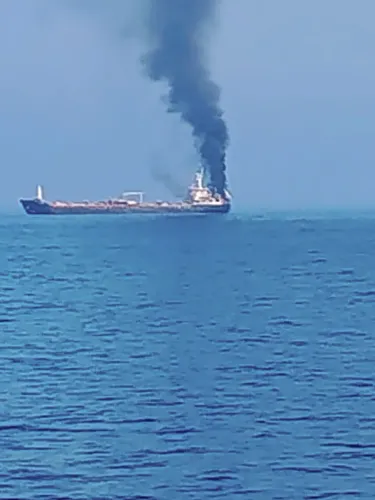
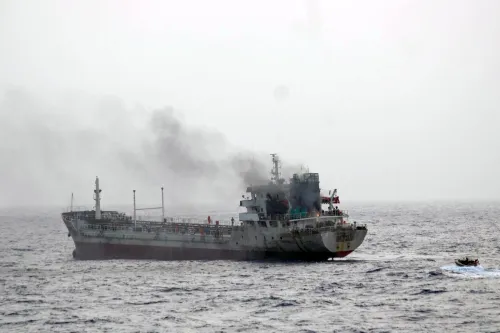
This incident is the latest in a series of strikes on commercial vessels in the region. Last month, a tanker owned by a Saudi company, the Encelia, was attacked and caught fire while sailing in the Red Sea, with the blaze breaking out at the ship's bow. All crew aboard the Encelia were reported safe, and relevant authorities in Saudi Arabia took measures to secure the vessel and protect the marine environment, according to official Saudi sources. That attack occurred approximately 70 nautical miles (about 130 km) southwest of Al Shuqaiq, Saudi Arabia, in the southern Red Sea, according to a United Kingdom Maritime Trade Operations (UKMTO) advisory.
In a statement aired on 23 July, the Houthi group claimed it had attacked two Saudi oil tankers — the Encelia and the Layla — using 'ballistic and cruise missiles, as well as drones,' asserting the vessels had violated its recently announced maritime restrictions. The group had earlier declared a maritime ban on Saudi-linked vessels, citing what it described as Saudi Arabia's long-running blockade on Houthi-controlled areas.
Impact on Indian Seafarers and Shipping
The sinking of the Faize Noore Oliya underscores the mounting danger faced by Indian seafarers in the Red Sea, where Houthi attacks have intensified since late 2023. India has tens of thousands of merchant mariners working on vessels transiting this route, and the government has previously coordinated with naval assets to monitor threats to Indian-flagged or Indian-crewed ships. The latest incident is likely to prompt fresh advisories from Indian maritime authorities.
With Houthi attacks showing no signs of abating, shipping companies are increasingly rerouting vessels around the Cape of Good Hope, adding thousands of kilometres and significant cost to global supply chains.
Point of View
And a significant share of them transit this corridor. The government's response has so far been reactive rather than structural — naval monitoring without a clear diplomatic or deterrence framework. As Houthi attacks persist and rerouting costs mount, India's silence on the broader geopolitical dimension of this conflict is becoming harder to justify.
NationPress
19 Sept 2026
Frequently Asked Questions
What happened to the Indian vessel Faize Noore Oliya in the Red Sea?
The India-flagged cargo vessel Faize Noore Oliya sank in the Red Sea after being struck by an explosives-laden boat approximately 13 nautical miles south of Hodeidah, Yemen. All 14 crew members, including 13 Indian sailors, were rescued by Yemen's National Resistance Forces with no casualties reported.
Who carried out the attack on the Indian vessel?
Yemen's government-affiliated National Resistance Forces (NRF) blamed the Houthi group for the attack on the Faize Noore Oliya. The Houthis had not issued any comment on this specific incident at the time of reporting.
Are the rescued Indian sailors safe?
Yes, all 13 Indian sailors aboard the Faize Noore Oliya were rescued and received medical assistance. No casualties were reported, according to the NRF statement.
How does this fit into the broader pattern of Red Sea attacks?
This attack is part of an ongoing Houthi campaign targeting commercial shipping in the Red Sea. Last month, the Houthis claimed strikes on two Saudi tankers, the Encelia and the Layla, using missiles and drones. The sustained attacks have forced many shipping companies to reroute vessels around the Cape of Good Hope.
What is the significance of the Red Sea route for India?
The Red Sea is a critical corridor for Indian trade and is regularly transited by vessels crewed by Indian merchant mariners, of whom India is one of the world's largest suppliers. Sustained attacks in the region raise both economic and safety concerns for India's maritime sector.