India in 9 of 11 UN peacekeeping mandates, says EAM Jaishankar at UNGA
Synopsis
India is deployed in 9 of the UN's 11 active peacekeeping mandates — and an Indian woman combat helicopter pilot just won the UN's top military gender award. At the UNGA, Jaishankar made the case that India's contribution to global peace goes well beyond troop numbers, stretching from conflict zones to flood-hit Nepal and earthquake-struck Venezuela.
Key Takeaways
Jaishankar told the UN General Assembly on 27 September 2026 that India is deployed under 9 of the UN's 11 peacekeeping mandates .
An Indian woman combat helicopter pilot received the UN's 2025 Military Gender Advocate of the Year award.
India has provided medical supplies, food, medicine, energy, and fertiliser to partner nations, and operated limb fitment camps abroad.
Jaishankar cited India's response to flash floods in Nepal and an earthquake in Venezuela as examples of early humanitarian action.
The minister argued peace requires stability, security, and predictability — not just the absence of war — and closed by quoting Mahatma Gandhi .
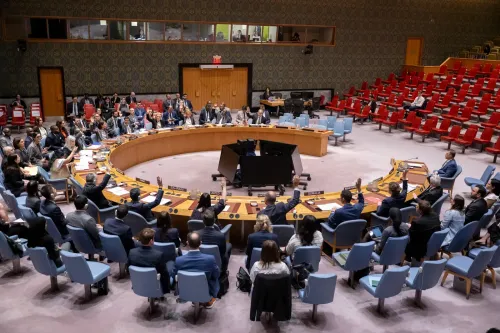
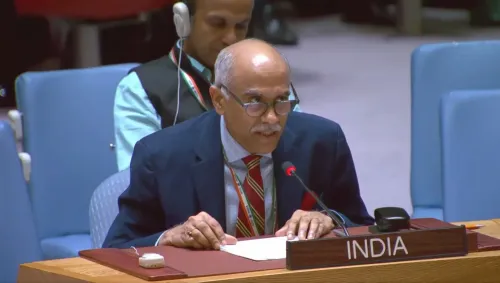
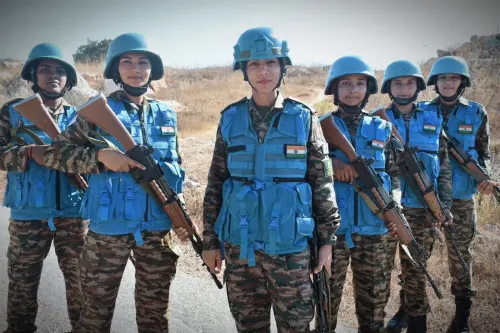
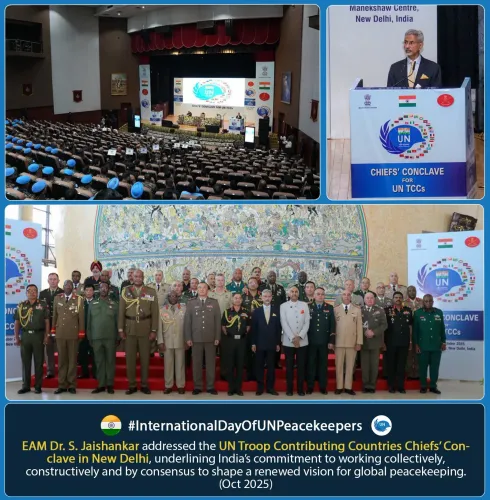
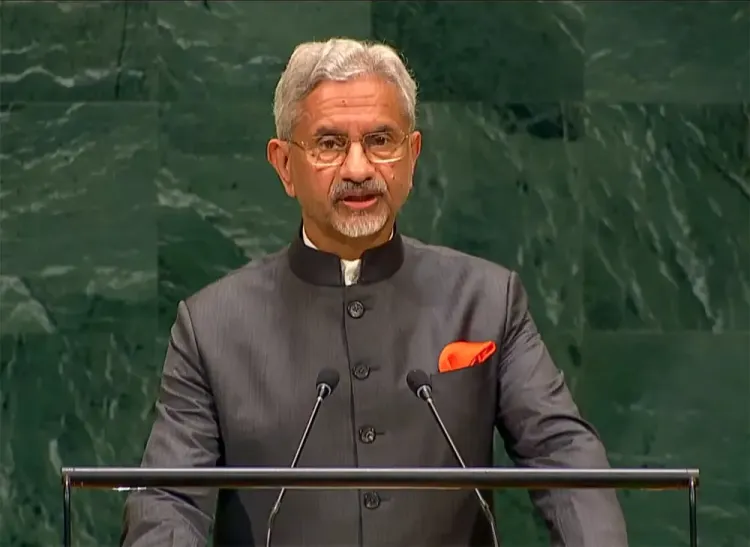
External Affairs Minister S. Jaishankar told the United Nations General Assembly on 27 September 2026 that Indian contingents are currently deployed under 9 of the UN's 11 active peacekeeping mandates, underlining India's role as one of the largest and most consistent contributors to global peace operations.
'Right now, our contingents are present in 9 out of 11 mandates,' Jaishankar said, adding that Indian troops had carried out their duties 'firmly and professionally, including under pressure.'
Recognition for an Indian Woman Peacekeeper
Jaishankar drew attention to the UN's 2025 Military Gender Advocate of the Year award, which was conferred on an Indian woman combat helicopter pilot. He did not name the officer or identify the specific mission in which she served. The recognition, he suggested, reflects the expanding role of Indian women in frontline peacekeeping roles — a dimension that has received little mainstream attention.
Broader Humanitarian Footprint
Beyond troop deployments, the minister outlined a wider humanitarian contribution. India had dispatched medical supplies to conflict zones, responded to epidemics, and provided relief to natural disaster-hit regions. He cited India's early response to flash floods in Nepal and an earthquake in Venezuela as specific examples. Indian programmes have also addressed shortages of food, medicine, energy, and fertiliser in partner nations, while limb fitment camps have served people across other countries.
India's Case for a Broader Definition of Peace
Jaishankar argued that peace cannot be measured solely by the absence of armed conflict. 'Stability, security and predictability were also necessary,' he said, warning that weakening any of these pillars would make peace harder to sustain. He called on every UN member state to reflect on its own contributions: 'Given the state of the world, each member of the UN must ask themselves what they can do.' India's development projects, emergency assistance, and peacekeeping deployments, he said, were its answer to that question.
Closing with Gandhi
The minister closed his address by invoking Mahatma Gandhi: 'There is no way to peace; peace is the way.' The remark framed India's peacekeeping engagement not as transactional diplomacy but as a principled, ongoing commitment — a signal to a General Assembly hall navigating multiple active conflicts.
India has contributed personnel to UN peacekeeping operations for decades and is consistently ranked among the top troop-contributing countries. Jaishankar's remarks at the 79th UNGA session underscored the breadth of that participation at a moment of heightened global instability.
Point of View
But the real signal is the framing: New Delhi is positioning itself as an indispensable contributor to global stability at a time when it is also pressing for a permanent Security Council seat. The spotlight on an unnamed Indian woman combat helicopter pilot winning the UN's top military gender award is a deft move — humanising a diplomatic speech without straying into controversy. What the address sidesteps is any accounting of the costs and casualties Indian peacekeepers bear, or the strategic interests India may serve by maintaining such a large footprint in UN operations. The Gandhi close was rhetorically clean, but the substance underneath is unmistakably strategic.
NationPress
27 Sept 2026
Frequently Asked Questions
How many UN peacekeeping mandates is India currently part of?
India is currently deployed under 9 of the UN's 11 active peacekeeping mandates, as stated by External Affairs Minister S. Jaishankar at the UN General Assembly on 27 September 2026. India has been a consistent top troop-contributing country to UN missions for decades.
Who won the UN's 2025 Military Gender Advocate of the Year award?
An Indian woman combat helicopter pilot received the UN's 2025 Military Gender Advocate of the Year award, according to EAM Jaishankar's UNGA address. He did not name the officer or identify the mission in which she served.
What humanitarian aid has India provided through UN and bilateral channels?
India has sent medical supplies to conflict zones and epidemic-affected regions, responded to flash floods in Nepal and an earthquake in Venezuela, and addressed shortages of food, medicine, energy, and fertiliser in partner nations. India has also run limb fitment camps in other countries.
What was Jaishankar's broader message on peace at the UNGA?
Jaishankar argued that peace cannot be defined solely by the absence of war — stability, security, and predictability are equally essential. He called on every UN member to ask what it can do, and closed his speech by quoting Mahatma Gandhi: 'There is no way to peace; peace is the way.'
Why does India's UN peacekeeping role matter diplomatically?
India's large peacekeeping footprint — spanning 9 of 11 mandates — strengthens its case for a permanent UN Security Council seat and reinforces its image as a responsible global actor. Jaishankar's remarks place peacekeeping at the centre of India's foreign policy identity at a moment of heightened global instability.