Sabang port project: India-Indonesia maritime ties deepen after Modi's Jakarta visit
Synopsis
The Sabang port project is not India's 'String of Pearls' counter-move — it's a commercial corridor play. An ASPI analysis released after PM Modi's July Jakarta visit argues that Sabang's strategic value hinges entirely on it succeeding as an Indonesian-led, locally beneficial project first, with a Sabang–Port Blair link that serves trade, tourism, and energy — not naval access.
Key Takeaways
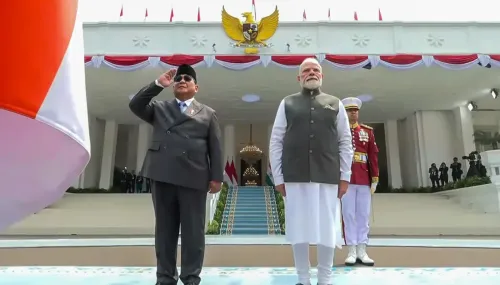
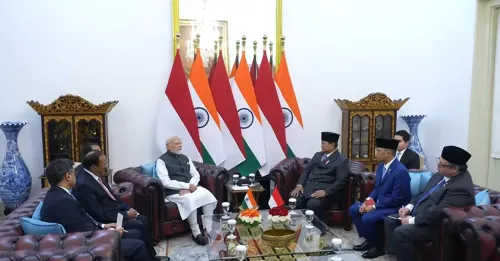
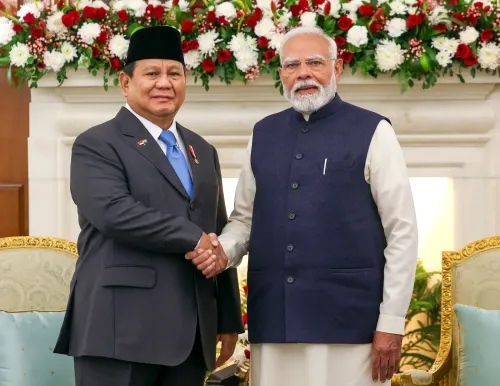
PM Modi and Indonesian President Prabowo Subianto advanced the Sabang port development project during Modi's July 2025 visit to Jakarta .
India's engagement with Sabang dates to the 2018 'Shared Vision on Maritime Cooperation in the Indo-Pacific', which proposed a Sabang–Port Blair corridor.
The July joint statement identifies cruise tourism, ship repair, shipbuilding, and offshore energy services as priority areas for the project.
An ASPI report stresses the project is not an Indian military base-in-waiting and makes no provision for permanent operational or security access.
For India, Sabang supports the commercial development of the Andaman and Nicobar Islands , complementing the Great Nicobar Project .
Officials have been directed to clarify the project's scope, financing, and development phases.
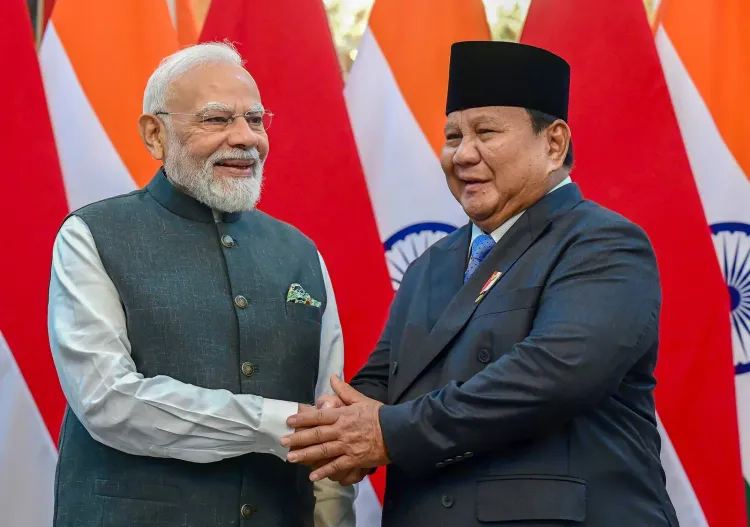
India and Indonesia have given fresh momentum to the Sabang port development project in northern Sumatra, with Indonesian President Prabowo Subianto welcoming Prime Minister Narendra Modi's interest in the port's integrated development during Modi's July 2025 visit to Jakarta. According to an analysis by the Australian Strategic Policy Institute (ASPI), the project holds significant promise as a commercial and bilateral corridor — but its strategic weight depends on it succeeding as an Indonesian-led initiative first.
Background and Bilateral Foundations
India's engagement with Sabang port dates to the 2018 'Shared Vision of India-Indonesia on Maritime Cooperation in the Indo-Pacific', which envisaged stronger connectivity between the Andaman and Nicobar Islands and Sumatra. That framework produced joint task forces, feasibility discussions, and proposals for a Sabang–Port Blair corridor, although most plans have yet to translate into commercial operations.
The July joint statement issued by India and Indonesia has now given the project greater substance, according to the ASPI report. It identifies cruise and marine tourism, ship repair, shipbuilding, and shore-based services for offshore energy activities as priority areas, and directs officials to clarify the project's scope, financing, and development phases.
What the ASPI Report Says
The ASPI analysis pushes back on the dominant framing of Sabang as a geopolitical counter-move. 'India's interest in developing Sabang port in northern Sumatra is often interpreted as a response to China's expanding maritime presence in the Indian Ocean. This does not capture India's more immediate priorities. Sabang will acquire strategic weight only if it first succeeds as a commercial, locally beneficial, Indonesian-led project. It is not an Indian base-in-waiting,' the report stated.
The analysis further notes that the agreement makes no provision for permanent operational access or a standing security presence, and that Indonesia's long-guarded sovereignty makes such an arrangement unlikely. 'India's objective is more modest and realistic — to improve maritime awareness, build logistical familiarity and deepen cooperation with regional partners in the eastern Indian Ocean. Sabang fits a strategy of presence through partnership rather than dominance through access,' the report stressed.
What It Means for India
For India, the report argues, Sabang is an opportunity to unlock the economic potential of the Andaman and Nicobar Islands — positioning them not merely as a security asset but as a platform for transhipment, tourism, and regional engagement, complementing the ongoing Great Nicobar Project. A Sabang–Port Blair corridor could support passenger and cargo services, repair contracts, offshore energy activity, skills exchanges, and greater movement of people and goods across the Andaman Sea.
What It Means for Indonesia
From Jakarta's perspective, a well-structured Sabang project could attract investment, technology, and employment to Aceh, strengthen maritime industries, and reinforce Indonesia's role as the gateway between the Indian and Pacific Oceans. The ASPI report emphasises, however, that the project must be visibly Indonesian-led, consistent with national regulations, and tied to local economic priorities — rather than presented as infrastructure that primarily serves another country's interests.
The Broader Strategic Picture
Notably, the ASPI analysis cautions against reading Sabang as India's answer to China's so-called 'String of Pearls' strategy. The report argues that such framing overstates India's intentions and risks complicating a project whose real value lies in commercial viability and regional trust-building. This comes amid a broader Indian push to deepen maritime partnerships across the Indo-Pacific through engagement rather than basing arrangements.
With officials now tasked with defining the project's scope and financing, the next phase of the Sabang port initiative will test whether the bilateral ambition outlined in July 2025 can be converted into operational reality.
Point of View
Not dominance through access' — is a useful corrective to the reflex of reading every Indian port engagement as a counter to China. But it also sets a high bar: Sabang's commercial case has been discussed since 2018 and has yet to produce operational results. The July joint statement adds political weight, but the harder work of defining financing, scope, and development phases still lies ahead. India's Andaman and Nicobar Islands remain underutilised as a commercial hub despite years of strategic attention; Sabang only amplifies that opportunity if New Delhi can move from bilateral statements to bankable projects. The real test is whether Indonesia's sovereignty-first posture and India's strategic caution can coexist with the investment risk appetite needed to build infrastructure that neither side wants to own alone.
NationPress
14 Oct 2026
Frequently Asked Questions
What is the Sabang port project between India and Indonesia?
The Sabang port project involves the integrated development of Sabang port in northern Sumatra , aimed at creating a maritime corridor between Indonesia and India's Andaman and Nicobar Islands . Priority areas include cruise tourism, ship repair, shipbuilding, and offshore energy services, as identified in the July 2025 India-Indonesia joint statement.
When did India's interest in Sabang port begin?
India's formal interest in Sabang port dates to 2018 , when the two countries signed the 'Shared Vision of India-Indonesia on Maritime Cooperation in the Indo-Pacific'. That agreement envisaged stronger connectivity between the Andaman and Nicobar Islands and Sumatra, and led to joint task forces and feasibility discussions, though commercial operations have not yet begun.
Is Sabang port being developed as an Indian naval base?
No. According to the ASPI report, the agreement makes no provision for permanent operational access or a standing security presence. The report explicitly states that Sabang 'is not an Indian base-in-waiting' and that Indonesia's long-guarded sovereignty makes such an arrangement unlikely.
What does the Sabang project mean for Indonesia's Aceh region?
For Aceh , the project could attract investment, technology, and employment, while strengthening local maritime industries. The ASPI report emphasises that the project must be visibly Indonesian-led and tied to local economic priorities to be sustainable and politically viable.
How does Sabang fit into India's broader Indo-Pacific strategy?
According to the ASPI analysis, Sabang fits India's strategy of 'presence through partnership rather than dominance through access' — focused on improving maritime awareness, building logistical familiarity, and deepening cooperation with eastern Indian Ocean partners, rather than establishing forward military positions.