India-Japan 2+2 dialogue: Niche, underwater and missile tech cooperation agreed in Tokyo
Synopsis
India and Japan used their 2+2 Ministerial Dialogue in Tokyo to push well beyond routine diplomacy — agreeing to accelerate cooperation in niche, underwater and missile technologies, fast-track a ship repair pact, and deepen maritime security ties. With the 75th anniversary of diplomatic relations approaching in 2027, both sides appear to be converting the 2025 Joint Declaration on Security Cooperation into concrete, binding frameworks at speed.
Key Takeaways
Defence Minister Rajnath Singh and EAM S.
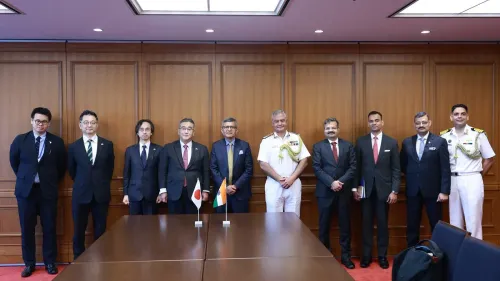
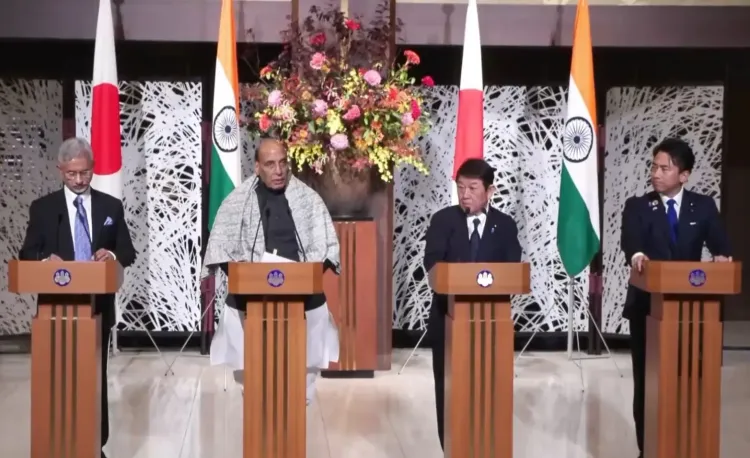
Jaishankar held the India-Japan 2+2 Ministerial Dialogue in Tokyo on 19 November 2026 .
India and Japan agreed to accelerate cooperation in niche, underwater and missile technologies .
Both sides affirmed the need for early conclusion of the Maritime Ship Repair Arrangement (MSRA) for reciprocal ship repair facilities.
Japan Air Self-Defence Force fighter aircraft participated for the first time in the Veer Guardian 26 air exercise held in India.
The third India-Japan Defence Industries Forum was convened in Tokyo on 13 October 2026 .
Both nations are building toward the 75th anniversary of diplomatic ties in 2027 under a Special Strategic and Global Partnership .
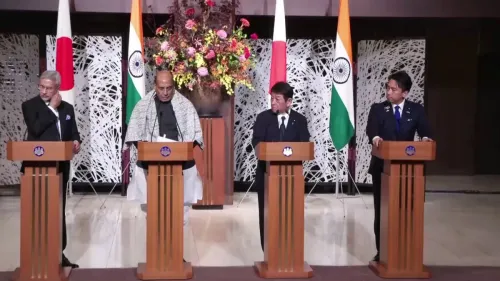
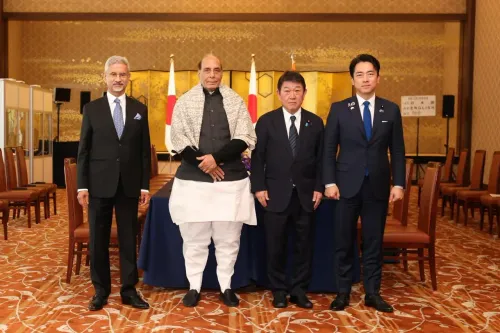
Defence Minister Rajnath Singh and External Affairs Minister S. Jaishankar met their Japanese counterparts in Tokyo on 19 November 2026 for the India-Japan 2+2 Ministerial Dialogue, agreeing to accelerate cooperation in niche, underwater and missile technologies and push for an early conclusion of the Maritime Ship Repair Arrangement (MSRA) for reciprocal ship repair facilities. The talks mark a significant deepening of the two nations' Special Strategic and Global Partnership ahead of the 75th anniversary of diplomatic ties in 2027.
Key Agreements from the Dialogue
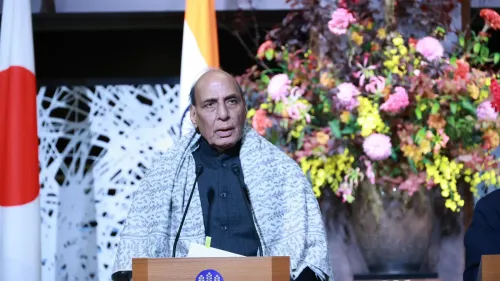
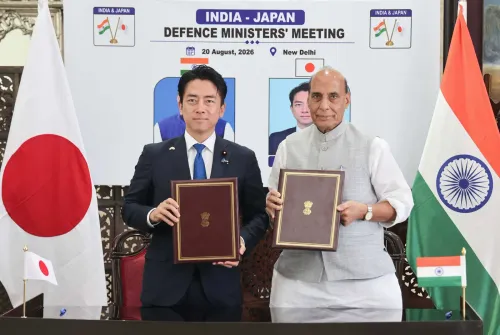
Addressing a joint press statement alongside Japanese Defence Minister Shinjiro Koizumi and Foreign Minister Toshimitsu Motegi, Singh outlined the core outcomes of the ministerial session. 'We agreed to accelerate cooperation in the areas of niche, underwater and missile technologies. We affirmed the need for early conclusion of Maritime Ship Repair Arrangement for reciprocal provision of ship repair facilities and decided to enhance cooperation in mine counter-measure capabilities,' Singh said.
Both sides also concurred on the need for the peaceful resolution of disputes in consonance with international law — a remark that carries weight given ongoing tensions in the Indo-Pacific and the South China Sea.
Defence Industrial Cooperation and Veer Guardian 26
Singh highlighted the first-ever participation by Japan Air Self-Defence Force fighter aircraft in the Japan-India Air Force exercise Veer Guardian 26, held in India, calling it a landmark moment in bilateral defence engagement. He also welcomed the convening of the third India-Japan Defence Industries Forum in Tokyo on 13 October 2026.
Discussions on ongoing cooperation in the air and space domain awareness were also progressed during the dialogue, according to Singh. Both sides expressed expectations for an early consideration of Unicorn-related agreements and reaffirmed commitment to strengthening defence industrial cooperation under the 'Design with Japan and Make in India' framework.
Maritime Security and Regional Stability
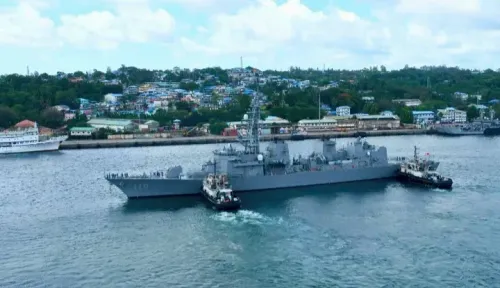
Building on a recently signed memorandum of arrangement on maritime security cooperation, both nations agreed to move swiftly toward concrete collaboration in maritime and air domain awareness, search and rescue, and information-sharing agreements. Singh noted that progress in this domain is particularly critical for ensuring stability in the Indo-Pacific.
The dialogue follows the Joint Declaration on Security Cooperation signed in August 2025, which had set the framework for expanded bilateral engagement across defence, technology, and strategic domains.
75 Years of Diplomatic Ties: A Strategic Milestone
Singh underscored the significance of 2026 as the year both India and Japan lay the foundation for celebrating 75 years of diplomatic relations in 2027. 'As two thriving democracies in Asia, we are pursuing a Special Strategic and Global Partnership. This is an important relationship for peace and prosperity in the Indo-Pacific region,' he stated.
With the MSRA, Unicorn agreements, and technology cooperation frameworks all at advanced stages, the coming months are expected to yield a series of binding bilateral commitments that could reshape the defence architecture of the Indo-Pacific.
Point of View
Underwater and missile technologies are not standard diplomatic talking points, they are capability domains that directly counter China's naval assertiveness in the Indo-Pacific. The speed at which India and Japan are operationalising the August 2025 Joint Declaration suggests both capitals have assessed the strategic window as narrow. What mainstream coverage underweights is the Unicorn-related agreements: if concluded, they could mark India's first major co-development commitment with a non-Western partner at the weapons-system level. The Make in India and Design with Japan framing also signals a deliberate effort to build domestic production depth — not just buy foreign hardware. The 75th anniversary rhetoric is window dressing; the real story is the quiet but rapid militarisation of a bilateral relationship that was largely ceremonial a decade ago.
NationPress
19 Nov 2026
Frequently Asked Questions
What was agreed at the India-Japan 2+2 Ministerial Dialogue in Tokyo?
India and Japan agreed to accelerate cooperation in niche, underwater and missile technologies, push for early conclusion of the Maritime Ship Repair Arrangement, and enhance mine counter-measure capabilities. Both sides also advanced discussions on maritime security, air and space domain awareness, and information-sharing.
What is the Maritime Ship Repair Arrangement (MSRA) between India and Japan?
The MSRA is a proposed bilateral arrangement for the reciprocal provision of ship repair facilities between India and Japan. Its early conclusion was specifically affirmed by Defence Minister Rajnath Singh at the 2+2 Ministerial Dialogue on 19 November 2026, as a step toward deeper maritime cooperation.
What is the significance of the Veer Guardian 26 exercise?
Veer Guardian 26 marked the first-ever participation of Japan Air Self-Defence Force fighter aircraft in a Japan-India bilateral air force exercise held on Indian soil. Singh described it as a landmark step in the bilateral defence relationship.
Why are 2026 and 2027 significant for India-Japan relations?
2026 is the year both nations are laying the groundwork to celebrate the 75th anniversary of the establishment of India-Japan diplomatic relations in 2027. Singh described the partnership as central to peace and prosperity in the Indo-Pacific region.
What are the Unicorn-related agreements mentioned by Rajnath Singh?
Singh indicated that both sides expressed expectations for an early consideration of Unicorn-related agreements as part of deepening defence industrial cooperation under the 'Design with Japan and Make in India' framework. Specific details of these agreements were not publicly disclosed at the dialogue.