India-Kenya climate cooperation talks: Swaika meets Barasa in Nairobi
Synopsis
India and Kenya are moving to formally link two of their leaders' flagship tree-planting campaigns — Modi's Ek Ped Maa Ke Naam and Ruto's 15 Billion Trees — as High Commissioner Swaika's Nairobi talks signal a shift from broad diplomatic goodwill to concrete South-South climate action.
Key Takeaways
High Commissioner Adarsh Swaika met Kenya's Cabinet Secretary Deborah Mlongo Barasa in Nairobi on 23 June 2025 .
Talks focused on linking PM Modi's Ek Ped Maa Ke Naam initiative with President Ruto's 15 Billion Trees Campaign .
Both sides explored institutional partnerships between their respective forestry and environmental bodies .
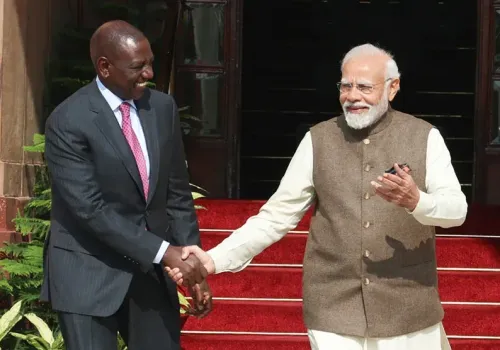
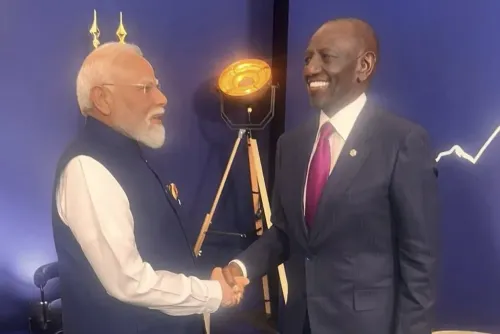
PM Modi and President Ruto had already met earlier this month on the sidelines of the G7 Summit .
India-Kenya bilateral trade exceeds USD 3 billion annually, with ties spanning trade, agriculture, defence, and healthcare.
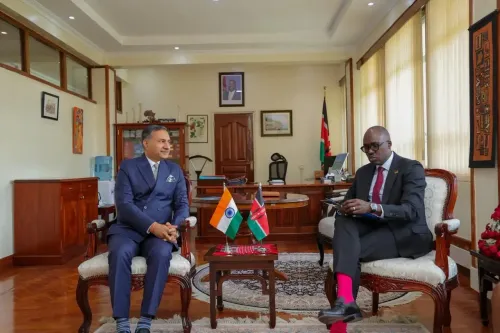
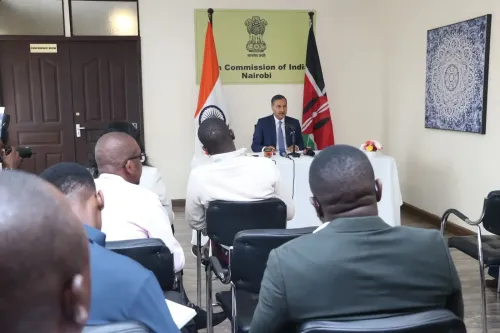
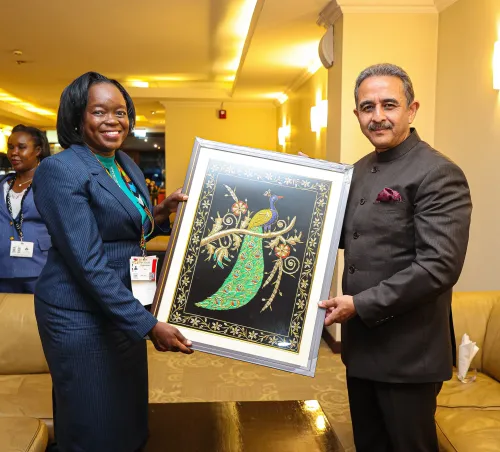
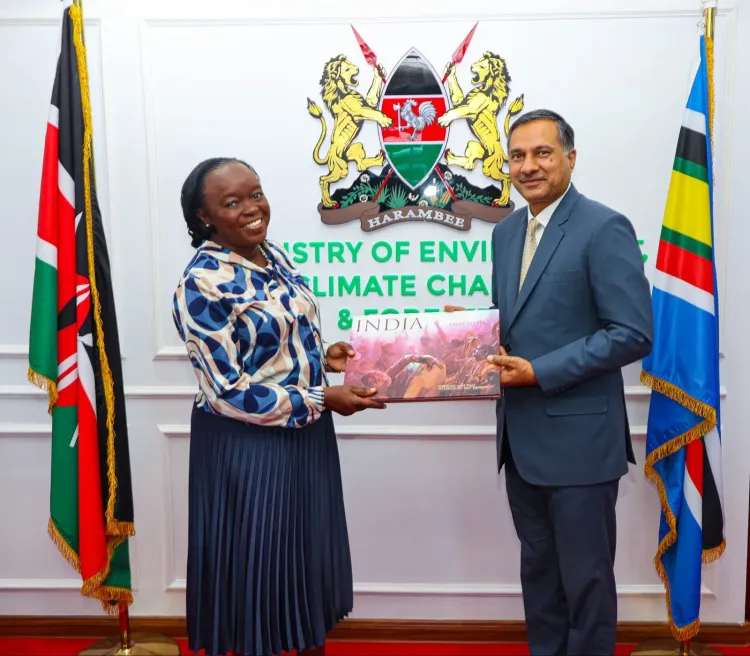
Adarsh Swaika, the High Commissioner of India to Kenya, on Tuesday, 23 June met Deborah Mlongo Barasa, Kenya's Cabinet Secretary for Environment, Climate Change and Forestry, in Nairobi to explore deeper bilateral cooperation on climate action, forestry, and environmental conservation.
Key Developments
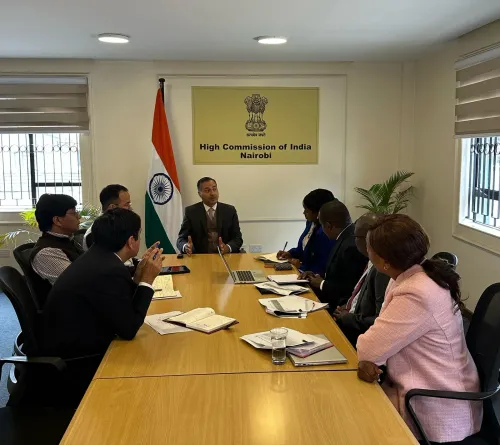
The talks centred on identifying synergies between two flagship tree-planting initiatives — Prime Minister Narendra Modi's Ek Ped Maa Ke Naam (Plant in the Name of Your Mother) campaign and President William Ruto's 15 Billion Trees Campaign. According to the High Commission of India in Nairobi, which shared details of the meeting on X, the two sides also explored joint environmental activities and institutional partnerships between forestry and environmental bodies of both countries.
Broader India-Kenya Diplomatic Context
The Nairobi meeting follows a bilateral interaction earlier this month between Prime Minister Modi and President Ruto on the sidelines of the Group of Seven (G7) Summit, where India participated as a partner country. Modi described the meeting as productive, noting that both nations remain committed to working together for the well-being of their people and the aspirations of the Global South.
Notably, this climate-focused engagement represents a deepening of an already multi-dimensional partnership. India and Kenya share historical ties dating to the pre-independence era, reinforced by an Indian diaspora of over 80,000 in Kenya that has shaped bilateral relations over decades.
Trade and Sectoral Ties
Beyond diplomacy, the two countries maintain robust economic links, with bilateral trade crossing USD 3 billion annually. India exports pharmaceuticals, machinery, and automobiles to Kenya, while importing tea, coffee, and leather products. The two nations have also collaborated across agriculture, education, defence, and healthcare.
What This Means for Climate Goals
The alignment of India's and Kenya's tree-planting drives signals a broader push to anchor South-South climate cooperation in concrete, people-facing programmes rather than purely policy frameworks. Both initiatives carry significant public mobilisation components — a strategic fit that officials are reportedly keen to formalise through institutional channels. Further joint environmental activities and partnerships between the two countries' forestry institutions are expected to be outlined in the coming weeks.
Point of View
But the real measure will be whether India and Kenya formalise institutional frameworks — not just photo-op alignments. South-South climate cooperation has historically struggled to move from ministerial meetings to measurable outcomes. With bilateral trade already above USD 3 billion and a large Indian diaspora embedded in Kenya's economy, the political will exists; what's missing is a concrete joint implementation mechanism. If the forestry institution partnerships announced here lead to verifiable afforestation data and shared monitoring, this could become a model for India's broader Africa climate diplomacy. If not, it risks being another statement of intent.
NationPress
22 Sept 2026
Frequently Asked Questions
What was discussed in the India-Kenya climate meeting in Nairobi?
High Commissioner Adarsh Swaika and Kenya's Cabinet Secretary Deborah Mlongo Barasa discussed strengthening bilateral cooperation in climate action, forestry, and environmental conservation on 23 June 2025. A key focus was identifying synergies between PM Modi's Ek Ped Maa Ke Naam initiative and President Ruto's 15 Billion Trees Campaign.
What is PM Modi's Ek Ped Maa Ke Naam initiative?
Ek Ped Maa Ke Naam — meaning 'Plant a Tree in the Name of Your Mother' — is a public tree-planting campaign launched by Prime Minister Narendra Modi to drive mass afforestation across India. It carries a strong public mobilisation component and is now being explored for alignment with Kenya's own 15 Billion Trees Campaign.
When did PM Modi and President Ruto last meet?
Prime Minister Modi and President William Ruto met earlier in June 2025 on the sidelines of the G7 Summit, where India was present as a partner country. Modi described the meeting positively and reaffirmed both nations' commitment to the aspirations of the Global South.
How significant is the India-Kenya bilateral relationship?
India and Kenya share historical ties dating to the pre-independence era, supported by an Indian diaspora of over 80,000 in Kenya. Bilateral trade exceeds USD 3 billion annually, spanning pharmaceuticals, machinery, tea, and coffee, with cooperation also extending to agriculture, education, defence, and healthcare.
What are the next steps following the Nairobi climate talks?
The two sides are expected to outline joint environmental activities and formalise partnerships between their forestry and environmental institutions. Specific timelines have not been publicly announced, but officials indicated further collaboration is being actively pursued.