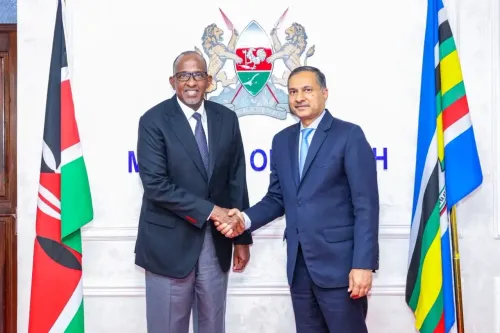
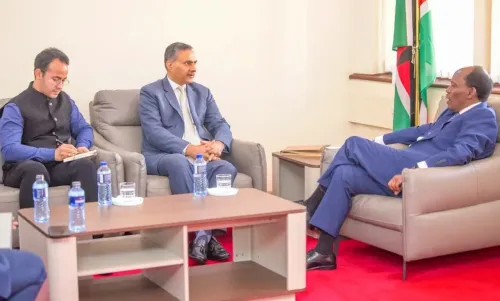
India-Kenya ties enter new phase of shared capacity and innovation
Synopsis
India and Kenya are quietly rewriting the rules of their relationship — moving from aid and scholarships to co-building digital systems, energy grids, and public health infrastructure. With bilateral trade crossing USD 4 billion and a DigiLocker partnership in the works, this is no longer a donor story. It is a strategic alignment between two Global South nations with shared ambitions.
Key Takeaways
India-Kenya ties are transitioning from a donor-recipient model to a partnership centred on shared capacity, innovation, and mutual interests, according to a Daily Nation report.
Bilateral trade between the two nations has surpassed USD 4 billion annually.
The DigiLocker partnership will enable secure digital document storage and verification in Kenya, supporting its ambition to become a regional digital hub.
Kenya is partnering with India's Power Grid Corporation and Africa50 to build high-voltage transmission lines across Western and Northern Kenya .
India has supplied a Bhabhatron-II radiotherapy machine, Covid-19 vaccines, and disease-outbreak preparedness support to Kenya.
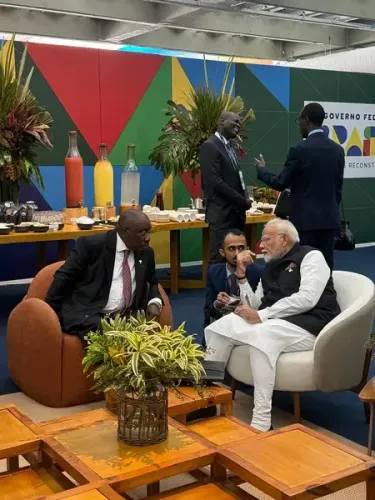
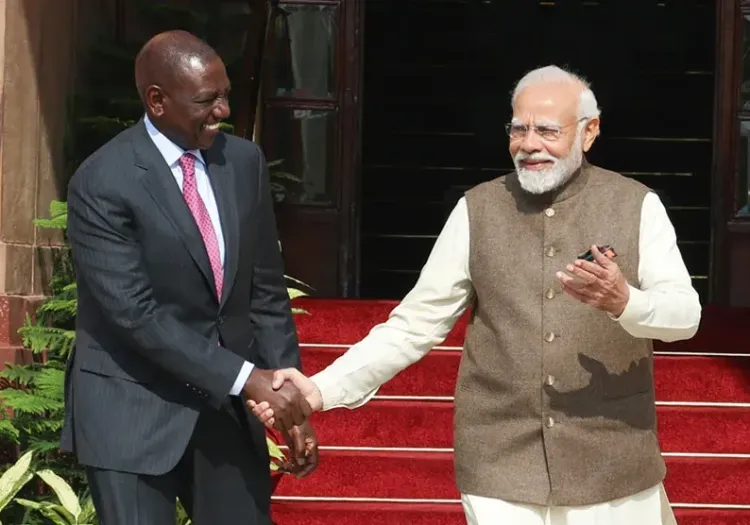
PM Modi and President Ruto met on the sidelines of the G7 Summit in Evian, France in June , reaffirming a 'longstanding partnership' rooted in Global South aspirations.
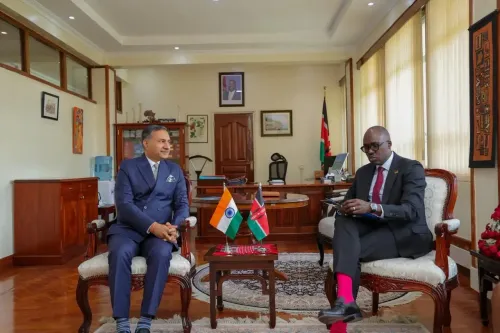
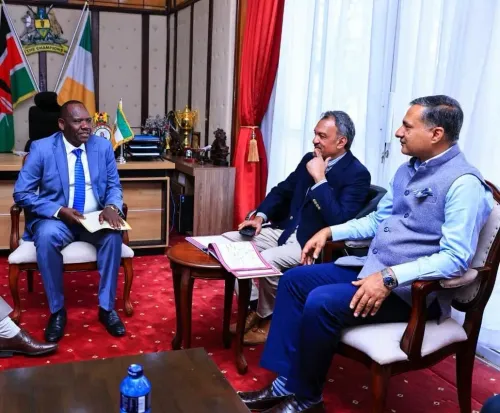
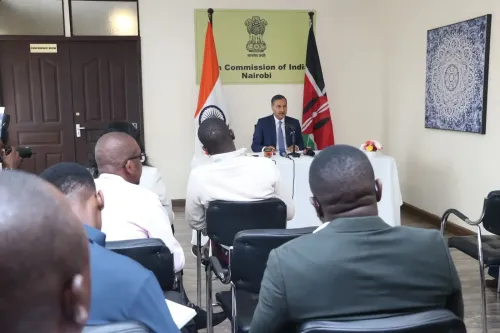
The relationship between India and Kenya is moving beyond the traditional donor-recipient framework into a deeper partnership centred on shared capacity, innovation, and mutual interests, according to a report published by the Daily Nation. The shift signals a maturing of ties that have historically rested on scholarships, technical training, affordable medicines, and infrastructure support.
Decades of Cooperation as Foundation
For years, India has occupied a prominent place in Kenya's foreign policy landscape. Thousands of Kenyan professionals have been trained in India through scholarships and the Indian Technical and Economic Cooperation (ITEC) programme, covering disciplines ranging from renewable energy and governance to technology and disaster management.
'The partnership is rooted in decades of cooperation, with thousands of Kenyan professionals trained in India through scholarships and the Indian Technical and Economic Cooperation programme,' the Daily Nation report noted. 'It now aligns with Kenya's ambition to become a regional digital and innovation hub.'
DigiLocker and the Digital Partnership
A centrepiece of the evolving relationship is the DigiLocker partnership, which will enable secure digital storage and verification of official documents in Kenya. According to the report, the initiative is designed to help Kenya reduce fraud and improve citizen access to public services — directly supporting the country's goal of positioning itself as a regional digital hub.
This digital collaboration represents a qualitative shift: rather than financing physical infrastructure alone, India is now co-building the institutional and technological systems that underpin long-term governance and competitiveness.
Trade, Energy, and Health Linkages
Bilateral trade between the two nations has risen to over USD 4 billion annually, reflecting deepening economic integration. In the energy sector, Kenya has partnered with India's Power Grid Corporation and Africa50 to construct high-voltage transmission lines and substations. The project aims to enhance grid reliability, integrate renewable energy sources, and strengthen power supply across Western and Northern Kenya.
On the health front, India has supplied a Bhabhatron-II radiotherapy machine, medicines, and vaccines during the Covid-19 pandemic, and has extended assistance in disease-outbreak preparedness — contributions that have reinforced India's credibility as a partner in Kenya's public health infrastructure.
What the Modi-Ruto Meeting Signalled
The diplomatic momentum was visible in June, when Prime Minister Narendra Modi met Kenyan President William Ruto on the sidelines of the Group of Seven (G7) Summit in Evian, France. Both leaders acknowledged a 'longstanding partnership' anchored in the aspirations of the Global South.
'Glad to have met President William Ruto of Kenya. India and Kenya share a longstanding partnership anchored in the aspirations of the Global South. We remain committed to working together for the well-being of our people,' Modi posted on X following the meeting.
The Road Ahead
The Daily Nation report was unambiguous in its framing: 'India-Kenya relations should no longer be viewed through the old donor-recipient lens. What is emerging is a partnership focused on building the systems, skills and institutions needed for long-term competitiveness. The next phase is about shared capacity, innovation and interests rather than simply financing projects.'
As both countries deepen their alignment within the Global South framework, the trajectory points toward a relationship increasingly defined by co-creation rather than aid — with digital governance, clean energy, and human capital at its core.
Point of View
At a moment when China's infrastructure-financing model is facing scrutiny across the continent. The DigiLocker export is particularly telling: India is now leveraging its own digital public infrastructure stack as a foreign policy instrument. The risk is implementation depth — ITEC programmes and bilateral declarations have historically outpaced on-the-ground outcomes. Whether the DigiLocker rollout and energy grid projects deliver measurable results will determine whether this rhetorical shift becomes a structural one.
NationPress
22 Sept 2026
Frequently Asked Questions
What is the new phase in India-Kenya relations?
The new phase moves away from a donor-recipient dynamic toward a partnership built on shared capacity, innovation, and mutual interests. It encompasses digital governance, clean energy, health infrastructure, and professional training, rather than simply financing projects.
What is the DigiLocker partnership between India and Kenya?
The DigiLocker partnership will allow Kenya to adopt India's digital document storage and verification system, enabling secure access to official documents and reducing fraud. It supports Kenya's goal of becoming a regional digital and innovation hub.
How significant is bilateral trade between India and Kenya?
Bilateral trade between India and Kenya has grown to over USD 4 billion annually, reflecting deepening economic integration across sectors including energy, health, and technology.
What did PM Modi and President Ruto discuss at the G7 Summit?
Prime Minister Narendra Modi met Kenyan President William Ruto on the sidelines of the G7 Summit in Evian, France in June, where both leaders reaffirmed a longstanding partnership anchored in the aspirations of the Global South and committed to continued cooperation.
What has India contributed to Kenya's health sector?
India has provided Kenya with a Bhabhatron-II radiotherapy machine, medicines and vaccines during the Covid-19 pandemic, and support for disease-outbreak preparedness. Kenyan professionals also receive training in health-related fields through ITEC scholarships.