What is the significance of MoS Singh's visit to Kenya for the UNEA?

Synopsis
Union Minister of State Kirti Vardhan Singh's arrival in Kenya for the seventh session of the United Nations Environment Assembly (UNEA) emphasizes India's commitment to environmental conservation. This pivotal meeting will address critical global ecological challenges, reinforcing the need for sustainable policies and collaborative international efforts.
Key Takeaways
Singh's visit underscores India's commitment to environmental conservation.
UNEA serves as a platform for global collaboration on environmental policies.
Urgent action is needed to address escalating ecological crises.
India aims to align its efforts with global sustainability goals.
The conference provides an opportunity for international dialogue on environmental issues.
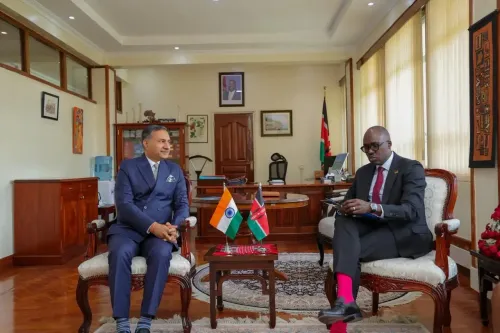
Nairobi, Dec 9 (NationPress) The Union Minister of State (MoS) for External Affairs, Kirti Vardhan Singh, has reached Kenya on Tuesday to participate in the seventh session of the United Nations Environment Assembly (UNEA). He emphasized that India is dedicated to strengthening its initiatives for environmental conservation and promoting the UN Environment Programme policies aimed at fostering a sustainable ecosystem.
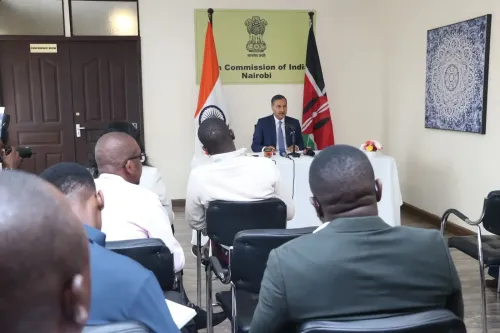
Upon his arrival in Nairobi, he was welcomed by India's High Commissioner to Kenya, Adarsh Swaika. Throughout his stay, Singh will partake in various UNEA sessions and engage with heads of state and representatives of international organizations during the event.
In a message shared on X, Kirti Vardhan Singh remarked, "I have arrived in Kenya to attend the seventh session of the United Nations Environment Assembly (UNEA). This significant conference comes at a time when we are on the brink of a global ecological crisis. India is committed to intensifying efforts for environmental conservation and promoting policies under the UN Environment Programme for a sustainable ecosystem."
"During my visit, I will attend numerous UNEA sessions and interact with heads of state and representatives of international organizations on the sidelines. Under the guidance of Hon'ble PM Shri Narendra Modi, India is focused on realizing a Viksit Bharat based on the principles of Mission LiFE," he added.
The UN Environment Programme described the UNEA as the world’s premier decision-making body regarding environmental matters, comprising all 193 UN Member States. It convenes biennially to establish priorities for global environmental policies; the decisions and resolutions adopted by Member States at the Assembly subsequently shape the work of the UN Environment Programme (UNEP).
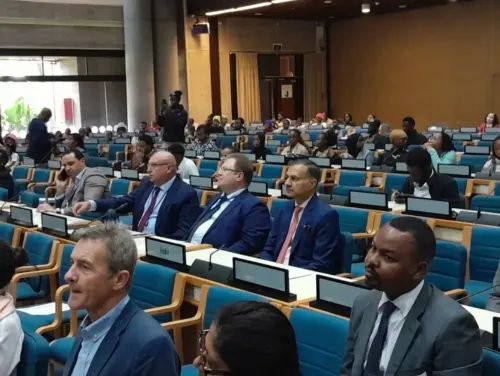
The seventh session of the United Nations Environment Assembly (UNEA-7) is taking place at the UNEP headquarters in Nairobi from December 8-12, centered around the theme "Advancing sustainable solutions for a resilient planet".
In a statement, UNEP's Executive Director Inger Andersen asserted, "This Assembly needs to probe deeper than ever, as environmental challenges are intensifying. The average global temperatures are expected to surpass 1.5°C in the next decade, leading to escalating repercussions with every fraction of a degree. Ecosystems are vanishing, and land is deteriorating. Dust storms are becoming more severe. Toxins incessantly contaminate our air, water, and land."
“This Assembly must delve deeply, as the world navigates turbulent geopolitical waters, which adds pressure to multilateral processes. We all desire the same outcome: a brighter future for ourselves and our families. This entails a stable climate, a secure, clean, and sustainable environment, and a pollution-free future,” she concluded.
Point of View
It is crucial to recognize the importance of Kirti Vardhan Singh's visit to Kenya. This engagement at the UNEA showcases India's proactive stance on environmental issues, aligning with global efforts to combat ecological crises. A commitment to sustainability is not just a national priority but a global necessity, demanding collaborative action from all nations.
NationPress
29 Sept 2026
Frequently Asked Questions
Why is Singh's visit significant?
Singh's visit signifies India's commitment to environmental conservation and showcases its role in shaping international environmental policies.
What are the key themes of UNEA-7?
The theme for UNEA-7 is 'Advancing sustainable solutions for a resilient planet,' focusing on addressing urgent environmental challenges.