PM Modi Reaffirms India-Kenya Partnership in Reply to President Ruto
Synopsis
Prime Minister Narendra Modi on 10 June 2026 publicly reaffirmed India's historical ties and strategic partnership with Kenya in a reply to President William Ruto on X, signalling continued high-level bilateral engagement rooted in trade, diaspora links and South-South cooperation.
Key Takeaways
PM Modi replied to President William Ruto on 10 June 2026 , reaffirming India-Kenya ties.
India and Kenya share historical links rooted in pre-independence migration and long-standing trade.
PM Modi visited Kenya in July 2016 , the first Indian prime ministerial visit in decades, signing deals on defence, trade and culture .
The partnership sits within India's broader South-South cooperation framework across Africa, covering pharmaceuticals, agriculture and maritime security.
The India-Kenya Joint Trade Committee and the next India-Africa Forum Summit are the key near-term diplomatic milestones to watch.
Prime Minister Narendra Modi on Wednesday, 10 June 2026 responded to a message from Kenyan President William Ruto, reaffirming India's commitment to its historical ties and strategic partnership with Kenya and expressing his intent to continue close bilateral cooperation for mutual benefit.
Context
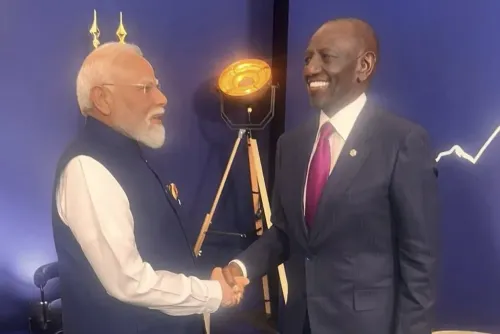
In his post on X, Prime Minister Modi wrote: 'Thank you President William Ruto for your warm wishes. India equally values its historical ties and strong partnership with Kenya. I look forward to continue to work closely with you for the mutual benefit of our countries and our peoples.' The exchange underscores the sustained high-level diplomatic engagement between the two countries, with President Ruto having initiated the outreach that prompted the Prime Minister's public reply.
The specific occasion for President Ruto's message has not been confirmed in public record. However, the warmth of the exchange reflects a relationship that has been cultivated over decades of people-to-people contact, trade, and formal diplomatic cooperation.
Policy Backdrop
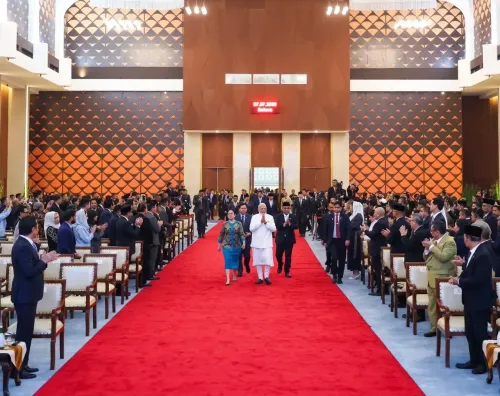
India and Kenya share ties rooted in pre-independence migration, with Kenya hosting one of Africa's largest communities of Indian-origin residents who have long served as a commercial bridge between the two nations. Prime Minister Modi visited Nairobi in July 2016, becoming the first Indian prime minister to address the Kenyan Parliament in decades, signing agreements covering defence, trade and culture.
That visit built on momentum from the third India-Africa Forum Summit held in October 2015, at which India extended lines of credit and capacity-building commitments to African nations, including Kenya. Since 2014, New Delhi has deepened its Africa engagement under a South-South cooperation framework emphasising pharmaceuticals, agricultural technology, maritime security in the Indian Ocean, and diaspora-driven commercial networks.
This approach has also positioned India as an alternative partner for African nations navigating substantial Chinese infrastructure investment, offering Indian lines of credit and technical assistance as complementary options.
Stakeholders and Impact
The Indian diaspora in Kenya — numbering in the tens of thousands — stands as a primary stakeholder in the health of bilateral ties, with community businesses spanning retail, manufacturing and financial services. Bilateral traders in sectors including pharmaceuticals, tea and textiles also have a direct interest in the continuity of preferential frameworks and joint committee mechanisms.
Kenya serves as a regional gateway for Indian diplomatic and commercial engagement across East Africa, making the partnership strategically significant beyond its bilateral dimensions. Defence training cooperation and capacity-building programmes have added a security dimension to what was historically a trade-and-diaspora relationship.
What's Next
Observers will watch for the scheduling of the next India-Kenya Joint Trade Committee meeting, which would translate this diplomatic warmth into concrete commercial outcomes. Kenya's potential participation in the next iteration of the India-Africa Forum Summit will also be a marker of how the two governments convert high-level goodwill into structured multilateral engagement.
With both leaders publicly reaffirming the partnership, the exchange sets a constructive tone for any forthcoming bilateral meetings or agreements, reinforcing India's broader ambition to deepen its footprint across the African continent through trusted, long-standing relationships.
Point of View
Reinforcing India's Africa outreach at a moment when New Delhi is competing for influence on the continent. The exchange fits a consistent pattern since 2014 of using high-visibility personal diplomacy — including social media — to sustain bilateral warmth between formal meetings. Kenya's role as East Africa's gateway makes this relationship structurally important to India's broader Africa strategy, and the public nature of the exchange ensures the diaspora and business communities in both countries register the commitment. The forward-looking language — 'I look forward to continue to work closely with you' — keeps the door open for a potential bilateral meeting or renewed institutional engagement in the near term.
NationPress
26 Oct 2026
Frequently Asked Questions
What did PM Modi say to President William Ruto?
PM Modi thanked President Ruto for his warm wishes and reaffirmed that India values its historical ties and strong partnership with Kenya, expressing his intent to work closely with Ruto for mutual benefit.
What is the current state of India-Kenya relations?
India and Kenya maintain strong bilateral ties built on a large Indian diaspora in Kenya, trade in pharmaceuticals, tea and textiles, defence cooperation, and diplomatic engagement through frameworks like the India-Africa Forum Summit.
When did PM Modi last visit Kenya?
PM Modi visited Kenya in July 2016, becoming the first Indian prime minister in decades to address the Kenyan Parliament, and signed agreements on defence, trade and culture during that trip.
Why is Kenya important to India's Africa policy?
Kenya hosts one of Africa's largest Indian-origin communities and serves as a regional gateway for Indian diplomatic and commercial engagement across East Africa, making it a central node in India's South-South cooperation strategy.
What are the next steps in India-Kenya bilateral engagement?
The next India-Kenya Joint Trade Committee meeting and Kenya's potential participation in the forthcoming India-Africa Forum Summit are the key near-term milestones that will shape the practical direction of the partnership.