India central to global crackdown on Bishnoi, Bhagwanpuria crime networks
Synopsis
The US Justice Department's Operation Hard Ball — 24 arrests, 37 defendants, three continents — has placed India at the centre of the most significant coordinated strike yet against the Bishnoi and Bhagwanpuria crime networks. India's decade-long intelligence on these syndicates, from the Sidhu Moose Wala killing to the Baba Siddique murder, is now a critical asset for prosecutors in the US, Canada, and Spain.
Key Takeaways
India ratified UNTOC and its three protocols in 2011 , binding it to combat human trafficking, migrant smuggling, and illicit arms trafficking.
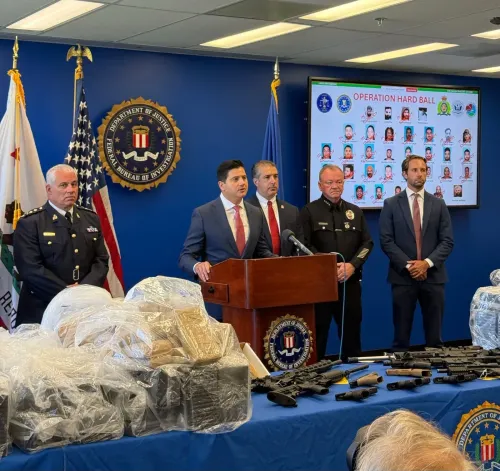
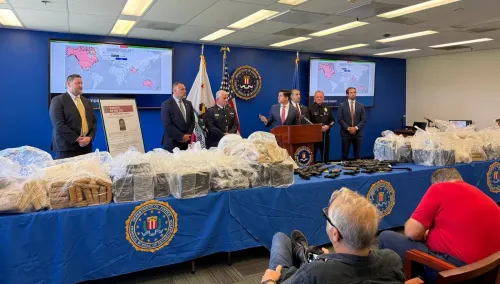
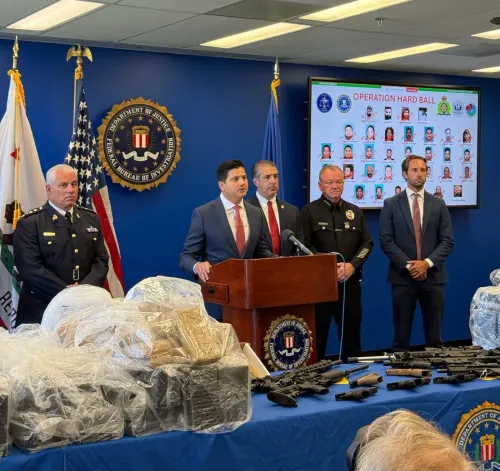
The US Justice Department's Operation Hard Ball , announced 7 July , resulted in 24 arrests , more than 50 search warrants , and 37 charged defendants across the US, Canada, and Europe.
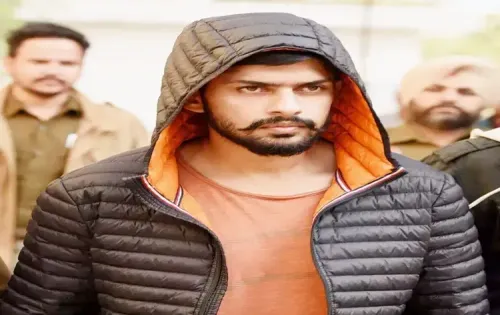
Indictments target networks led by jailed gangster Lawrence Bishnoi , Jaggu Bhagwanpuria , and Canada-based Ravinder Singh Dhanda .
The Bhagwanpuria group reportedly has more than 1,000 members and associates worldwide, operating via encrypted messaging and prison-smuggled phones.
The Bishnoi network claimed the assassination of singer Sidhu Moose Wala in May 2022 and has been linked to the killing of politician Baba Siddique in October 2024 .
The RCMP in Ottawa formally acknowledged India's cooperation; the US, Canada, Spain, and India are expected to maintain close coordination as prosecutions proceed.
India has emerged as a pivotal partner in international efforts to dismantle transnational organised crime networks, with its cooperation now formally acknowledged by agencies in the United States, Canada, and Europe following one of the largest coordinated enforcement actions in recent memory. The country's role is rooted in its 2011 ratification of the United Nations Convention against Transnational Organised Crime (UNTOC) and its three protocols, which bound New Delhi to obligations covering human trafficking, migrant smuggling, and illicit arms trafficking.
Operation Hard Ball and What It Uncovered
The US Justice Department's 'Operation Hard Ball', announced on 7 July, has drawn attention across global capitals as a demonstration of what coordinated cross-border enforcement can achieve. The operation yielded 24 arrests across the United States, Canada, and Europe, more than 50 search warrants, three unsealed indictments, and 37 charged defendants drawn from syndicates that, according to reports, recruit and operate across continents. It is described as one of the largest joint actions ever mounted against transnational criminal enterprises.
For New Delhi, the significance of the operation extends well beyond the arrest count. The networks under investigation were reportedly based in India, initially targeted Indian victims, and cannot be fully dismantled without India's active cooperation — placing the country at the centre of the effort rather than on its periphery, according to a report published in the European Times this week.
The Bishnoi and Bhagwanpuria Networks
The indictments, as cited in the European Times report, describe criminal enterprises led by jailed Punjab gangster Lawrence Bishnoi and Jaggu Bhagwanpuria, alongside the Canada-based network of Ravinder Singh Dhanda. Together, these outfits are alleged to run murder-for-hire operations, extortion rackets, weapons trafficking, and bulk narcotics movement across several continents.
The Bhagwanpuria group alone is said to count more than a thousand members and associates worldwide, reportedly directing extortion through encrypted messaging applications and managing operations via contraband phones smuggled into prison facilities, according to the report.
India's Prior Intelligence on These Syndicates
India had confronted these criminal outfits well before they registered as a threat in cities such as Los Angeles and Vancouver, the report noted. The gangs have carried out multiple high-profile targeted killings across India. The Bishnoi organisation and its associate Satinderjeet Singh, known as Goldy Brar, claimed responsibility for the assassination of singer Sidhu Moose Wala in Punjab in May 2022. The same network has been linked to the killing of Maharashtra politician Baba Siddique in Mumbai in October 2024, and to a sustained campaign of threats against prominent public figures.
This history means India brings to any joint enforcement effort a body of knowledge on these syndicates — their personnel, financing, and prison-run command structures — that few partner nations can match, the report stated.
International Coordination Going Forward
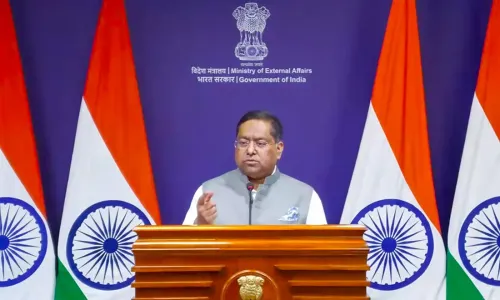
The Royal Canadian Mounted Police (RCMP) in Ottawa formally acknowledged New Delhi's cooperation in the investigation. Prosecutors have indicated that authorities from the United States, Canada, Spain, and India are expected to maintain close coordination as the cases progress through their respective legal systems.
New Delhi's consistent doctrine — treating human trafficking, illegal migration networks, narcotics trafficking, arms smuggling, forged documentation, and narco-terror links as interconnected security threats rather than isolated crimes — now appears to be gaining formal recognition in multilateral enforcement frameworks. How deeply that cooperation deepens will shape the next phase of prosecutions.
Point of View
So far, New Delhi appears to be passing it. The formal RCMP acknowledgement of Indian cooperation is diplomatically significant at a moment when Canada-India relations have been strained. What the operation also reveals is the limits of treating gangsterism as a domestic law-and-order problem: the Bishnoi and Bhagwanpuria networks metastasised precisely because their prison-run command structures were underestimated for too long. The harder question, which the indictments do not answer, is whether India's own prison administration reforms can close the encrypted-phone loophole that keeps incarcerated gang leaders operationally active.
NationPress
17 Oct 2026
Frequently Asked Questions
What is Operation Hard Ball and how is India connected?
Operation Hard Ball is a US Justice Department-led enforcement action announced on 7 July that resulted in 24 arrests and 37 charged defendants across the United States, Canada, and Europe. India is central to the operation because the criminal networks targeted — led by Lawrence Bishnoi and Jaggu Bhagwanpuria — are reportedly based in India and initially targeted Indian victims, making Indian intelligence and cooperation essential to the prosecutions.
Who are Lawrence Bishnoi and Jaggu Bhagwanpuria?
Lawrence Bishnoi is a jailed Punjab gangster whose organisation has been linked to high-profile killings in India, including the assassination of singer Sidhu Moose Wala in May 2022 and the murder of Maharashtra politician Baba Siddique in October 2024. Jaggu Bhagwanpuria leads a separate but associated criminal enterprise whose group reportedly has more than a thousand members and associates worldwide.
What obligations does India have under UNTOC?
India ratified the United Nations Convention against Transnational Organised Crime and its three protocols in 2011, accepting binding obligations to combat human trafficking, migrant smuggling, and the illicit manufacture and trafficking of firearms. These commitments underpin New Delhi's formal cooperation with international agencies in joint enforcement operations.
Which countries are cooperating in the investigation?
Prosecutors have indicated that authorities from the United States, Canada, Spain, and India are expected to maintain close coordination as the cases move through their respective legal systems. The Royal Canadian Mounted Police in Ottawa has formally acknowledged India's cooperation in the investigation.
Why does India's role matter beyond the arrest numbers?
India had confronted the Bishnoi and Bhagwanpuria networks years before they became a concern in cities such as Los Angeles and Vancouver, giving it detailed intelligence on the syndicates' personnel, financing, and prison-run command structures. That accumulated knowledge, according to reports, is an asset few partner nations can replicate, making India's cooperation a decisive factor in the success of ongoing prosecutions.