India challenges OIC's Kashmir role at UN Security Council
Synopsis
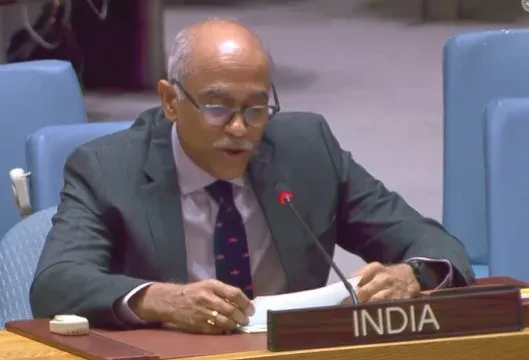
India's UN envoy delivered a thinly veiled but unmistakable challenge to the OIC's right to weigh in on Kashmir — arguing that cross-regional bodies with no geographic or security mandate have no business in bilateral disputes. The move is part of a deliberate Indian strategy to close off multilateral avenues Pakistan uses to internationalise the Kashmir question.
Key Takeaways
India's Permanent Representative P Harish questioned the OIC's standing to raise the Kashmir issue at the UN Security Council on 24 July .
Harish said 'cross-regional groups' lacking geographic ties and a peace-and-security mandate cannot legitimately intervene in regional disputes.
The OIC General Secretariat had in October reiterated solidarity with Kashmiris and called for implementation of UN Security Council resolutions on Kashmir.
The key 1948 Security Council resolution on Kashmir required Pakistan to withdraw its troops and stop supporting armed groups — conditions India says Pakistan has not met.
Pakistan's Permanent Representative Asim Iftikhar Ahmad described Kashmir as 'the core issue bedevilling peace and stability in South Asia' at the same debate.
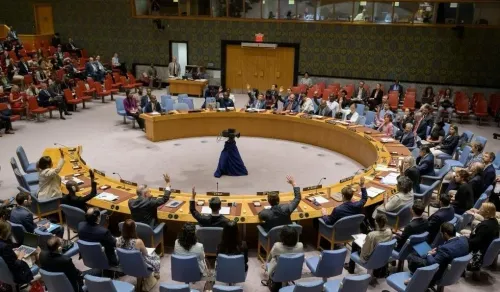
India on Thursday, 24 July delivered a pointed, diplomatically worded rebuke to the Organisation of Islamic Cooperation (OIC) at the United Nations Security Council, questioning the body's standing to intervene in the Kashmir dispute. The remarks came during an open debate on 'Strengthening the Mechanisms for Peaceful Settlement of Disputes', triggered in part by Pakistan raising the Kashmir issue before the Council.
What India Said
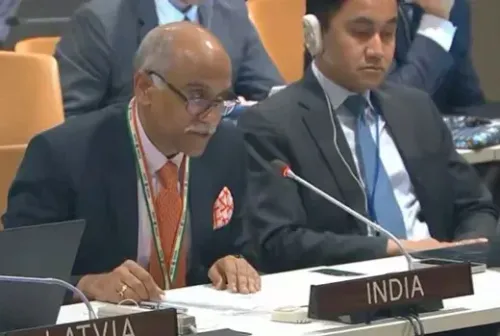
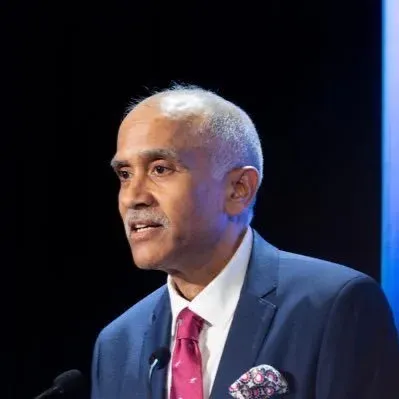
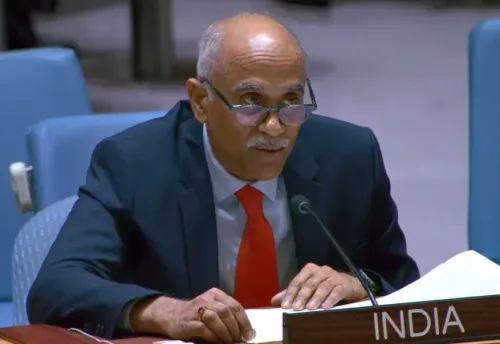
India's Permanent Representative P Harish stopped short of naming the OIC directly but left little ambiguity about his target. 'Cross-regional groups that are neither bound by geography nor common issues, with no direct linkage to international peace and security, may not get involved in disputes and conflicts,' he said.
Harish added that 'such groupings lack domain expertise and regional knowledge that are critical to resolution of disputes.' He drew a distinction between established regional and sub-regional organisations — which he said 'could play an enabling role in resolving disputes' and complement UN functions — and cross-regional bodies, which he argued do not meet that threshold.
The OIC's Record on Kashmir
The 57-member OIC, which spans four continents and is centred on Islamic solidarity, has raised the Kashmir issue at multiple levels within its structure. Most recently, its General Secretariat issued a statement in October reiterating 'full solidarity with the people of Jammu and Kashmir in their legitimate quest for the right to self-determination' and calling for implementation of UN Security Council resolutions on Kashmir.
Notably, the primary Security Council resolution on Kashmir, adopted in 1948, demanded that Pakistan withdraw its troops and nationals from territories it occupies in Kashmir and cease support for armed groups operating there — conditions Pakistan has not fulfilled, according to India's long-standing position.
Pakistan's Intervention
Pakistan's Permanent Representative Asim Iftikhar Ahmad told the Council that the 'Kashmir dispute' was 'the core issue bedevilling peace and stability in South Asia' — framing that India has consistently rejected. New Delhi's response through Harish was calibrated to undercut both Pakistan's narrative and the OIC's institutional legitimacy on the question without triggering a direct bilateral confrontation on the Council floor.
Why This Matters
India's challenge to the OIC's locus standi is part of a broader diplomatic strategy to delegitimise third-party interventions on Kashmir, particularly from bodies whose membership and mandate, New Delhi argues, have no direct bearing on regional peace and security. This is not the first time India has pushed back at the UN against OIC statements on Kashmir, but the explicit framing around 'cross-regional groups' signals a sharper, more structured counter-argument. The remarks come amid elevated India-Pakistan tensions following recent security incidents, lending additional weight to the exchange.
Point of View
New Delhi is attempting to build a procedural firewall against third-party Kashmir interventions — one that could apply beyond the OIC to any cross-regional grouping Pakistan courts. The irony the Indian side pointedly left on the table: the 1948 Security Council resolution the OIC invokes actually obligates Pakistan to act first. That Pakistan has neither withdrawn its forces nor ceased support for armed groups, yet continues to invoke the same resolution, is a contradiction that mainstream coverage of the exchange routinely underplays.
NationPress
24 Jul 2026
Frequently Asked Questions
What did India say about the OIC and Kashmir at the UN?
India's Permanent Representative P Harish said on 24 July that cross-regional groups with no geographic ties or direct linkage to international peace and security — an implicit reference to the OIC — lack the standing to intervene in disputes like Kashmir. He argued such bodies also lack the domain expertise needed for dispute resolution.
Why is the OIC's involvement in Kashmir controversial for India?
India considers Kashmir an integral part of its territory and views OIC statements on the issue as interference in its internal affairs by a body with no geographic or institutional mandate over South Asian security. New Delhi argues the 57-member OIC is a religious-solidarity grouping, not a regional peace mechanism.
What does the 1948 UN Security Council resolution on Kashmir actually say?
The primary 1948 Security Council resolution demanded that Pakistan withdraw its troops and nationals from the areas of Kashmir it occupies and stop supporting armed groups there before any further steps could be taken. India's position is that Pakistan has complied with neither condition.
What was Pakistan's argument at the Security Council debate?
Pakistan's Permanent Representative Asim Iftikhar Ahmad described the Kashmir dispute as 'the core issue bedevilling peace and stability in South Asia,' seeking to frame it as a matter of regional and international concern requiring Council attention.
What is the OIC's recent record on Kashmir?
The OIC General Secretariat issued a statement in October reiterating full solidarity with the people of Jammu and Kashmir in their quest for self-determination and calling for implementation of UN Security Council resolutions on Kashmir. The OIC has raised the issue at multiple levels, including the Islamic Summit and meetings of foreign ministers.