Gulf energy disruption: India must diversify routes and build reserves, report warns
Synopsis
A new India Narrative report lays bare a stark fact: roughly 60% of India's crude and LNG imports and 85% of its LPG shipments flow through a single chokepoint — the Strait of Hormuz. One sustained disruption there could widen the import bill, strain the current account, and hit millions of households directly through LPG shortages. The report demands alternative routes, bigger strategic reserves, and a serious renewables push — now.
Key Takeaways
A new India Narrative report released on 1 October 2026 warns of serious risks from India's Gulf energy dependence.
About 60% of India's crude oil and LNG imports and 85% of LPG shipments transit the Strait of Hormuz .
Gulf suppliers historically supplied nearly 88% of India's LPG imports.
India has partially diversified, sourcing more LPG from the United States , LNG from Oman, Nigeria, Trinidad and Angola , and expanded crude purchases from Russia .
The report recommends alternative maritime corridors, expanded strategic petroleum reserves , and long-term investment in renewables as a hedge.
A Gulf disruption risks cascading second-order effects across transportation, aviation, logistics, manufacturing and agriculture .
A new report by India Narrative has warned that disruption to Gulf energy infrastructure poses serious strategic and economic risks for India, calling urgently for a more diversified and resilient energy strategy. Released on 1 October 2026, the report flags India's deep dependence on the Strait of Hormuz as a structural vulnerability that could strain the country's current account, widen its import bill, and stoke domestic inflation.
The Scale of India's Gulf Dependence
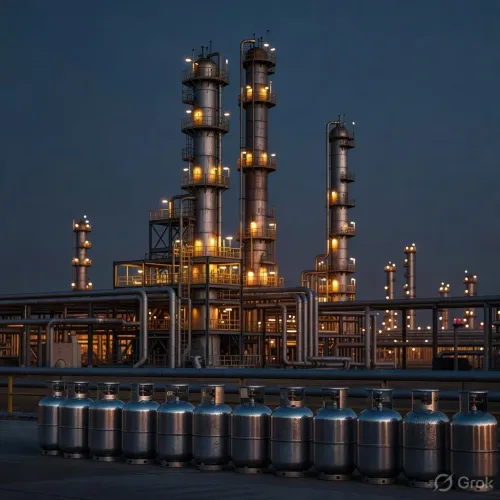
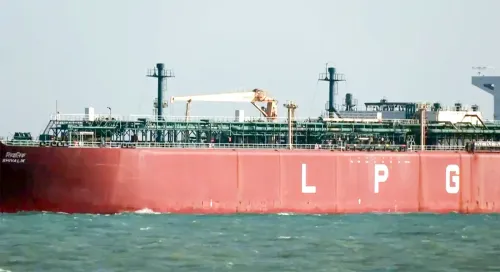
India currently routes approximately 60 per cent of its crude oil and LNG imports — and nearly 85 per cent of its LPG shipments — through the Strait of Hormuz. Historically, Gulf suppliers accounted for close to 88 per cent of India's LPG imports alone, making the country acutely sensitive to any disruption at this single chokepoint.
The report underscores that LPG disruptions carry an especially high immediate social cost, given the fuel's direct link to household cooking needs across hundreds of millions of Indian homes. Unlike industrial energy commodities, a supply shock in LPG translates quickly into kitchen-level hardship.
Why This Matters Beyond Oil and Gas
According to the report, the consequences of a sustained Gulf disruption would ripple well beyond the energy sector. Transportation, aviation, logistics, petrochemicals, manufacturing, and agriculture are all exposed to second-order effects from a prolonged spike in crude prices. The report notes that India 'cannot afford excessive dependence on any single geographical region, even if the area provides commercially viable oil and gas supplies.'
Crude oil presents a particularly difficult challenge, the publication observed, because India's vast refining system demands large, continuous feedstock volumes — a requirement that makes rapid supply switching inherently difficult.
What India Has Already Done
New Delhi has shown some adaptability in recent years. Following escalation of the West Asian conflict, India expanded LPG sourcing from alternative suppliers, including the United States. It has also diversified LNG procurement to countries such as Oman, Nigeria, Trinidad, and Angola, while sharply ramping up crude purchases from Russia to shore up refinery feedstock.
Notably, India's LNG imports declined far less than anticipated following global supply disruption — a sign, the report argues, that diversified sourcing strategies are already delivering measurable resilience.
Key Recommendations: Routes, Reserves, Renewables
The India Narrative report outlines three broad pillars for reducing exposure. First, it calls for developing alternative ports, pipelines, storage facilities, and maritime corridors to ensure no single chokepoint can shut off supply. Second, it recommends expanding strategic petroleum reserves, which it describes as providing 'temporary protection against sudden disruptions and additional time to secure alternative supplies.' Third, while acknowledging that renewables and green fuels cannot replace hydrocarbons immediately, the report positions them as a 'long-term hedge that increases resilience to external shocks.'
What Comes Next
The report arrives as geopolitical tensions in the Gulf remain elevated and global energy markets continue to show volatility. For India — the world's third-largest oil importer — translating these recommendations into policy action will be the central test. Industry observers and energy analysts are likely to scrutinise the Centre's next budget cycle and strategic petroleum reserve targets in light of these findings.
Point of View
US LPG, multi-origin LNG — are tactically sensible but still do not add up to a structural solution. The Strait of Hormuz remains the jugular, and 60% crude dependence through a single chokepoint is a national security liability as much as an economic one. What the India Narrative report does not fully address is that building strategic petroleum reserves and alternate corridors requires capital commitment and political will across budget cycles — precisely where India's energy policy has historically stalled. The test is not whether another report identifies the problem, but whether the Centre's next petroleum and infrastructure budget translates this diagnosis into binding targets.
NationPress
1 Oct 2026
Frequently Asked Questions
Why is the Strait of Hormuz so critical for India's energy supply?
The Strait of Hormuz is the narrow waterway through which approximately 60% of India's crude oil and LNG imports and nearly 85% of its LPG shipments are routed. Any disruption there — whether from conflict, blockade or infrastructure damage — can immediately constrain India's energy supply, inflate import costs, and affect household fuel availability.
What does the India Narrative report recommend to reduce India's energy vulnerability?
The report recommends three broad measures: developing alternative ports, pipelines and maritime corridors to avoid over-reliance on one chokepoint; expanding strategic petroleum reserves to buy time during sudden disruptions; and investing in renewables and green fuels as a long-term hedge against external energy shocks.
Has India already started diversifying its energy imports away from the Gulf?
Yes, to a degree. India has sourced increased LPG volumes from the United States following the West Asian conflict, diversified LNG procurement to Oman, Nigeria, Trinidad and Angola, and substantially expanded crude purchases from Russia. The report notes that India's LNG imports held up better than expected after global disruptions, suggesting these moves are yielding results.
Which sectors beyond energy are at risk from a Gulf supply disruption?
A prolonged disruption would affect transportation, aviation, logistics, petrochemicals, manufacturing and agriculture through second-order price effects. A sustained rise in crude prices raises input costs across much of the Indian economy, widening the current account deficit and feeding domestic inflation.
What is the social impact of a disruption to Gulf LPG supplies specifically?
LPG is directly linked to household cooking for hundreds of millions of Indians, making a supply shock immediately felt at the household level. The report highlights that LPG disruptions have a higher immediate social impact than fluctuations in most industrial energy commodities, given this direct connection to daily domestic consumption.