India warns Pakistan: 'No bow to nuclear blackmail', vows response to terror
Synopsis
At the UN General Assembly's First Committee, India's Anmol Sher Bedi told Pakistan directly: nuclear threats will not shield Islamabad from accountability for terrorism. Invoking Operation Sindoor, the AQ Khan proliferation network, and Pakistan's military-driven governance, India's statement was less a diplomatic formality and more a formal doctrine declaration — with global audiences as the intended audience.
Key Takeaways
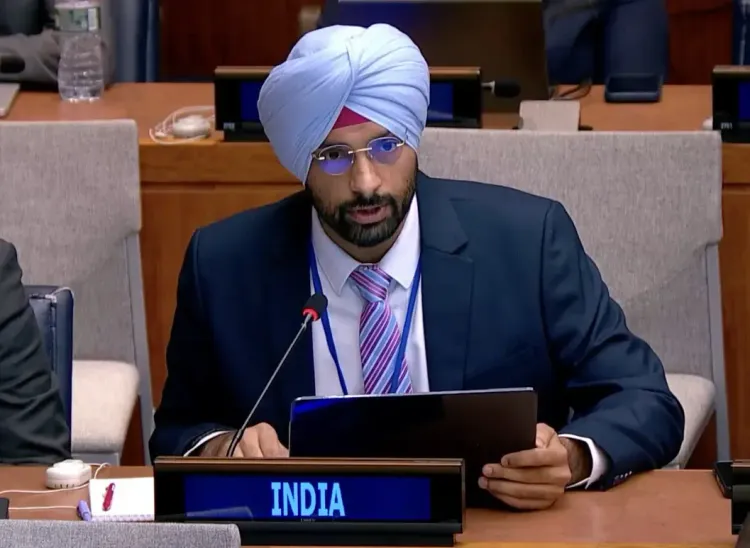
Anmol Sher Bedi , India's senior adviser at the UN Conference on Disarmament , declared 'India will not bow to nuclear blackmail' at the UN First Committee meeting in New York on 10 October 2026 .
India vowed a 'fitting response' to any terrorist attack, pledging no distinction between sponsors and masterminds of terrorism.
Operation Sindoor was described as a measured, targeted act of self-defence following the Pahalgam attack that killed 26 civilians .
Bedi invoked the AQ Khan nuclear proliferation network to warn countries against unquestioned nuclear cooperation with Pakistan .
India characterised Pakistan's recurring crisis cycle as: provocation, denial, then appeals for restraint — enabled by unelected military rule.
India reiterated that Jammu and Kashmir is an 'integral and inalienable' part of India, rejecting Pakistan's attempt to raise it at a disarmament forum.
India delivered a sharp warning to Pakistan at the United Nations General Assembly's First Committee in New York on 10 October 2026, declaring it will not be deterred by nuclear threats used as a shield against accountability for cross-border terrorism. The statement signals New Delhi's resolve to respond to any future terrorist provocation, regardless of Islamabad's nuclear posturing.
The Core Warning
Anmol Sher Bedi, senior adviser at India's Permanent Mission to the UN Conference on Disarmament in Geneva, told the committee: "India will not bow to nuclear blackmail." He served explicit notice that "any terrorist attack against India will receive a fitting response" and that India "will make no distinction between those who sponsor terrorism and those who mastermind it."
Bedi also cautioned that "nuclear weapons must not be treated as routine instruments of statecraft," adding that a posture relying on nuclear overhang to limit consequences of sub-conventional activity "raises the risk of escalation and not the prospect of restraint."
Operation Sindoor and India's Self-Defence Position
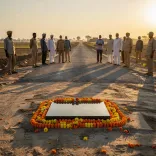
Bedi contextualised India's conduct by referring to Operation Sindoor, India's military action last year against terrorist infrastructure in Pakistan, which he said "followed a grave provocation" — the terrorist attack in Pahalgam by Pakistan-based militants that killed 26 civilians. "India acted in self-defence," he said, stressing that "these actions were measured, targeted, and designed to be non-escalatory."
India has maintained a declared no-first-use nuclear policy, unlike Pakistan, meaning New Delhi commits not to deploy nuclear weapons first against any state. Bedi reiterated that India's nuclear capabilities "are defensive in nature" and "are shaped by our own security environment."
AQ Khan Network and Proliferation Warning
In a pointed rebuke to Pakistan's calls for nuclear cooperation, Bedi invoked the history of the Abdul Qadeer Khan proliferation network — the Pakistani nuclear scientist whose network supplied nuclear weapons know-how to third countries and traded nuclear material for missile technology with North Korea. He cited the network's role in prompting UN Security Council Resolution 1540, adopted in 2004, which prohibits the transfer of weapons of mass destruction to non-state actors.
"We urge all states and all responsible suppliers to exercise the highest degree of vigilance, not because of India, but for their own security," Bedi said, warning countries to scrutinise cooperation with Islamabad on nuclear and advanced military technology.
Pakistan's Pattern of Provocation and Denial
Bedi described what he characterised as a recurring regional crisis cycle: "first, provocation; second, denial of responsibility; and third, appeals for restraint once a response has been made." He argued this pattern is enabled by Pakistan's governance structure, where real authority rests with the military rather than elected civilian leaders. "Those in power are neither elected by people nor accountable to them — their decisions carry no risk and impose no cost for those who take them," he said.
Notably, Bedi referenced UN Secretary-General António Guterres' recent visit to Pakistan, during which Guterres reportedly met Army Chief General Asim Munir — an unusual step for a UN chief whose formal itinerary does not typically include meetings with military leaders — as an illustration of where effective power in Islamabad resides.
Indus Waters Treaty and Kashmir
On the Indus Waters Treaty, Bedi stated India placed the agreement in abeyance because it was "signed on the understanding of trust and cooperation" that Pakistan had undermined. Responding to Pakistan's permanent representative Tahir Andrabi, who raised the Kashmir issue at the disarmament forum, Bedi dismissed the gambit: "Jammu and Kashmir is an integral and inalienable part of India. We call for India's illegally occupied territories to be vacated and returned back."
As the UN First Committee session continues, India's forceful intervention signals that New Delhi intends to hold Pakistan internationally accountable at multilateral forums even as bilateral tensions remain elevated in the post-Operation Sindoor landscape.
Point of View
The nonproliferation community (AQ Khan as a standing disqualifier for Pakistan's nuclear cooperation demands), and the geopolitical gallery (accountability for state-sponsored terrorism cannot be deflected by nuclear posture). The invocation of UN Secretary-General Guterres' meeting with General Asim Munir was a calculated jab — using the UN's own chief's itinerary to expose the civilian facade in Islamabad. What mainstream coverage may underplay is that this is as much a message to potential Pakistan arms suppliers — China foremost among them — as it is a message to Pakistan itself.
NationPress
10 Oct 2026
Frequently Asked Questions
What did India say about nuclear blackmail at the United Nations?
India's senior adviser Anmol Sher Bedi declared at the UN General Assembly's First Committee on 10 October 2026 that 'India will not bow to nuclear blackmail,' warning Pakistan that using the threat of nuclear escalation to evade accountability for terrorism will not deter New Delhi from responding to attacks. He also said nuclear weapons must not be treated as routine instruments of statecraft.
What is Operation Sindoor and why was it cited at the UN?
Operation Sindoor was India's military action against terrorist infrastructure in Pakistan, carried out last year in response to the Pahalgam terror attack in which Pakistan-based militants killed 26 civilians. At the First Committee, Bedi cited it as an act of lawful self-defence that was 'measured, targeted, and designed to be non-escalatory,' pushing back against Pakistan's characterisation of the operation.
Why did India bring up the AQ Khan network at a disarmament meeting?
India raised the Abdul Qadeer Khan proliferation network to counter Pakistan's calls for nuclear cooperation, citing AQ Khan's role in supplying nuclear weapons know-how to third countries and trading nuclear material with North Korea. Bedi linked the network to UN Security Council Resolution 1540 (2004) and urged all states to exercise 'the highest degree of vigilance' when cooperating with Pakistan on nuclear and military technology.
What is India's no-first-use nuclear policy and how does it differ from Pakistan's?
India has a declared no-first-use policy, meaning it commits not to deploy nuclear weapons first against any state. Pakistan has not adopted such a policy, leaving open the option of first use — a posture India argues creates escalatory risk and is being wielded to suppress India's conventional responses to terrorism.
Why did India put the Indus Waters Treaty in abeyance?
India stated that the Indus Waters Treaty was placed in abeyance because the agreement was premised on mutual trust and cooperation, conditions that Pakistan had violated. The treaty has historically governed the sharing of river waters between the two countries, and its suspension marks a significant diplomatic escalation following the Pahalgam attack.