India rebuts press freedom, minority rights questions during Modi's Netherlands visit
Synopsis
During PM Modi's visit to The Hague, a Dutch journalist's questions on press freedom and Muslim minority rights drew a pointed rebuttal from India's MEA Secretary Sibi George — who cited India's 5,000-year civilisational record, a minority population that has grown from 11% to over 20% since independence, and 22 official languages as proof that the questions reflect a 'lack of understanding' rather than a genuine failing.
Key Takeaways
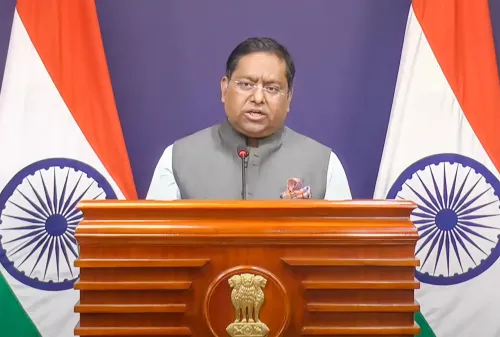
Sibi George , MEA Secretary (West) , rebutted questions on press freedom and minority rights during PM Modi's visit to The Hague on 17 May .
George said such questions stem from a 'lack of understanding' of India's 5,000-year civilisational and religious history.
He cited India as the birthplace of four religions — Hinduism, Buddhism, Jainism, and Sikhism — and noted the long presence of Christianity and Islam on the subcontinent.
India's minority population has grown from 11 per cent at independence to over 20 per cent , George said, calling it unique globally.
India has 22 official languages , all featured on its currency, cited as evidence of linguistic pluralism.
Polling percentages crossed 90 per cent in several recent state Assembly elections, George noted, underscoring democratic participation.
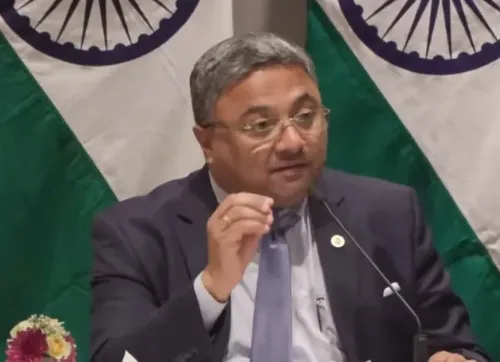
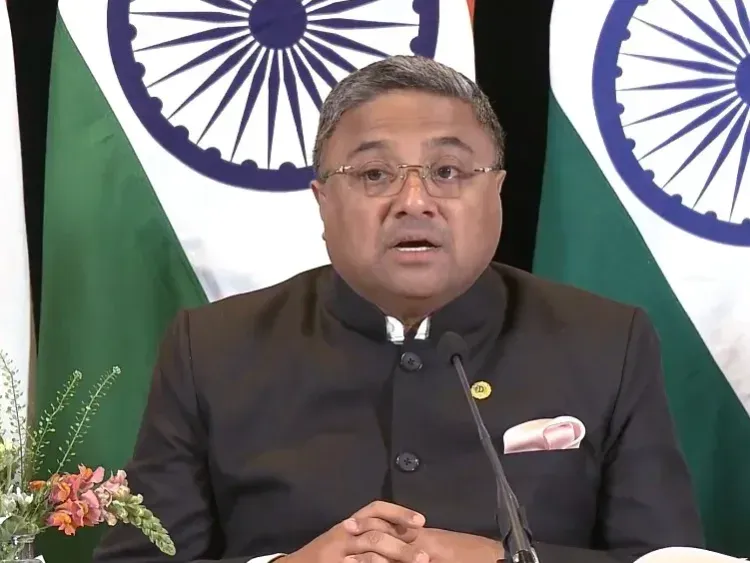
India mounted a strong defence of its democratic credentials and religious diversity on 17 May during Prime Minister Narendra Modi's visit to The Hague, after a Dutch journalist raised pointed questions about press freedom and the condition of minorities — particularly Muslims — in India. Sibi George, Ministry of External Affairs Secretary (West), delivered the rebuttal, dismissing the concerns as stemming from a fundamental misreading of India's history and social fabric.
The Questions That Prompted the Pushback
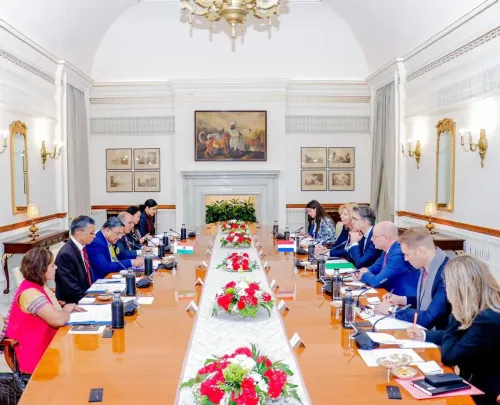
The Dutch journalist's queries were twofold: why Prime Minister Modi and the Dutch leadership were not jointly available for a media interaction, and whether India's record on press freedom and minority rights warranted scrutiny. The questions, posed during the bilateral visit, touched on issues that have drawn recurring international attention in recent years.
What India's Diplomat Said
Sibi George responded sharply, attributing the concerns to a 'lack of understanding' of India rather than any substantive failing. 'We face these kinds of questions basically because of the lack of understanding of the person who asks the question. India is a country of 1.4 billion people, the most populous country in the world. A country of civilisation of more than 5,000 years old. It's a diverse country,' George said.
He highlighted that India is the birthplace of four major religions — Hinduism, Buddhism, Jainism, and Sikhism — and argued that followers of all major world faiths have coexisted and practised freely in India for centuries. 'Look at India, how beautiful it is. There is no other country in the world where four religions have originated... These religions originated in India and continue to flourish in India,' he said.
George also pointed to the history of Christianity and Islam on the subcontinent. 'Christianity came to India immediately after the resurrection of Jesus Christ... Christianity came to India much before it came to Europe, and it flourished in India. Islam came to India during the time of Prophet Muhammad himself and flourished in India,' he said.
On Minorities and Democratic Freedoms
George invoked demographic data to counter the minority rights concern, stating that India's minority population had grown from 11 per cent at independence to over 20 per cent today. 'Name a country where the population of minorities have gone up — you won't find it other than India,' he said.
He also cited India's 22 official languages, all of which are printed on Indian currency, as evidence of the country's linguistic pluralism. On press freedom, George described India as a 'noisy democracy' — a characterisation he framed as a point of pride. 'Everyone has the freedom of expression and freedom of the press in the country. And that makes our democracy a very noisy democracy, and we are proud of that,' he stated.
The diplomat further noted that polling percentages crossed 90 per cent in several areas during recently concluded state Assembly elections, citing this as evidence of a vibrant democratic process.
The Broader Context
India's pushback in The Hague is consistent with a pattern of firm responses to international queries on press freedom and minority rights — issues on which global indices have periodically ranked India lower than its government contests. This is not the first time Indian diplomats have rebutted such questions during high-profile bilateral visits; similar exchanges have occurred on the sidelines of G20 and UN engagements. The Indian government's consistent position is that such assessments reflect external bias rather than ground reality.
George concluded by inviting the journalist to visit India directly. 'I would also invite you to visit India and see for yourself how India lives, how thriving an economy it is, how vibrant a democracy it is,' he said. As PM Modi's Netherlands visit continues, the diplomatic exchange is likely to draw further attention to the friction between India's self-presentation abroad and the scrutiny it faces from international media and rights bodies.
Point of View
Rather than engage with the specific concerns raised, carries its own risk: it closes off the kind of dialogue that might actually shift international perception. Global press freedom indices and minority rights assessments are not monolithic, but they are also not fabricated — and dismissing them wholesale as a 'lack of understanding' does not address the underlying data points those indices rely on. The more durable approach for India's diplomacy would be to contest specific metrics rather than the legitimacy of the question itself.
NationPress
26 Sept 2026
Frequently Asked Questions
Why did India push back against press freedom questions during PM Modi's Netherlands visit?
India's MEA Secretary Sibi George dismissed the questions as reflecting a 'lack of understanding' of India's history and diversity, rather than any substantive failing. He argued that India's civilisational record, growing minority population, and 22 official languages demonstrate a pluralistic and free society.
What did Sibi George say about minorities in India?
George stated that India's minority population had grown from 11 per cent at independence to over 20 per cent, and challenged the journalist to name another country where minority populations had increased. He also cited the Jewish community's 2,500-year presence in India without persecution as a key example.
What is India's position on press freedom?
George described India as a 'noisy democracy' where freedom of expression and press freedom are constitutionally guaranteed. He framed the noisiness of Indian media as a sign of democratic health rather than disorder.
What was the context of the Dutch journalist's question?
The journalist asked why PM Modi and Dutch leadership were not jointly available for a media interaction, and raised concerns about press freedom and the condition of Muslims in India — questions that have been raised at several international forums involving Indian leadership in recent years.
How does this incident fit into India's broader diplomatic pattern?
India has consistently rebutted international scrutiny on press freedom and minority rights during high-profile bilateral visits and multilateral forums. The government's position is that such assessments reflect external bias rather than ground reality, a stance it has maintained across G20, UN, and bilateral engagements.