India rebuts Norway press freedom questions, slams 'ignorant NGO' reports
Synopsis
India's top diplomat didn't just defend — he went on offence. When a Norwegian journalist challenged India's press freedom record during PM Modi's Oslo visit, MEA Secretary Sibi George fired back with a pointed dismissal of 'ignorant NGO' reports and a defence of India's 1947 women's suffrage record. It's the second such confrontation in days, signalling New Delhi's new template for handling human rights scrutiny on foreign soil.
Key Takeaways
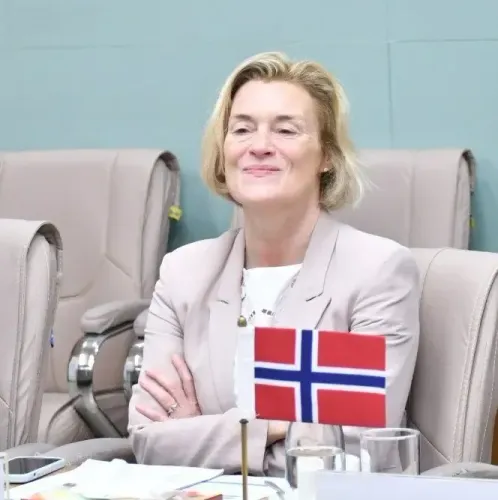
Norwegian journalist Helle Lyng questioned India's democratic and human rights record at an Embassy of India media briefing in Oslo on 19 May .
MEA Secretary Sibi George defended India's constitutional framework, citing women's voting rights granted in 1947 and a media landscape of over 200 TV channels in Delhi alone .
George criticised foreign assessments based on 'ignorant NGO' reports, calling them reductive and uninformed.
This was the second consecutive confrontation of this kind — a similar exchange occurred days earlier during PM Modi's visit to the Netherlands .
India's position frames assertive rebuttal as its standard diplomatic response to human rights questions on foreign soil.
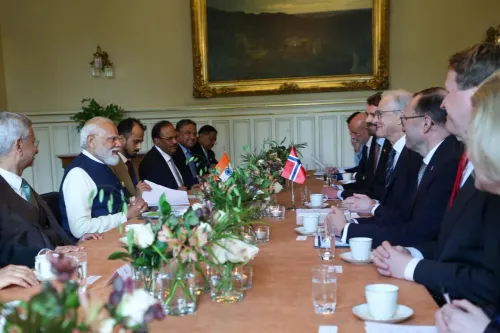
India's Ministry of External Affairs (MEA) on 19 May strongly pushed back against questions on press freedom and human rights posed by a Norwegian journalist during Prime Minister Narendra Modi's visit to Oslo, with a senior diplomat defending India's constitutional framework and criticising what he called narratives shaped by 'ignorant NGOs'.
How the Confrontation Unfolded
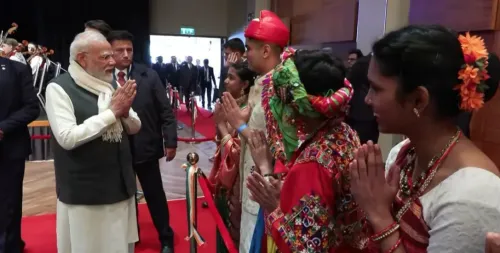
The episode began when Norwegian journalist Helle Lyng called out to PM Modi at the venue, urging him to take questions from the media. Visuals from the event showed the Prime Minister walking out of the room as Lyng appealed to him. Subsequently, Lyng was invited by the Embassy of India in Oslo to attend an official media briefing addressed by senior MEA officials.
During the briefing, Lyng pressed India's officials on the country's democratic and human rights record. 'As we strengthen our partnership, why should we trust you? Can you promise that you will try to stop the human rights violations that go on in your country? And also, will the prime minister start taking critical questions from the Indian press at some point in the future?' she asked.
What India's Diplomat Said
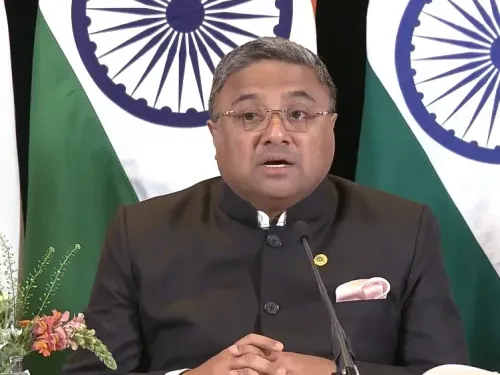
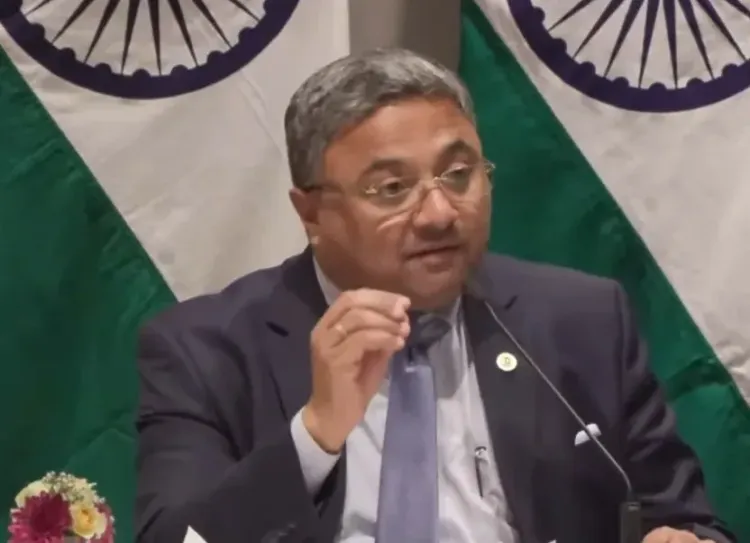
Sibi George, Secretary (West) in the MEA, responded by defending India's constitutional guarantees and democratic record. He highlighted that India granted women equal voting rights immediately upon Independence in 1947 — ahead of several other nations.
'We have a constitution which guarantees the rights of the people, fundamental rights of the people. We have equal rights for the women of our country... In 1947, we gave the freedom to vote for our women... Many countries I know, the voting right for women came several decades after India gave that freedom. Because we believe in equality, we believe in human rights,' George said.
George also underscored the scale of India's media landscape, noting that Delhi alone has at least 200 television news channels operating in English, Hindi, and multiple regional languages. He argued that foreign observers frequently misunderstand the breadth and diversity of India's media ecosystem.
The 'Ignorant NGOs' Remark
George drew attention for sharply criticising the sourcing behind some international assessments of India. 'They read one or two news reports published by some godforsaken, ignorant NGOs and then come and ask questions,' he said, arguing that India's internal complexities are routinely reduced to simplistic narratives abroad.
During the exchange, George repeatedly requested that Lyng not interrupt him, insisting on completing his response. 'Let me answer the question, please don't interrupt me. You asked a question — this is my press conference,' he said.
A Pattern Across European Capitals
Notably, this is the second such confrontation within days. During PM Modi's preceding visit to the Netherlands, George had similarly defended India after a Dutch journalist raised concerns about the absence of a joint media interaction and questioned the condition of minorities, particularly Muslims, in India. On that occasion too, George attributed such questions to a 'lack of understanding' of India's history, democratic processes, and social fabric.
The back-to-back episodes during the Prime Minister's European tour signal a consistent posture from New Delhi: proactive, assertive rebuttals of what it characterises as uninformed foreign commentary on its domestic affairs.
India's Broader Argument
Reaffirming India's democratic credentials, George pointed to the country's role during global crises such as the Covid pandemic and cited India's contributions to mathematics, culture, and global heritage. 'India is a country which believes in the rule of law. We have always been following rules wherever it is. We play by the book. That is India's reputation,' he stated.
As PM Modi's European engagements continue, the diplomatic optics around press access and human rights questions are likely to remain a point of international scrutiny.
Point of View
Two confrontations, one week — the pattern is deliberate. India's MEA is no longer offering measured deflections on press freedom questions abroad; it is deploying a combative counter-narrative, complete with historical citations and sharp dismissals of NGO credibility. What mainstream coverage underplays is the tension embedded in this approach: asserting democratic strength while declining to engage with the specific concerns raised — joint press interactions, minority rights, journalist safety — leaves those questions unanswered even as the rebuttal lands forcefully. The 'ignorant NGO' framing may play well domestically, but it risks hardening perceptions among European interlocutors whose own press-freedom frameworks are constitutionally central. India's diplomatic calculus here is high-risk, high-reward.
NationPress
13 Oct 2026
Frequently Asked Questions
What happened between India and the Norwegian journalist in Oslo?
Norwegian journalist Helle Lyng questioned India's democratic and human rights record at an official media briefing held by the Embassy of India in Oslo on 19 May, during PM Modi's visit. MEA Secretary Sibi George responded with a robust defence of India's Constitution, women's suffrage history, and media landscape, while criticising foreign assessments he attributed to 'ignorant NGOs'.
Who is Sibi George and what did he say?
Sibi George is the Secretary (West) in India's Ministry of External Affairs. He defended India's democratic record, citing its 1947 grant of women's voting rights and a media ecosystem of over 200 TV channels in Delhi alone, and dismissed critical foreign narratives as products of selective, NGO-driven reporting.
Why did PM Modi walk out of the room?
Visuals from the Oslo venue showed PM Modi walking out as journalist Helle Lyng called out to him, urging him to take media questions. The Indian side did not offer an official explanation for the exit, though a subsequent media briefing was held by senior MEA officials.
Has India faced similar questions on this European tour?
Yes. Days before the Oslo episode, a Dutch journalist in the Netherlands raised concerns about the absence of a joint press interaction and questioned the condition of minorities in India. Sibi George responded in a similar vein on that occasion, attributing such questions to a lack of understanding of India's history and social fabric.
What is India's official position on press freedom and human rights?
India maintains that its Constitution guarantees fundamental rights to all citizens and provides legal mechanisms to address violations. The government argues that its democratic institutions, including an independent judiciary and a large, multilingual media ecosystem, are evidence of its commitment to these values.