India at UN urges reform of global financial institutions for Global South
Synopsis
India took its Global South advocacy to the UN General Assembly's Second Committee, demanding a structural overhaul of the World Bank and IMF — institutions built for post-WWII Europe, not 21st-century development. With $150 million committed to a grant-only partnership fund and $70 million to disaster resilience, New Delhi is backing its reform rhetoric with real money.
Key Takeaways
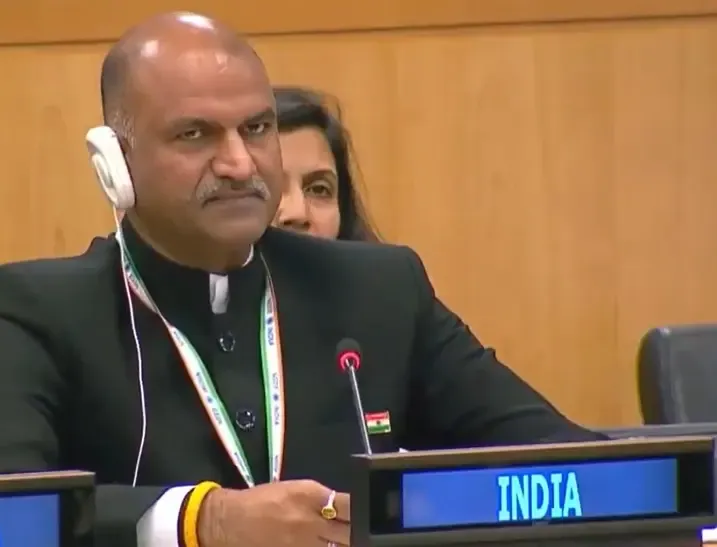
BJP MP C P Joshi addressed the UN General Assembly's Second Committee on 6 October 2026 , calling for reform of global financial institutions.
India has committed $150 million to the India–UN Development Partnership Fund (I-UNDPF) , which carries no loan component and lets recipients set their own priorities.
India has pledged approximately $70 million to the Coalition for Disaster Resilient Infrastructure (CDRI) , whose secretariat it hosts.
India argues the World Bank and IMF were designed for post-WWII Europe and must be restructured for 21st-century developing-world needs.
India called for the 17 SDGs ' unfinished agenda to continue beyond the 2030 deadline, with national priorities respected.
India is sharing expertise in digital public infrastructure and financial inclusion with other developing nations as a replicable model.
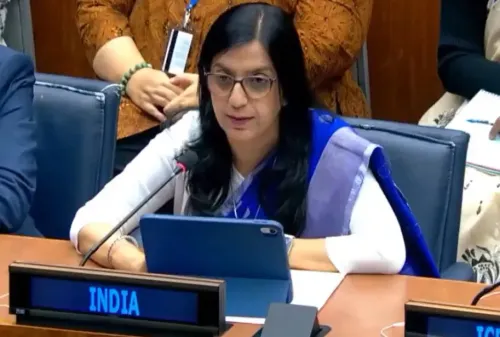
India has reiterated its call for a fundamental overhaul of international financial institutions, demanding greater representation for the Global South and assured access to affordable, predictable development funding. The statement was made at the United Nations General Assembly's Second Committee — which handles economic and financial matters — in New York on 6 October 2026.
What India Said at the UN
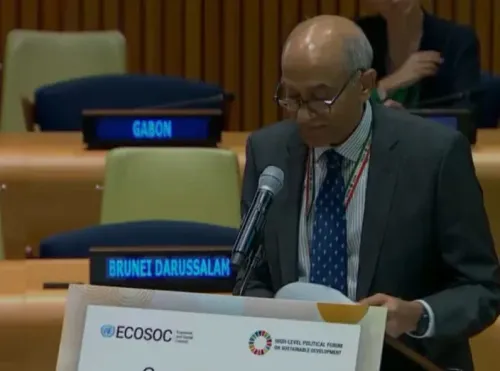
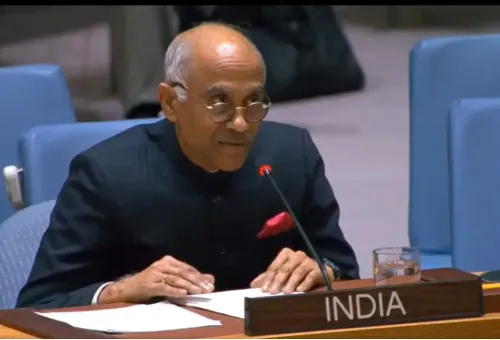
Bharatiya Janata Party (BJP) MP C P Joshi, who represents Rajasthan and chairs the Parliament Committee on Petitions, addressed the Second Committee in Hindi with simultaneous interpretation into all five official UN languages. He argued that global financial architecture must be restructured to reflect 21st-century realities and give developing nations a genuine seat at the table.
Joshi pointed out that institutions like the World Bank and the International Monetary Fund (IMF) were designed after World War II primarily to rebuild war-ravaged Europe — a mandate that is long obsolete. India's position is that these bodies must now refocus their structures to meet the needs of the developing world.
India's Development Partnerships with the Global South
Joshi highlighted several instruments through which India is already financing the development aspirations of Global South countries. These include the India–UN Development Partnership Fund (I-UNDPF), to which India has committed $150 million, and the IBSA Fund, a trilateral initiative with Brazil and South Africa. A distinctive feature of the I-UNDPF is that recipient countries themselves set the priorities, and the fund carries no loan component — making it a genuinely grants-based model.
India is also a driving force behind the International Solar Alliance (ISA) and the Coalition for Disaster Resilient Infrastructure (CDRI), the latter launched in 2016 by Prime Minister Narendra Modi. India hosts the CDRI secretariat and has pledged approximately $70 million to the initiative.
Digital Public Infrastructure and Financial Inclusion
Joshi said India is sharing its expertise in digital public infrastructure, financial inclusion, and domestic resource mobilisation with other developing nations. This positions India's own experience — from UPI-scale payments to direct benefit transfers — as a replicable development model for the Global South, rather than a aid-dependent one.
SDGs Must Respect National Priorities, India Says
On the Sustainable Development Goals (SDGs), India's delegation argued that the framework must respect national priorities and that unfinished elements should be carried forward beyond the current 2030 deadline. The 17 SDGs, adopted in 2015, span a wide arc of human development — from poverty eradication and education to climate, peace, and gender equality. With many targets off-track globally, India's call to extend the agenda reflects a pragmatic acknowledgment of the implementation gap.
What This Signals
India's statement at the Second Committee is consistent with its broader diplomatic posture since assuming the G20 presidency — championing the Global South as a constituency that deserves structural power, not just development aid. The push for reformed multilateral lending echoes positions taken at BRICS and G20 summits. With global debt distress rising across Africa, South Asia, and parts of Latin America, the call for affordable and predictable financing is gaining urgency well beyond New Delhi's interests alone.
Point of View
And New Delhi knows it. What is missing from India's pitch, however, is a concrete proposal for how voting-share reform at the World Bank or IMF would actually be achieved — given that the US and Europe hold effective veto power over structural changes. Advocacy without a coalition mechanism risks becoming a recurring rhetorical fixture at UN forums rather than a lever for real change.
NationPress
6 Oct 2026
Frequently Asked Questions
What did India say at the UN General Assembly's Second Committee?
India called for structural reform of international financial institutions, including the World Bank and IMF, to give developing nations and the Global South greater representation and access to affordable, predictable funding. BJP MP C P Joshi made the statement on 6 October 2026.
What is the India–UN Development Partnership Fund (I-UNDPF)?
The I-UNDPF is a development financing vehicle to which India has committed $150 million. Its key feature is that recipient countries set their own priorities and there is no loan element — making it a grant-based model distinct from traditional multilateral lending.
What is the Coalition for Disaster Resilient Infrastructure (CDRI)?
The CDRI is a global initiative launched in 2016 by Prime Minister Narendra Modi to help countries build infrastructure that can withstand climate and disaster shocks. India hosts its secretariat and has pledged approximately $70 million to the coalition.
Why does India want World Bank and IMF reform?
India argues that both institutions were created after World War II to rebuild Europe and their governance structures have not kept pace with the needs of developing nations. New Delhi wants voting-share reforms and a mandate shift so that affordable financing is accessible to the Global South.
What is India's position on the Sustainable Development Goals (SDGs)?
India supports the 17 SDGs adopted in 2015 but has argued that their unfinished elements should continue beyond the 2030 deadline and that the framework must respect the national priorities of individual countries rather than impose a one-size-fits-all agenda.