India reaffirms Afghanistan peace commitment, slams Pakistan at UN
Synopsis
India used a UN Security Council session on Afghanistan to do two things at once: reaffirm its humanitarian and development partnership with Kabul, and publicly call out Pakistan's air strikes on Afghan territory as 'unconscionable' hypocrisy. The dual move signals that New Delhi is positioning itself as a principled stakeholder in Afghan stability — even as Islamabad faces growing international scrutiny over cross-border military action.
Key Takeaways
The MEA reaffirmed India's commitment to peace, stability, and development in Afghanistan on 9 June 2025 .
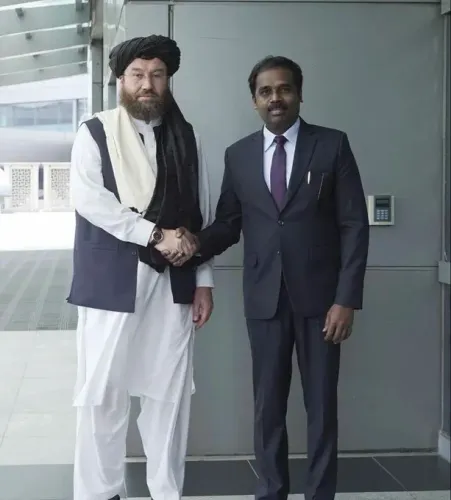
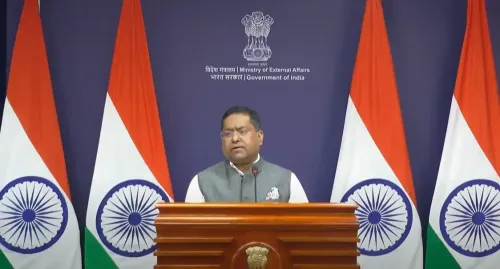
MEA spokesperson Randhir Jaiswal cited India's statement at the UNAMA briefing in New York , stressing centuries-old civilisational ties.
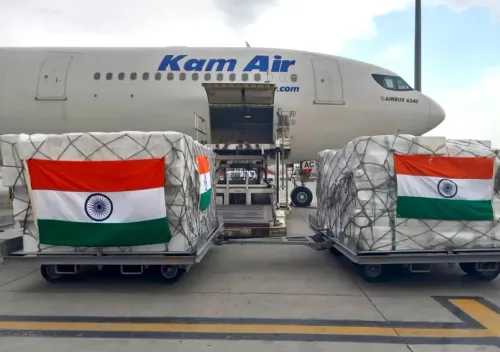
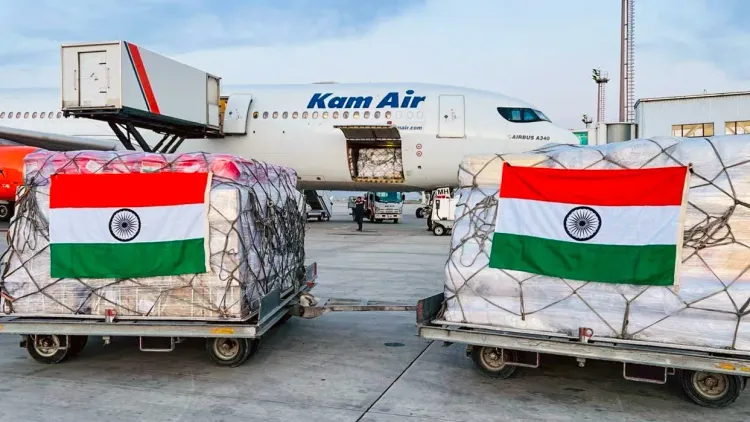
India's development cooperation with Afghanistan spans food security, medicine, health, scholarships , and capacity-building — and benefits women and children.
India's Permanent Representative P.
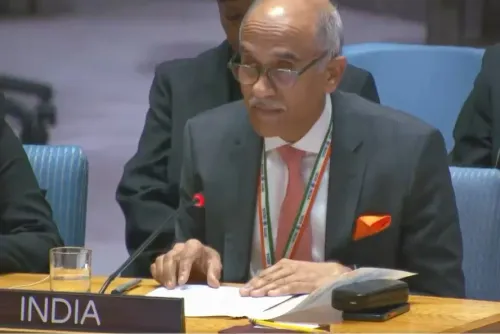
Harish condemned Pakistan's air strikes on Afghanistan during Ramadan as 'unconscionable' and 'the perfect example of hypocrisy' at the UN Security Council .
India backed the UN Secretary-General's call for compliance with international humanitarian law and supported UNAMA's demand for accountability over civilian casualties.
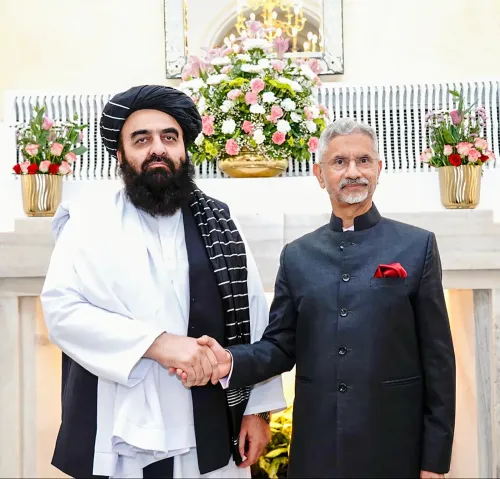
The Ministry of External Affairs (MEA) on Tuesday, 9 June reaffirmed New Delhi's commitment to peace, stability, and development in Afghanistan, citing enduring civilisational ties between the two nations and underscoring India's ongoing humanitarian and development cooperation with the Afghan people.
India's Statement at UNAMA Briefing
Speaking at his weekly media briefing in New Delhi, MEA spokesperson Randhir Jaiswal referenced India's statement delivered at the UN Assistance Mission in Afghanistan (UNAMA) briefing in New York the previous day. He noted that India's Permanent Representative (PR) had reiterated the depth of the bilateral relationship at the session.
'India and Afghanistan are contiguous neighbours. As civilisational states, our ties have spanned centuries. We stand in favor of peace and stability in Afghanistan and in the region so as to foster development and stability in the region,' Jaiswal stated, paraphrasing India's position at the UN meeting.
Jaiswal also highlighted India's active development cooperation with Afghanistan, covering food security, medicine, pharmaceutical support, and health. He added that many of these programmes are gender-inclusive, benefiting women and children, and that scholarships and capacity-building programmes for Afghan citizens would continue.
India Condemns Pakistan's Air Strikes on Afghanistan
On Monday, India's Permanent Representative P. Harish delivered a pointed rebuke of Pakistan at the UN Security Council during a discussion on the situation in Afghanistan. Harish condemned Pakistan's attempts to question the intent of UNAMA and the veracity of UN Secretary-General António Guterres' report on Afghanistan.
'We would like to stress that support for multilateralism and the United Nations is not an a la carte menu,' Harish said, pushing back against what India characterised as selective engagement with international norms.
Harish called Pakistan's air strikes on Afghanistan during the holy month of Ramadan — even as Islamabad publicly espoused principles of international law and Islamic solidarity — the 'perfect example of hypocrisy.' India described Pakistan's violence against its neighbour as 'unconscionable.'
India's Calls for Accountability and Civilian Protection
India reiterated the UN Secretary-General's deep concern over civilian casualties resulting from air strikes, cross-border firing, and targeted killings, as detailed in UNAMA reports. New Delhi expressed support for the Secretary-General's call urging full compliance with international law, including international humanitarian law.
India also backed UNAMA's earlier calls for independent investigations to ensure accountability, prevent recurrence, and uphold the rights of victims — a position that implicitly holds Pakistan responsible for documented civilian harm.
Context and What It Signals
India's dual posture — affirming development partnership with Afghanistan while confronting Pakistan at the Security Council — reflects a calibrated diplomatic strategy. This comes amid Pakistan's reported escalation of cross-border military action into Afghan territory, which has drawn international criticism. Notably, India's development cooperation with Afghanistan has continued despite the Taliban's return to power in 2021, signalling a pragmatic approach that prioritises the welfare of the Afghan people over political recognition. The MEA's reiteration of this position at a multilateral forum reinforces New Delhi's intent to remain a constructive stakeholder in Afghanistan's stability.
Point of View
Leveraging a multilateral stage to isolate Pakistan diplomatically. What mainstream coverage often misses is that India's continued development cooperation with a Taliban-governed Afghanistan represents a significant policy evolution — one that subordinates ideological discomfort to strategic interest. The real question is whether this diplomatic positioning translates into any durable influence over Afghanistan's trajectory, or remains largely symbolic given the Taliban's own foreign policy constraints.
NationPress
20 Sept 2026
Frequently Asked Questions
What did India say about Afghanistan at the UN in June 2025?
India's Permanent Representative reaffirmed New Delhi's commitment to peace, stability, and development in Afghanistan at the UNAMA briefing in New York on 9 June 2025. India also highlighted its ongoing humanitarian and development cooperation with the Afghan people, including food security, medicine, and scholarships.
Why did India condemn Pakistan at the UN Security Council?
India condemned Pakistan for conducting air strikes on Afghanistan during Ramadan while simultaneously invoking principles of international law and Islamic solidarity. India's Permanent Representative P. Harish called this the 'perfect example of hypocrisy' and described Pakistan's violence against its neighbour as 'unconscionable.'
What development programmes does India run in Afghanistan?
India's development cooperation with Afghanistan covers food security, medicine, pharmaceutical support, health, scholarships, and capacity-building programmes. According to MEA spokesperson Randhir Jaiswal, many of these programmes are gender-inclusive and benefit women and children.
What is UNAMA and why does it matter here?
UNAMA is the UN Assistance Mission in Afghanistan, mandated to support peace and stability in the country. India cited its statement at the UNAMA briefing to reaffirm its Afghan policy, and also backed UNAMA's calls for accountability over civilian casualties caused by air strikes and cross-border firing.
Has India maintained ties with Afghanistan after the Taliban takeover in 2021?
Yes, India has continued its development and humanitarian cooperation with Afghanistan despite the Taliban's return to power in 2021. New Delhi's approach prioritises the welfare of the Afghan people, and the MEA has reiterated that these programmes — including scholarships and health support — will continue.