India-South Korea cultural ties: Das meets Assembly panel chief in Seoul
Synopsis
India's Ambassador to South Korea held a parliamentary-level meeting in Seoul to advance cultural and people-to-people ties, picking up directly from the April Modi-Lee summit. The engagement signals that the bilateral Special Strategic Partnership is moving from headline MoUs to institutional follow-through — a less visible but more durable form of diplomacy.
Key Takeaways
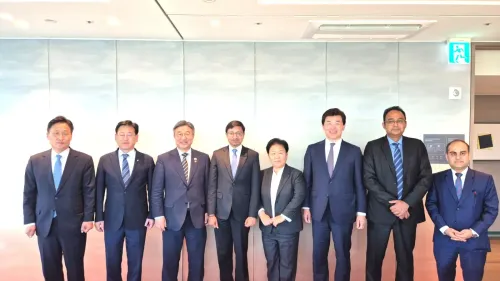
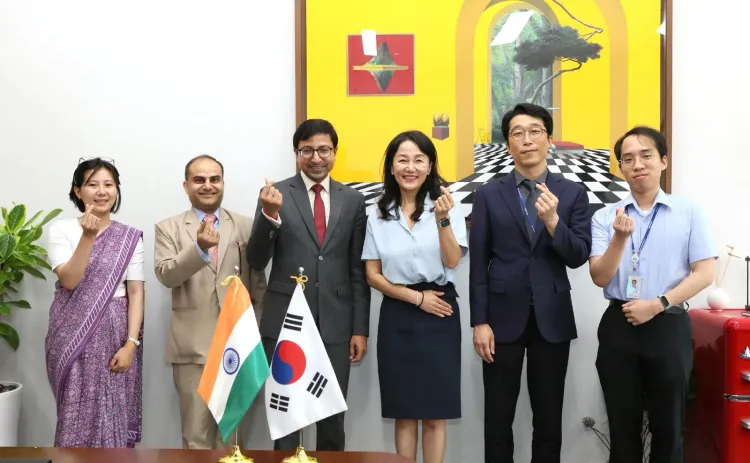
India's Ambassador Gourangalal Das met Lee Jae-jeong , Chairperson of South Korea's National Assembly Culture, Sports and Tourism Committee , in Seoul on 25 August 2025 .
Talks focused on deepening cultural ties and people-to-people exchanges under the India–ROK Special Strategic Partnership .
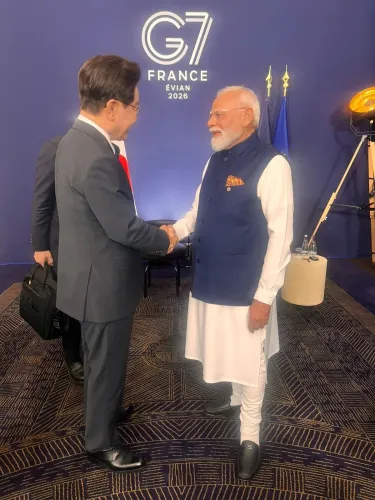
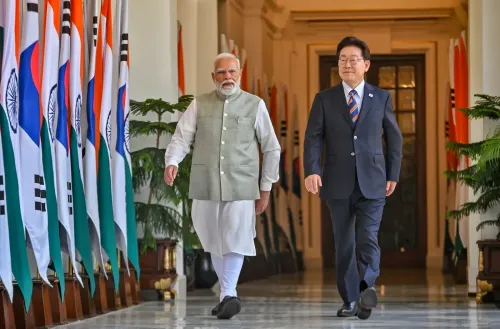
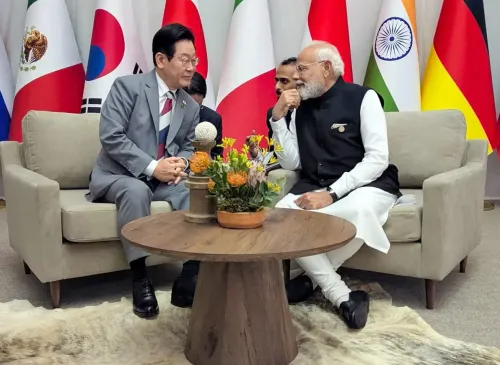
The meeting follows the April 2025 summit between PM Narendra Modi and President Lee Jae Myung at Hyderabad House , New Delhi.
Both countries signed multiple MoUs in April covering trade, shipbuilding, digital infrastructure, education, culture, and sports.
The MEA described President Lee's India visit as an 'important milestone' in advancing the bilateral partnership.
India's Ambassador to South Korea, Gourangalal Das, met Lee Jae-jeong, Chairperson of the National Assembly's Culture, Sports and Tourism Committee, in Seoul on 25 August 2025, to explore ways of deepening cultural ties and people-to-people exchanges between the two nations. The Indian Embassy in Seoul confirmed the meeting on Tuesday.
What Was Discussed
According to the Indian Embassy, the meeting built on momentum generated by the recent visit of South Korean President Lee Jae Myung to India. Ambassador Das and Chairperson Lee discussed concrete avenues to strengthen cultural collaboration and expand bilateral people-to-people contacts between India and the Republic of Korea (ROK).
The Indian Embassy stated on X: 'Building on the strong momentum set by the recent visit of the ROK President to India, they discussed avenues to further strengthen cultural ties and people-to-people exchanges between India and ROK.'
Context: Modi-Lee Summit in April
The meeting follows the high-profile summit held in April 2025, when South Korean President Lee Jae Myung and Prime Minister Narendra Modi held talks at Hyderabad House in New Delhi. The two leaders reviewed progress under the India–ROK Special Strategic Partnership and discussed expanding cooperation across trade, financial services, shipbuilding, artificial intelligence, energy, semiconductors, critical and emerging technologies, defence and security, and cultural exchanges.
In a notable gesture, President Lee planted a sapling under Prime Minister Modi's 'Ek Ped Maa Ke Naam' initiative, signalling a shared focus on sustainability. The summit concluded with both leaders witnessing the signing of several Memoranda of Understanding (MoUs) and frameworks spanning economy, trade, shipbuilding, maritime affairs, digital infrastructure, education, culture, sports, and people-to-people ties.
Strategic Partnership in Focus
The Ministry of External Affairs (MEA) described President Lee's India visit as an 'important milestone' in advancing the Special Strategic Partnership. The MEA noted that India and the ROK share a 'multifaceted partnership rooted in ancient civilisational ties and shared values of democracy and rule of law.' It added that the outcomes of the summit 'will inject more vitality into the bilateral partnership and create new opportunities for people and industry.'
What This Means Going Forward
Ambassador Das's meeting with the National Assembly's culture committee signals that diplomatic follow-through on the April summit is actively under way at the parliamentary level — not just the executive. With MoUs already signed across education, culture, and sports, the focus now shifts to implementation and institutional linkages that can sustain long-term people-to-people engagement between the two democracies.
Point of View
Not just ministers who sign statements. What is worth watching is whether the MoUs from April translate into visible programmes: student exchanges, co-productions, language institutes, or tourism frameworks. India's cultural diplomacy in East Asia has historically lagged its economic ambitions in the region. South Korea, with its formidable soft-power infrastructure, is a natural partner to correct that imbalance — but only if follow-through matches the summit rhetoric.
NationPress
9 Oct 2026
Frequently Asked Questions
Why did India's Ambassador meet South Korea's National Assembly culture committee chief?
Ambassador Gourangalal Das met Chairperson Lee Jae-jeong to explore ways to strengthen cultural ties and people-to-people exchanges between India and South Korea, building on the momentum of the April 2025 Modi-Lee summit. The meeting was confirmed by the Indian Embassy in Seoul on 25 August 2025.
What is the India–ROK Special Strategic Partnership?
It is the overarching framework governing bilateral relations between India and the Republic of Korea, covering trade, defence, technology, culture, and people-to-people ties. The partnership was reviewed and expanded during the April 2025 summit between PM Modi and President Lee Jae Myung in New Delhi.
What did Modi and South Korean President Lee agree on during their April 2025 summit?
The two leaders reviewed progress across trade, financial services, shipbuilding, AI, energy, semiconductors, critical technologies, defence, and cultural exchanges. They witnessed the signing of multiple MoUs spanning economy, digital infrastructure, education, sports, and people-to-people ties.
What is the 'Ek Ped Maa Ke Naam' initiative that President Lee participated in?
It is a tree-planting initiative launched by Prime Minister Narendra Modi, encouraging people to plant a tree in their mother's name as a gesture toward environmental sustainability. President Lee planted a sapling under this initiative during his April 2025 visit to India.
What happens next in India-South Korea cultural engagement?
With MoUs already signed in April 2025, the focus now shifts to implementation — including student exchanges, cultural programmes, and institutional linkages. Ambassador Das's meeting with the National Assembly's culture panel is part of that follow-through process at the parliamentary level.