India sends third relief flight to Nepal, total aid crosses 60 tonnes
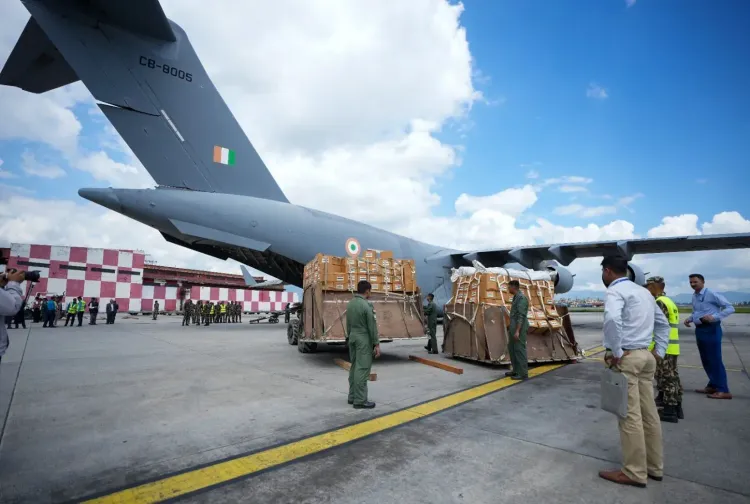
Synopsis
India mobilised three relief flights to Nepal within 48 hours of the Bhote Koshi flash floods, delivering a cumulative 60 tonnes of aid. With tunnel rescue teams, medical units, and Bailey bridges now being readied, New Delhi's response has moved from emergency relief to a sustained recovery operation — even as nearly 550 are confirmed dead and 977 remain out of contact.
Key Takeaways
India's third relief flight to Nepal is expected to depart Friday evening, 28 August , carrying 12–13 tonnes of supplies including portable generators, food, and water purification tablets.
Combined with the first two flights ( 26 August and 27 August ), India will have delivered 60 tonnes of humanitarian aid in total.
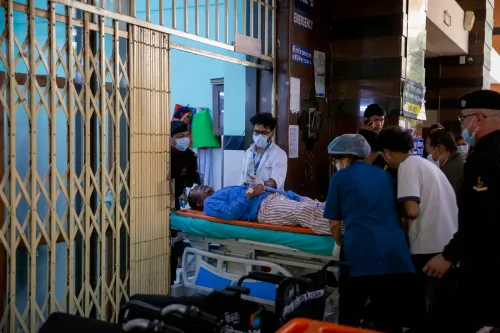
Flash floods triggered by an avalanche on the Bhote Koshi River have killed nearly 550 people ; 977 individuals remain out of contact.
India is deploying a tunnel rescue team (preceded by a recce team), a medical team , and Bailey bridges with technical support to restore connectivity.
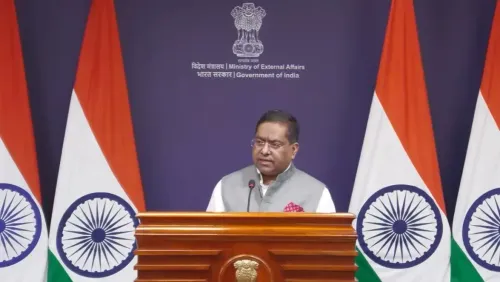
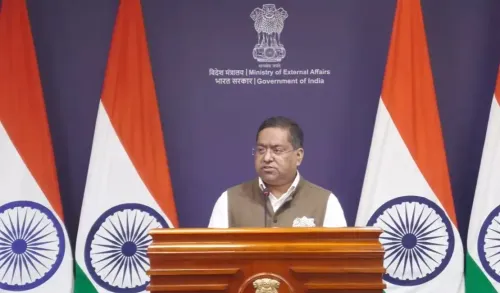
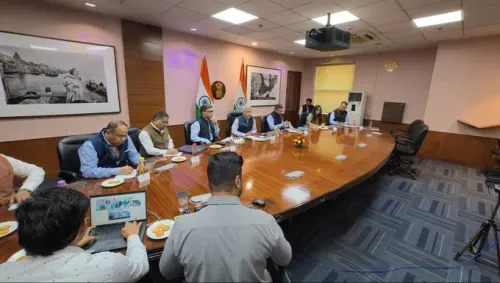
MEA spokesperson Randhir Jaiswal confirmed the details at a press briefing in New Delhi on 28 August .
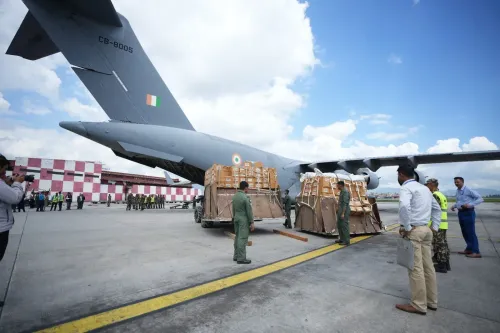
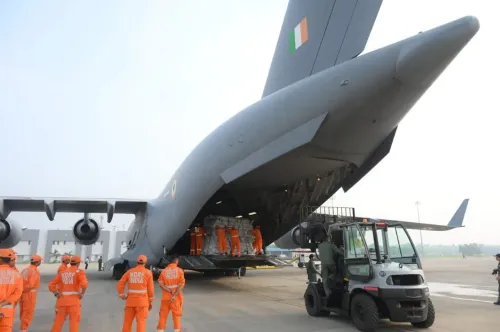
India is significantly scaling up its humanitarian response to Nepal following catastrophic flash floods triggered by an avalanche on the Bhote Koshi River, with a third relief aircraft carrying 12–13 tonnes of essential supplies expected to depart Friday evening, 28 August, the Ministry of External Affairs (MEA) confirmed. Once airborne, the three flights will have collectively delivered 60 tonnes of relief material to the flood-ravaged neighbouring country.
Flight-by-Flight Relief Timeline
MEA spokesperson Randhir Jaiswal, addressing a bi-weekly press briefing in New Delhi on Friday, detailed the phased response. The first aircraft departed on 26 August in the evening, carrying 10 tonnes of relief material — including temporary shelters, blankets, hygiene kits, solar lamps, and medicines.
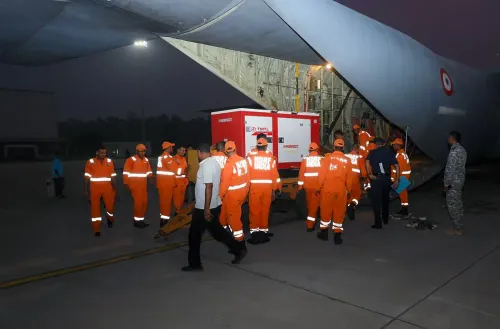
A second flight followed on 27 August at around 10:30 am, transporting a much larger consignment of 37.5 tonnes that included tents, blankets, hygiene kits, solar lamps, dewatering pumps, kitchen sets, generator sets, medicines, and food items.
The third flight, expected to leave Friday evening, will carry portable generator sets, dignity kits, food, water purification tablets, and medicines — items specifically requested by the Nepali government. Its load is estimated at 12–13 tonnes, bringing the cumulative total to 60 tonnes.
Tunnel Rescue Team and Bailey Bridges on the Way
Beyond air-delivered supplies, India is preparing a broader on-ground response. Jaiswal said a recce team is being flown in first to assess the situation and equipment requirements before a full tunnel rescue team is deployed, as requested by Nepal.
A medical team is also being dispatched. Additionally, India has offered Bailey bridges along with associated technical teams to rapidly restore road connectivity in affected areas. Notably, one Bailey bridge is already on Nepali soil and ready for deployment in relief and connectivity operations.
Scale of the Disaster
The flash floods, believed to have been set off by an avalanche on a transboundary river between Nepal and China upstream of the Bhote Koshi, have left nearly 550 people dead, with 977 individuals still out of contact. The disaster swept away human settlements, roads, hydropower projects, and transmission infrastructure along the river banks downstream.
This is one of the deadliest flood events Nepal has recorded in recent years, and the scale of destruction to critical infrastructure — particularly hydropower and road networks — points to a recovery challenge that extends well beyond immediate relief.
India's Neighbourhood First Policy in Action
India's rapid mobilisation — with the first flight departing on the same day the crisis unfolded — underscores the operational weight of its Neighbourhood First foreign policy doctrine. This is not the first time India has been Nepal's primary first-responder: similar swift responses were mounted after the 2015 Gorkha earthquake and subsequent flood events. The offer of Bailey bridges and tunnel rescue teams signals that New Delhi is preparing for a prolonged relief-and-reconstruction phase, not just an immediate emergency drop.
As the situation on the ground continues to evolve, further assistance tranches are likely to follow based on assessments by the incoming recce team.
Point of View
Three-flight response to the Bhote Koshi disaster is operationally impressive, but the harder test begins now. The destruction of hydropower projects and road infrastructure signals a reconstruction burden that dwarfs emergency relief. The offer of Bailey bridges and tunnel rescue teams is the right instinct, but Nepal's topography and the transboundary origin of the avalanche — upstream in Chinese territory — add diplomatic and logistical layers that airlift tonnage alone cannot resolve. New Delhi's Neighbourhood First doctrine is visible here, but sustained follow-through, not just first-mover optics, will define how this moment is remembered.
NationPress
28 Aug 2026
Frequently Asked Questions
How much relief material has India sent to Nepal after the Bhote Koshi floods?
India has dispatched three relief flights carrying a cumulative total of 60 tonnes of humanitarian supplies to Nepal as of 28 August. The consignments include tents, blankets, food, medicines, water purification tablets, solar lamps, generator sets, dewatering pumps, and dignity kits.
What caused the flash floods in Nepal's Bhote Koshi River?
The floods are believed to have been triggered by an avalanche on a transboundary river between Nepal and China, located upstream of the Bhote Koshi River. The resulting surge swept away settlements, roads, hydropower projects, and power transmission infrastructure downstream.
How many people have died or gone missing in the Nepal floods?
Nearly 550 people have died in the disaster, according to reports, while 977 individuals remain out of contact as of 28 August.
What additional support is India providing beyond relief supplies?
India is sending a tunnel rescue team — preceded by a recce team to assess equipment needs — along with a medical team. India has also offered Bailey bridges with technical teams to quickly restore road connectivity in affected areas; one Bailey bridge is already in Nepal and ready for deployment.
When did India begin its relief operations for Nepal?
India mobilised on the same day the disaster unfolded, with the first aircraft departing on the evening of 26 August carrying 10 tonnes of relief material. A second flight followed on 27 August, and a third was expected to depart on the evening of 28 August.