India, UAE expand trade and investment ties in Dubai meeting
Synopsis
India and the UAE are in an intensive diplomatic sprint — Dubai trade talks, a trilateral with France on AI and space at UNGA, and a Modi-UAE President phone call all clustered within weeks. The relationship has quietly evolved from a bilateral trade partnership into a multi-format strategic axis with global ambitions.
Key Takeaways
India's Consul General Dr.
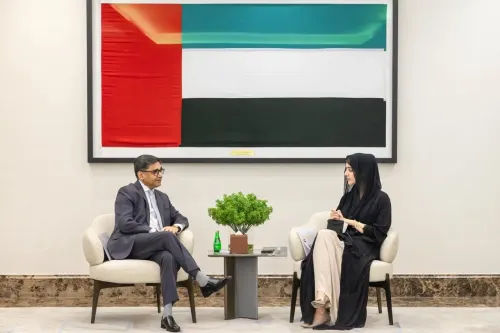
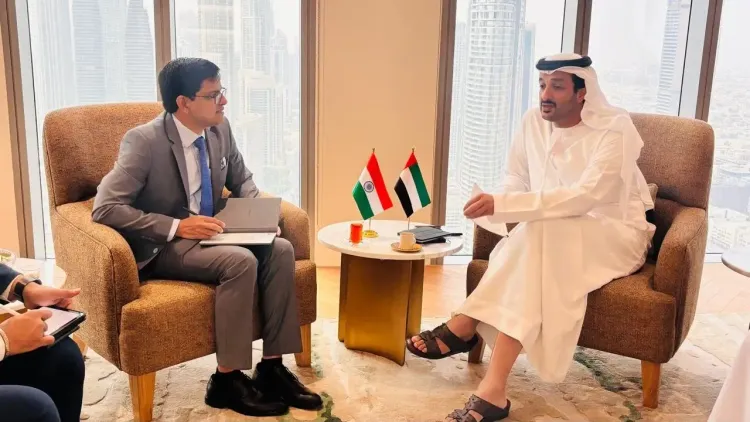
Vishnu Vardhan Reddy met UAE Economy Minister Abdulla bin Touq Al Marri in Dubai on 5 October 2026 to discuss expanding bilateral trade and investment.
Jaishankar , UAE FM Sheikh Abdullah bin Zayed Al Nahyan , and French FM Jean-Noel Barrot held an India-UAE-France trilateral at UNGA81 on 22 September , focusing on AI, space, health sciences, energy, and culture .
The three ministers agreed to meet at regular intervals and reaffirmed commitment to 'concrete initiatives.' PM Modi and UAE President Sheikh Mohamed bin Zayed Al Nahyan spoke by phone on 18 September , discussing the India-UAE Comprehensive Strategic Partnership across energy, defence, technology, investment, and health.
Both sides also exchanged views on West Asia developments, reflecting the geopolitical dimension of the bilateral relationship.
India and the United Arab Emirates (UAE) on Monday, 5 October 2026, held high-level discussions in Dubai to explore new avenues for bilateral trade, investment, and business partnerships — the latest in a series of engagements that have markedly deepened the two nations' economic ties.
Key Developments in Dubai
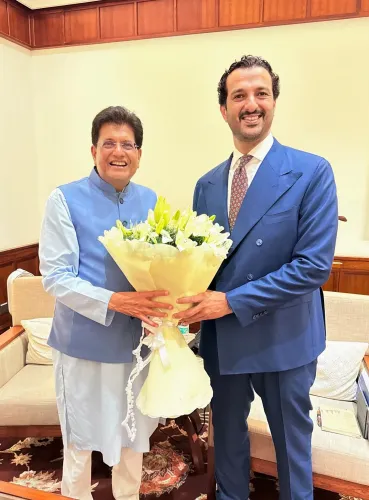
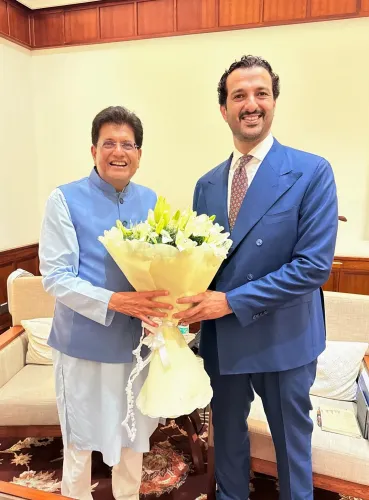
The discussions were held during a bilateral meeting between Dr. E. Vishnu Vardhan Reddy, India's Consul General in Dubai, and Abdulla bin Touq Al Marri, the UAE's Minister of Economy and Tourism. The Consulate General of India in Dubai confirmed on X that the meeting 'highlighted the strong momentum in India–UAE economic relations,' with talks focused on expanding bilateral trade, investment, and business partnerships.
India-UAE-France Trilateral at UNGA
The Dubai engagement follows a significant trilateral meeting on 22 September, when External Affairs Minister S. Jaishankar, UAE Foreign Minister Sheikh Abdullah bin Zayed Al Nahyan, and French Foreign Minister Jean-Noel Barrot convened on the sidelines of the 81st session of the United Nations General Assembly (UNGA) in New York. The three ministers reviewed progress on cooperation in Artificial Intelligence (AI), space, health sciences, energy, and culture, and also discussed the situation in West Asia, according to a statement from India's Ministry of External Affairs (MEA).
In a post on X following the meeting, EAM Jaishankar wrote: 'Glad to participate in the India-UAE-France trilateral on the sidelines of UNGA81. Collaboration in the fields of Artificial Intelligence, Space, health sciences, energy and culture was the main topic of discussion. Our shared interests and complimentary capabilities offer immense scope for cooperation. Agreed to meet again soon to take the discussion forward.'
The three ministers reaffirmed their commitment to building 'constructive ties through concrete initiatives' and agreed to meet at regular intervals to review progress across all areas of cooperation, the MEA statement noted.
Modi–UAE President Telephonic Exchange
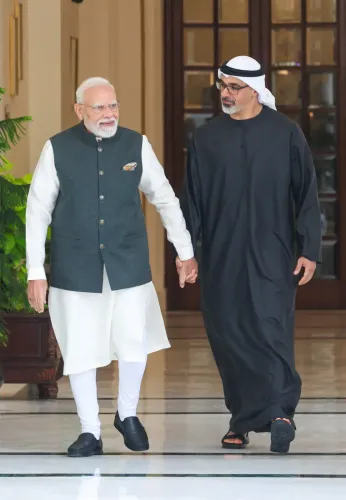
Further underscoring the breadth of the India-UAE relationship, Prime Minister Narendra Modi and UAE President Sheikh Mohamed bin Zayed Al Nahyan held a telephonic conversation on 18 September. According to the Prime Minister's Office (PMO), the UAE President congratulated PM Modi on India's successful BRICS Presidency. Modi, in turn, appreciated the participation of Abu Dhabi Crown Prince Sheikh Khaled bin Mohamed bin Zayed Al Nahyan in the BRICS Summit and acknowledged the UAE's role in delivering substantive outcomes under India's presidency.
The two leaders discussed new measures to deepen the India-UAE Comprehensive Strategic Partnership, spanning energy, defence, technology, investment, and health. They also exchanged views on West Asia developments and reaffirmed their commitment to regional peace, security, and stability.
On social media platform X, PM Modi said: 'Grateful to my brother, the President of UAE, Sheikh Mohamed bin Zayed Al Nahyan, for his call and birthday wishes. We discussed measures to further deepen our bilateral Comprehensive Strategic Partnership and exchanged views on efforts to promote regional peace, security and stability.'
Why This Matters
The UAE is one of India's most significant trade partners and home to a large Indian diaspora. The intensity of diplomatic contact — from consul-general-level trade meetings in Dubai to trilateral foreign-minister formats and prime-ministerial calls — reflects a strategic elevation of the bilateral relationship that goes well beyond conventional commerce. Notably, the India-UAE axis is now embedded in a broader trilateral framework with France, adding a European dimension to what was previously a largely bilateral economic partnership. The repeated focus on West Asia in these conversations also signals that both sides see geopolitical coordination as integral to the relationship, not merely an add-on.
What to Watch Next
The EAM's agreement to meet the UAE and French foreign ministers 'again soon' suggests a follow-up trilateral is in the pipeline. Observers will watch whether concrete AI or space cooperation frameworks materialise from the UNGA commitments, and whether the consul-general-level trade talks in Dubai translate into new bilateral investment agreements.
Point of View
A prime-ministerial call, and a three-nation foreign-minister format — within weeks of each other is not coincidental diplomacy; it is a coordinated signalling exercise. The addition of France to the bilateral axis is strategically significant: it internationalises the partnership and gives India a European anchor for its AI and space ambitions. What is missing from the public readouts, however, is any measurable commitment — no trade targets, no signed frameworks, no timelines. Momentum without metrics is a pattern in India's bilateral diplomacy that has repeatedly generated goodwill without generating outcomes.
NationPress
5 Oct 2026
Frequently Asked Questions
What was discussed in the India-UAE meeting in Dubai on 5 October 2026?
India's Consul General Dr. E. Vishnu Vardhan Reddy met UAE Minister of Economy and Tourism Abdulla bin Touq Al Marri to explore avenues for expanding bilateral trade, investment, and business partnerships. The meeting was described as reflecting strong momentum in India-UAE economic relations.
What is the India-UAE-France trilateral and what was agreed at UNGA?
The India-UAE-France trilateral is a three-nation ministerial format that convened on 22 September on the sidelines of the 81st UN General Assembly in New York. EAM Jaishankar, UAE FM Sheikh Abdullah bin Zayed Al Nahyan, and French FM Jean-Noel Barrot discussed cooperation in AI, space, health sciences, energy, and culture, and agreed to meet again to take the collaboration forward.
What did PM Modi and the UAE President discuss in their September phone call?
PM Narendra Modi and UAE President Sheikh Mohamed bin Zayed Al Nahyan spoke on 18 September, discussing ways to deepen the India-UAE Comprehensive Strategic Partnership across energy, defence, technology, investment, and health. They also exchanged views on the situation in West Asia and reaffirmed commitment to regional peace and stability.
Why is the India-UAE relationship considered a Comprehensive Strategic Partnership?
India and the UAE designated their relationship a Comprehensive Strategic Partnership to reflect its multi-dimensional nature — spanning trade, investment, defence, energy, technology, and cultural ties. The UAE is among India's largest trade partners and hosts one of the world's biggest Indian diaspora communities.
What is the significance of India including France in the UAE bilateral framework?
The India-UAE-France trilateral adds a European dimension to what was previously a bilateral India-UAE relationship. France brings complementary capabilities in AI, space, and energy, giving the partnership broader global reach and a potential platform for concrete project collaboration across three major economies.